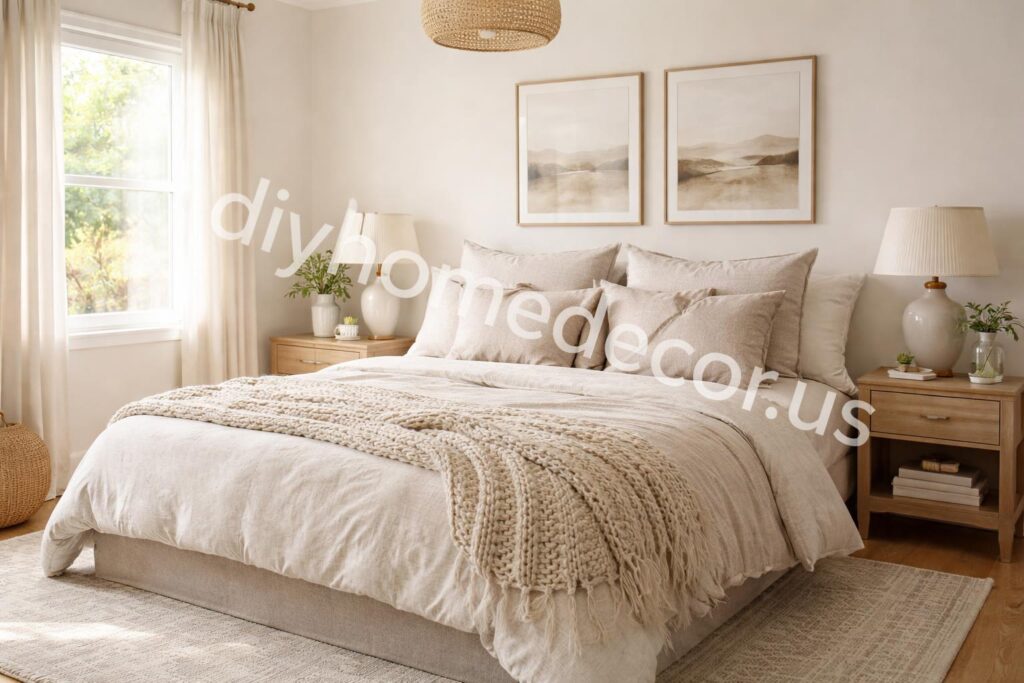
A bedroom can go from calm to cluttered pretty fast, and the sad part is that it doesn’t take much. One mismatched lamp, a bare wall, or cheap-looking bedding can make the whole room feel unfinished.
If you ignore those little details, the room usually ends up feeling more temporary than restful. And that’s annoying, because a bedroom should feel like the one place that actually helps you breathe.
The good news is you don’t need a big budget to change that. These 17 ideas focus on small, smart upgrades that create a polished look without pretending to be expensive. You’ll see where to spend a little, where to save, and which details make the biggest visual difference.
Start with the pieces people notice first
The fastest way to make a room look better is to fix the things the eye lands on right away. For most bedrooms, that means the bed, the lighting, and the wall behind the bed.
A cheap room usually looks cheap because too many surfaces feel empty or too busy. A better room feels intentional, even if most of the pieces are simple.
1. Use oversized pillows, not just more pillows
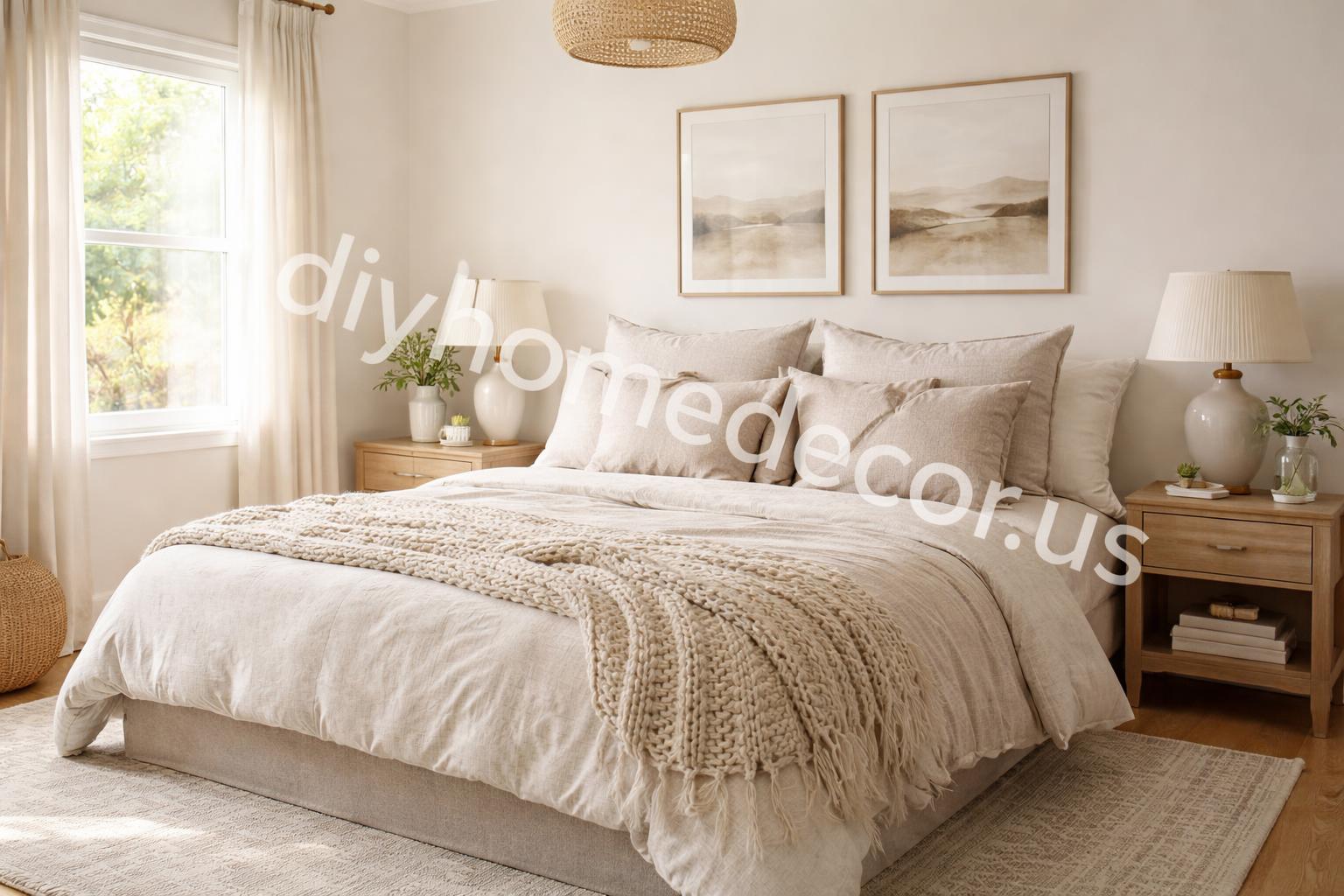
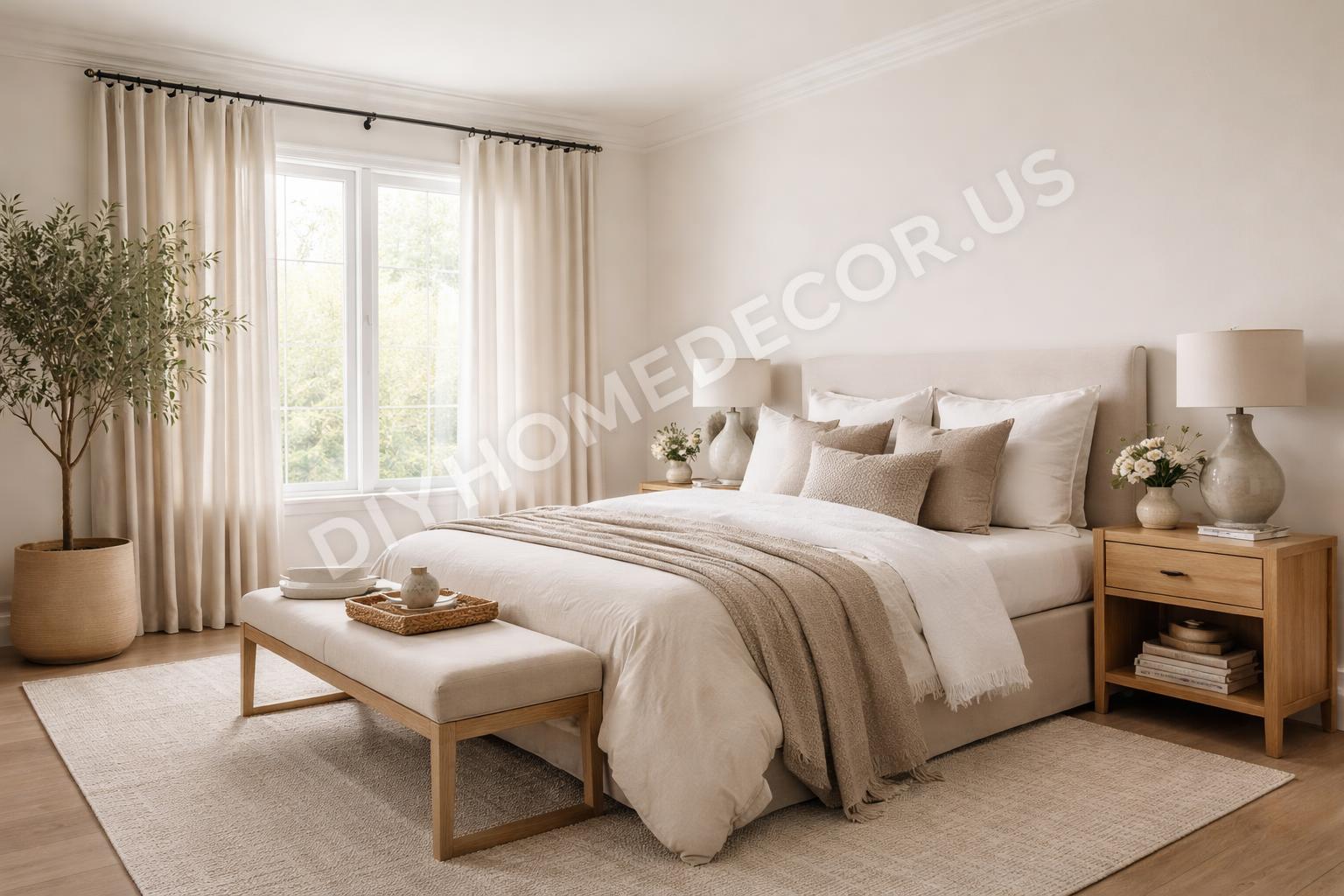
One thing I’ve noticed is that a bed often looks more expensive when it has fewer, larger pillows instead of a pile of tiny ones. Big pillows create that full, hotel-like look without much effort.
You don’t need a dozen decorative pieces. Just a pair of larger shams in a textured fabric can make the bed look finished.
2. Add a single throw blanket with some weight
A thin, flimsy throw can cheapen the whole bed setup. A heavier knit, woven blanket, or soft faux-fur throw feels more substantial and adds texture fast.
I’d keep it folded loosely at the end of the bed. That little bit of structure matters more than people think.
3. Choose one “anchor” lamp
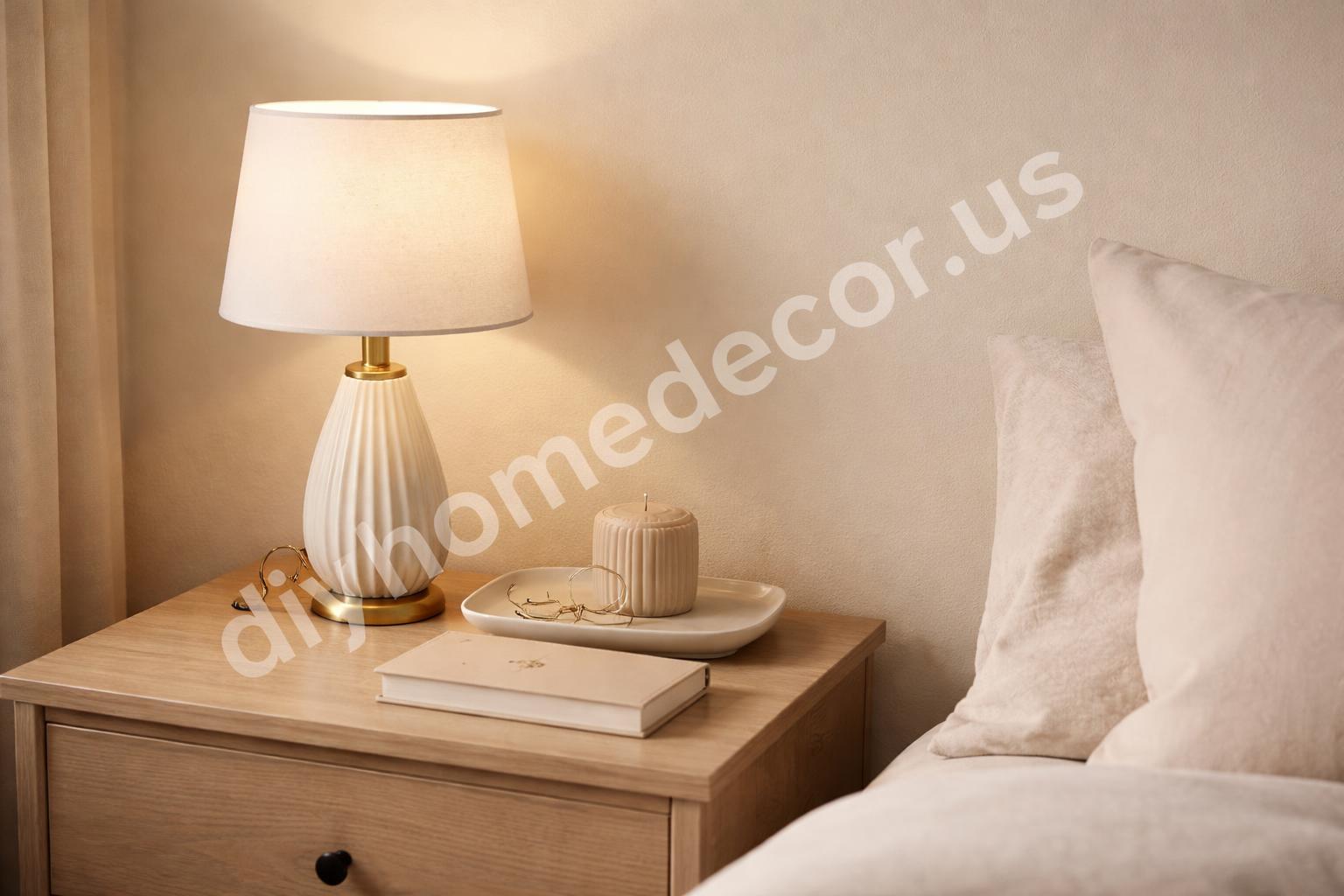
A bedroom looks more expensive when the lighting feels deliberate. A pair of matching lamps is nice, but even one good lamp can do a lot if it has a solid base and a shade that looks clean and simple.
Avoid tiny lamps that disappear on the nightstand. They usually make the whole setup feel under-scaled.
4. Hang curtains higher than the window frame
This is one of those tricks that looks small but changes the room a lot. Curtains hung closer to the ceiling make the walls feel taller and the space feel more finished.
Use longer panels if you can. Curtains that stop awkwardly above the floor can make the room feel rushed.
Quick tip: If you only do one thing in the room, try this first. It’s one of the cheapest ways to make a bedroom look more expensive.
Work with texture, not just color
A budget room often fails because everything is flat. Same smooth fabric, same plain finish, same no-fuss look. It ends up feeling a little lifeless.
Texture fixes that. It gives a room depth without needing lots of décor.
5. Mix cotton, linen, knit, and wood
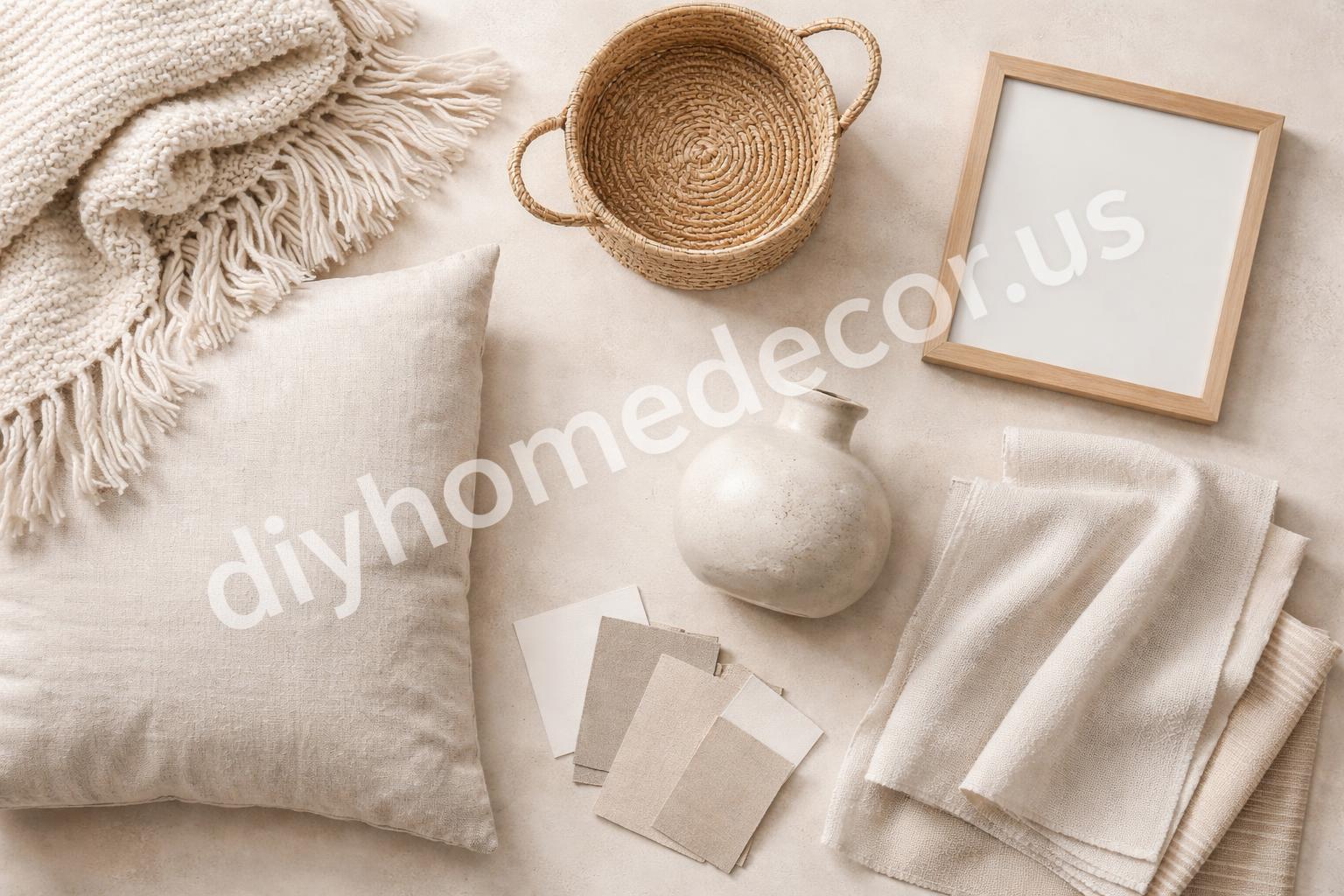
You don’t need luxury materials. You just need contrast. A cotton duvet, a linen pillow, a knit throw, and a wood tray can look richer together than one pricey item alone.
This is where a lot of people overdo it. They buy more stuff instead of better contrast. That usually makes the room feel crowded, not elevated.
6. Add a rug with pattern or woven texture
A rug grounds the whole room, especially if your flooring is plain. Even an affordable rug can look expensive if it has a subtle pattern, a muted color, or a natural woven texture.
The trick is scale. A rug that’s too small makes the room feel stingy. A slightly larger one often looks better, even if it costs a bit more.
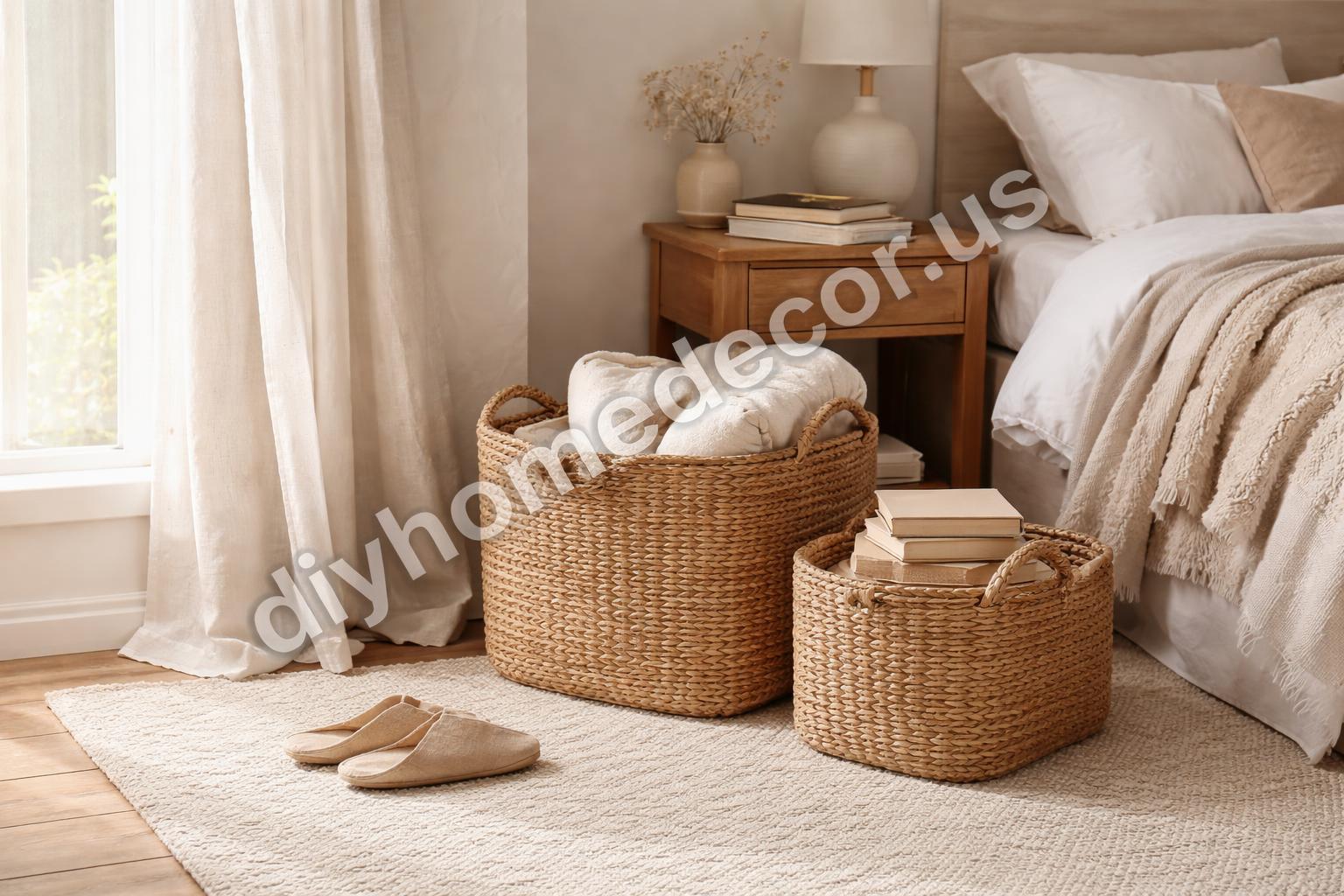
7. Use woven baskets instead of visible plastic storage
Storage can absolutely ruin a pretty bedroom if it’s exposed in the wrong way. Open bins, plastic boxes, and random piles make the room feel like you’re mid-move.
Woven baskets, fabric bins, or covered boxes hide the mess and add warmth at the same time. That’s a small change with a big payoff.
8. Bring in one natural material
Wood, rattan, ceramic, stone, or even marble-look accents can make a room feel more layered. You only need one or two of these to make the room feel less flat.
A ceramic vase on a dresser or a rattan tray on a nightstand can quietly do a lot. It doesn’t have to be obvious to work.
Use color like a grown-up, not a rainbow
The most expensive-looking bedrooms usually don’t scream for attention. They feel calm. Even when they use color, the palette is controlled.
That doesn’t mean everything has to be beige. It just means the colors should feel like they belong to each other.
9. Stick to one main color family
If your bedroom has too many random colors, it starts to feel scattered. A simple palette makes the space feel planned, which is usually what people read as “expensive.”
Try this:
– one base color
– one supporting color
– one accent color
That’s enough. More than that and the room often starts losing its calm.
10. Use dark accents in small doses
A little black, deep brown, or charcoal can sharpen a bedroom right away. Dark accents create contrast, and contrast tends to make lighter bedding and walls look more refined.
I’ve seen people go too far with this, though. Too many dark items can make a bedroom feel heavy instead of elegant. One or two is usually enough.
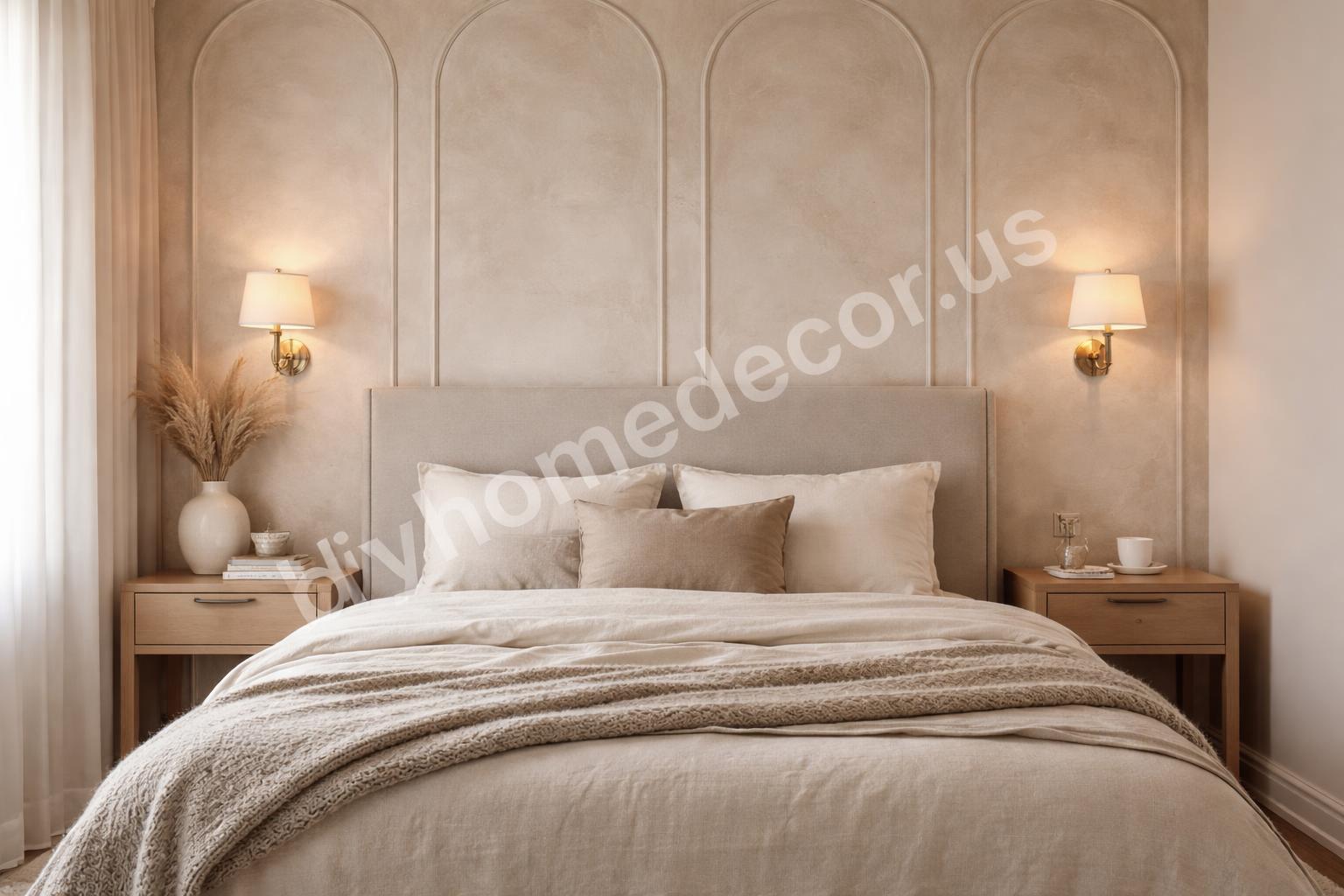
11. Paint or style the wall behind the bed
A painted accent wall, wallpaper panel, or even a fabric headboard can change the whole room. The wall behind the bed is prime real estate, so don’t waste it.
If you can’t paint, try a large framed print or a textile hanging. A blank wall behind the bed makes everything else work harder than it should.
For more inspiration that leans cozy and romantic, this roundup of romantic bedroom décor ideas for a cozy escape shows how soft textures and moody color choices can make a room feel much richer.
Small styling choices that quietly do the heavy lifting
This is where a bedroom starts to feel intentional instead of just decorated. A lot of people skip these details, then wonder why the room still feels unfinished.
The truth is, the little styling choices are what usually make a room look expensive.
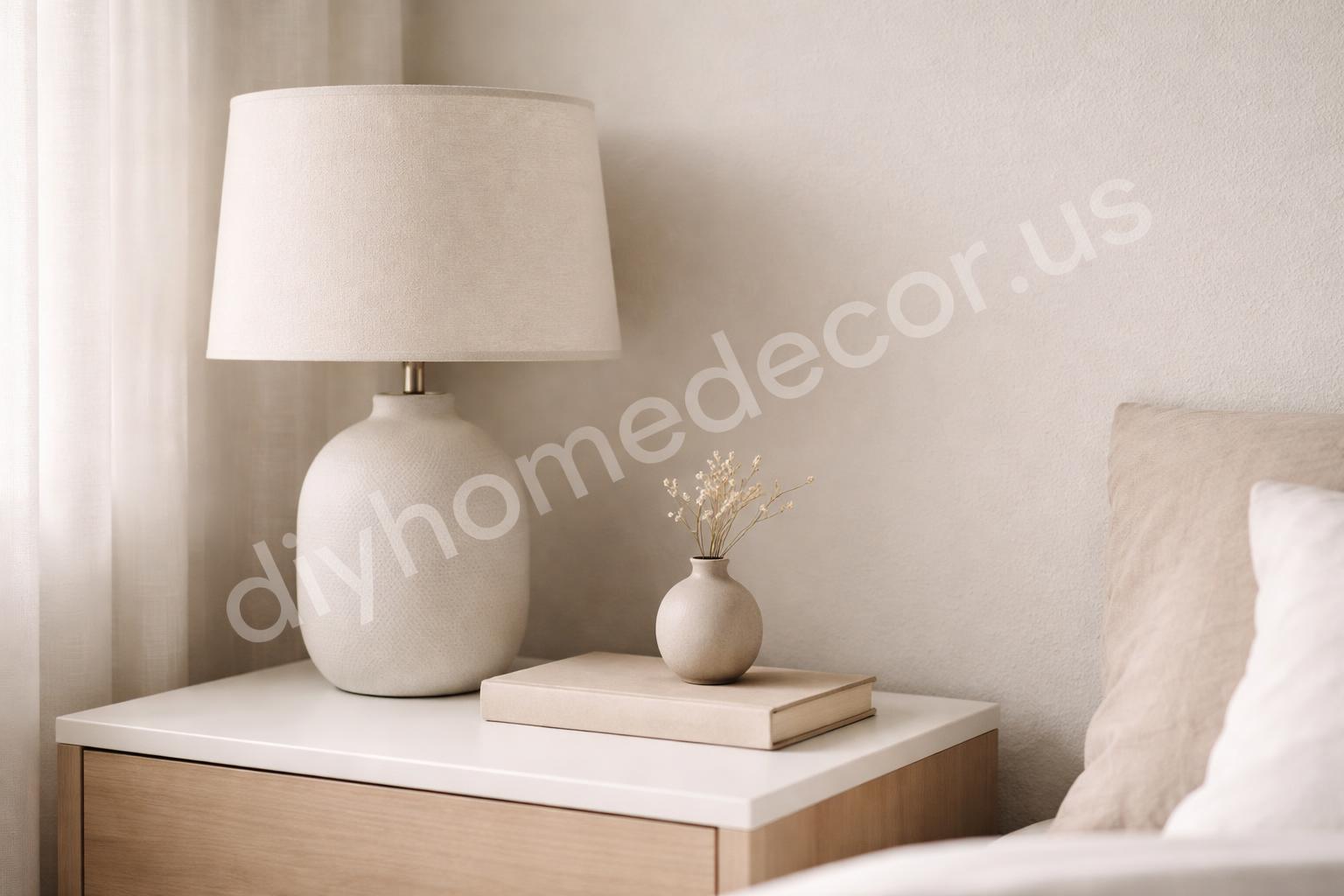
12. Clear the nightstand down to a few items
A crowded nightstand almost always looks cheaper than a simple one. Too many lotions, cables, books, and random cups create visual noise.
Keep just a lamp, one small dish, and maybe a book or vase. That’s enough. The empty space is part of the look.
13. Use matching bedside tables if possible
Matched nightstands make a room feel calmer and more deliberate. They don’t have to be fancy. They just need to look like they belong together.
If matching tables aren’t realistic, try to keep them in the same color family or material. One light wood and one dark wood can feel accidental unless the rest of the room is very balanced.
14. Swap shiny hardware for softer finishes
This is a tiny detail, but it matters. Bright, overly reflective finishes can sometimes look cheap, especially if they’re mixed with a lot of other glossy pieces.
Brushed brass, matte black, and soft chrome usually feel more settled. The room doesn’t need much, just a consistent finish that doesn’t fight everything else.
15. Frame something simple instead of buying wall filler
You do not need expensive art to make a bedroom look styled. A simple print, fabric sample, photograph, or abstract shape in a decent frame can look polished if it’s hung with care.
The frame matters almost as much as the artwork. A nice frame can make a very inexpensive print look surprisingly good.
Warning note: Don’t hang tiny art on a big wall and call it done. That’s one of the easiest ways to make a room feel underdone.
Add mood without making the room feel cluttered
There’s a sweet spot between plain and overdecorated. You want the room to feel lived-in, not overloaded.
A lot of expensive-looking bedrooms are just edited well. They don’t necessarily have more stuff. They just have better chosen stuff.
16. Use a mirror to reflect light
A mirror can make a small bedroom feel brighter and a little larger. It also helps bounce natural light around, which makes everything look cleaner and more open.
Place it where it catches daylight if you can. If it just reflects a cluttered corner, it won’t help much.
For bedroom layout and styling choices that create a softer, more layered look, the ideas in this romantic bedroom décor guide are a nice reminder that mood often matters more than expensive furniture.
17. Edit the room like you mean it
This is the part most people skip, and honestly, it makes the biggest difference. If something doesn’t belong, take it out. If a surface feels crowded, clear it off.
A bedroom looks expensive when it feels edited. Not empty, just edited.
A few things to remove or rethink:
– extra decorative pillows that never get used
– mismatched laundry baskets in plain sight
– too many small trinkets on shelves
– cables and chargers left out everywhere
– too many competing patterns in one corner
A simple way to make all 17 ideas work together
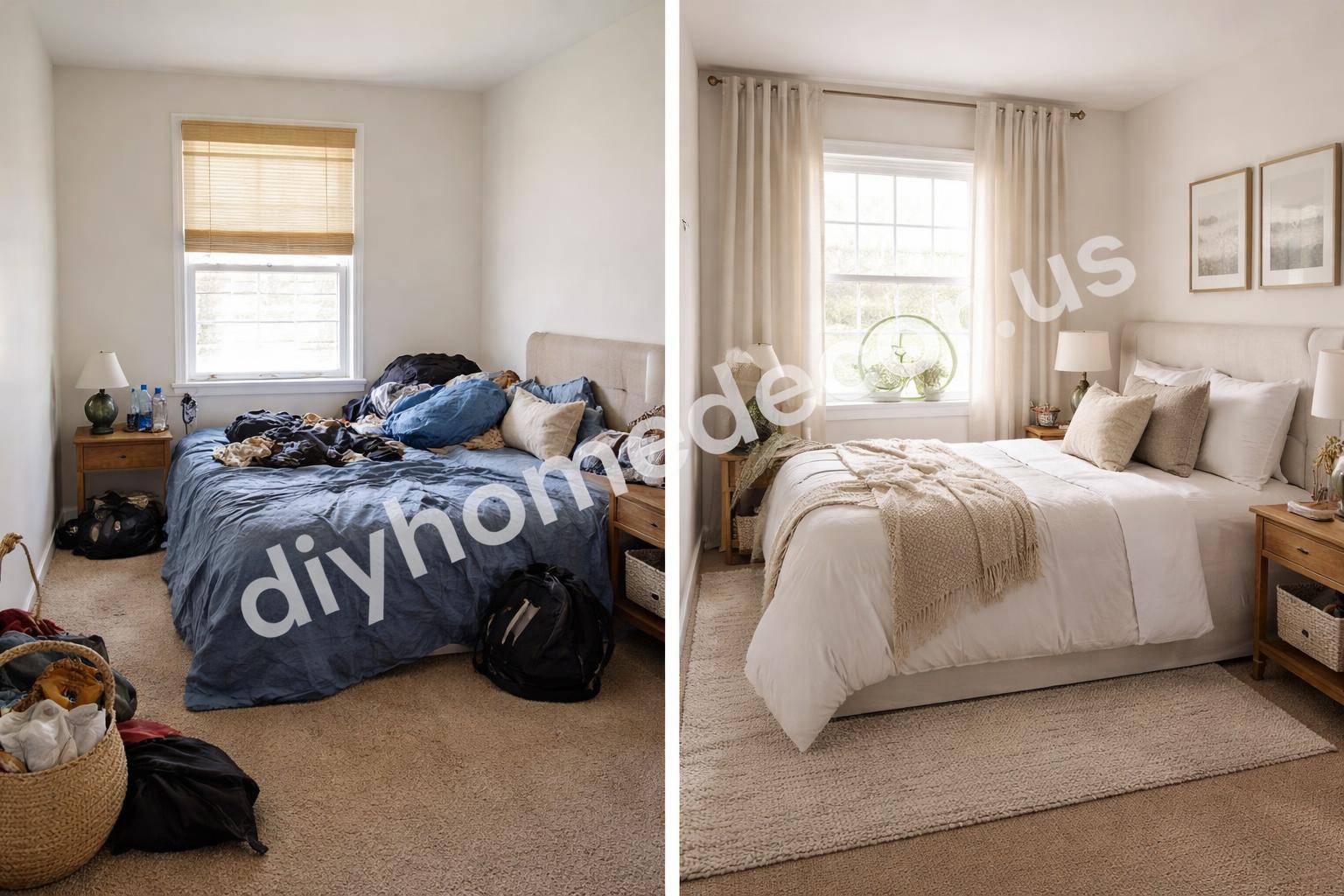
You don’t need to do all of these at once. That’s usually how people get overwhelmed and end up doing nothing.
Start with the bed, then the lighting, then the surfaces. Those three areas usually change the feel of the room faster than anything else.
Here’s the order I’d use:
- Fix the bedding.
- Add better lighting.
- Clear the nightstand.
- Add texture with a throw or rug.
- Hang curtains properly.
- Remove whatever feels noisy or random.
That may sound basic, but basic is often exactly what works. A room rarely needs more decoration than it needs editing.
A few budget-friendly swaps that usually help
- Replace tiny pillows with larger shams.
- Trade plastic storage for woven bins.
- Use one good lamp instead of two weak ones.
- Choose one framed print instead of many small pieces.
- Add a textured throw instead of extra decor.
What usually makes a budget bedroom look expensive
The biggest clue is balance. If the room has enough texture, a clean color palette, and a little breathing room, it usually looks far more expensive than it is.
The mistake I see most often is trying to fill every gap. That rarely helps. It just makes the room feel busier, and busier doesn’t read as luxurious.
A better-looking bedroom usually has:
– fewer colors
– better scale
– softer lighting
– a cleaner bed
– a little empty space
That’s it, really. Not every room needs a dramatic makeover. Sometimes it just needs a smarter edit.
Final thought
The nicest-looking budget bedrooms I’ve seen don’t try too hard. They lean on texture, scale, and restraint, and they let a few good choices do the work.
If you’re changing only a couple of things, start with the bed and the lighting. Those two alone can make the whole room feel more settled, and a lot more expensive than it really is.
Save This Guide on Pinterest
Save this image to Pinterest so you can easily return to this guide later.