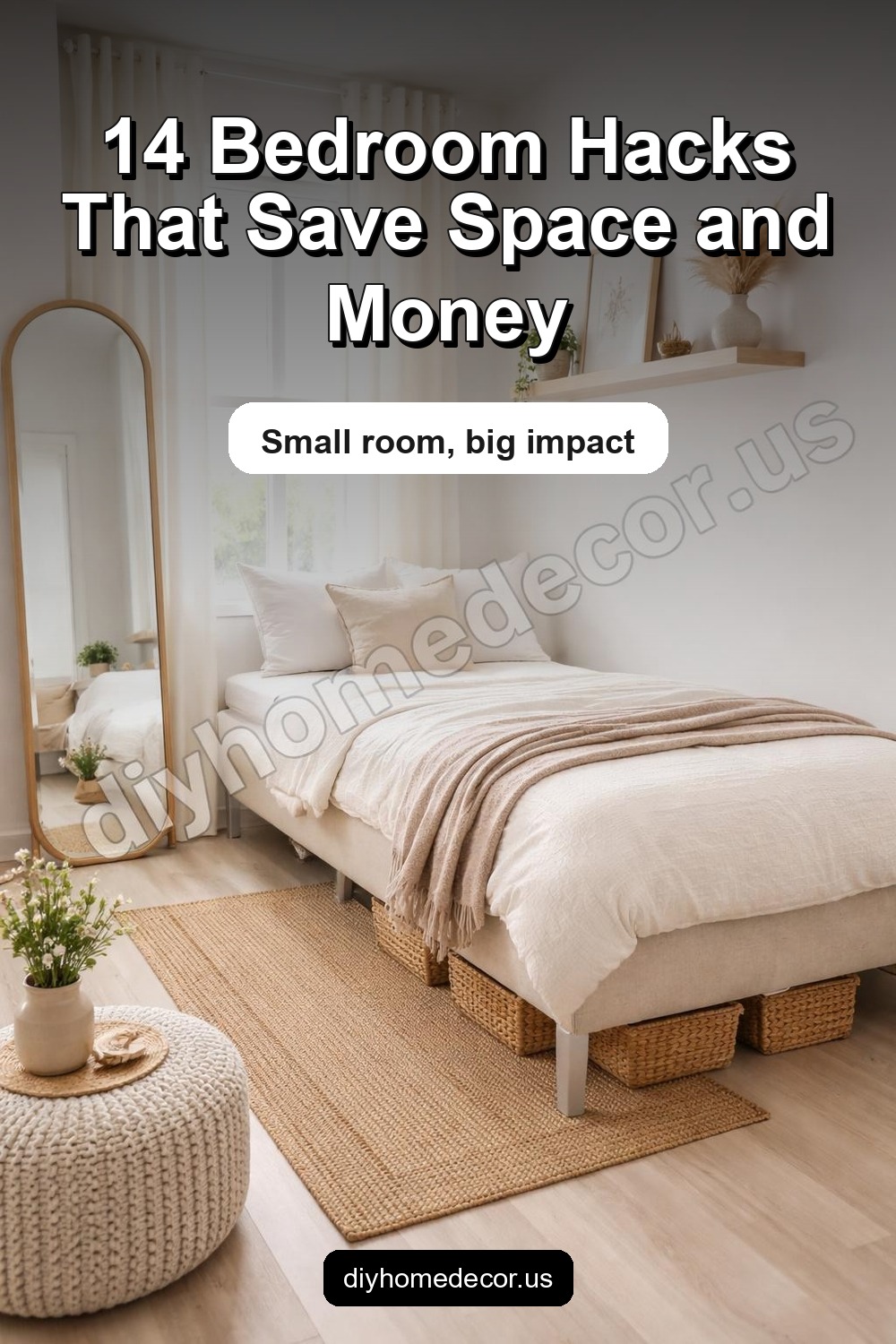
A small bedroom can start feeling cramped fast. One extra chair, one bulky lamp, or the wrong nightstand, and suddenly the whole room feels tighter than it should.
If you ignore that feeling, the room usually turns into a catch-all. And then you stop relaxing in it, which is a shame because bedrooms should do the opposite. In this article, I’m walking through practical, money-saving bedroom decorating hacks that make a room feel bigger without making it feel empty or cold.
Start with the bed, because it takes up the most visual space
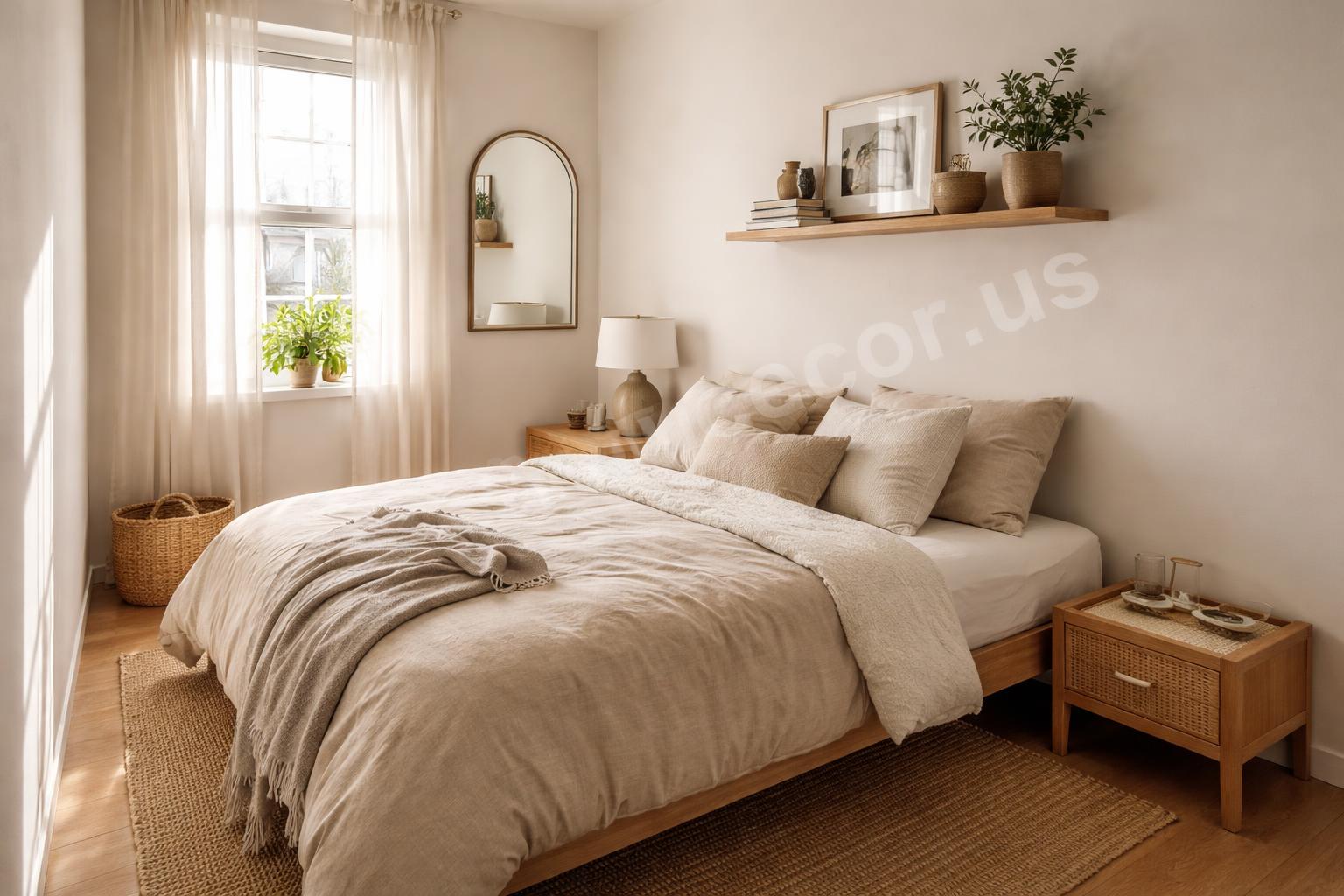
The bed is usually the biggest thing in the room, so that’s where I’d start every time. If the bed looks heavy, the rest of the room feels heavy too.
A low-profile bed frame can make the ceiling feel higher. A simple upholstered headboard often helps too, but only if it doesn’t stick out too far into the room.
What works best in a tight room
- Keep the bed frame slim.
- Skip oversized headboards.
- Use bedding in one calm color family.
- Choose a duvet that looks full, not bulky.
One thing I learned the hard way: a large, thick comforter can eat up the room visually even when it’s technically neat. The bed feels like a giant soft block, and that’s not helping anyone.
If you want more ideas like this, these small bedroom décor ideas that instantly create more space are worth a look.
Use one mirror where it actually matters
Mirrors get recommended a lot, but placement matters more than size. A mirror across from a window can bounce light and make the room feel brighter right away.
That doesn’t mean you need a huge fancy mirror. Even a simple full-length mirror behind a door or leaning in a corner can do a lot.
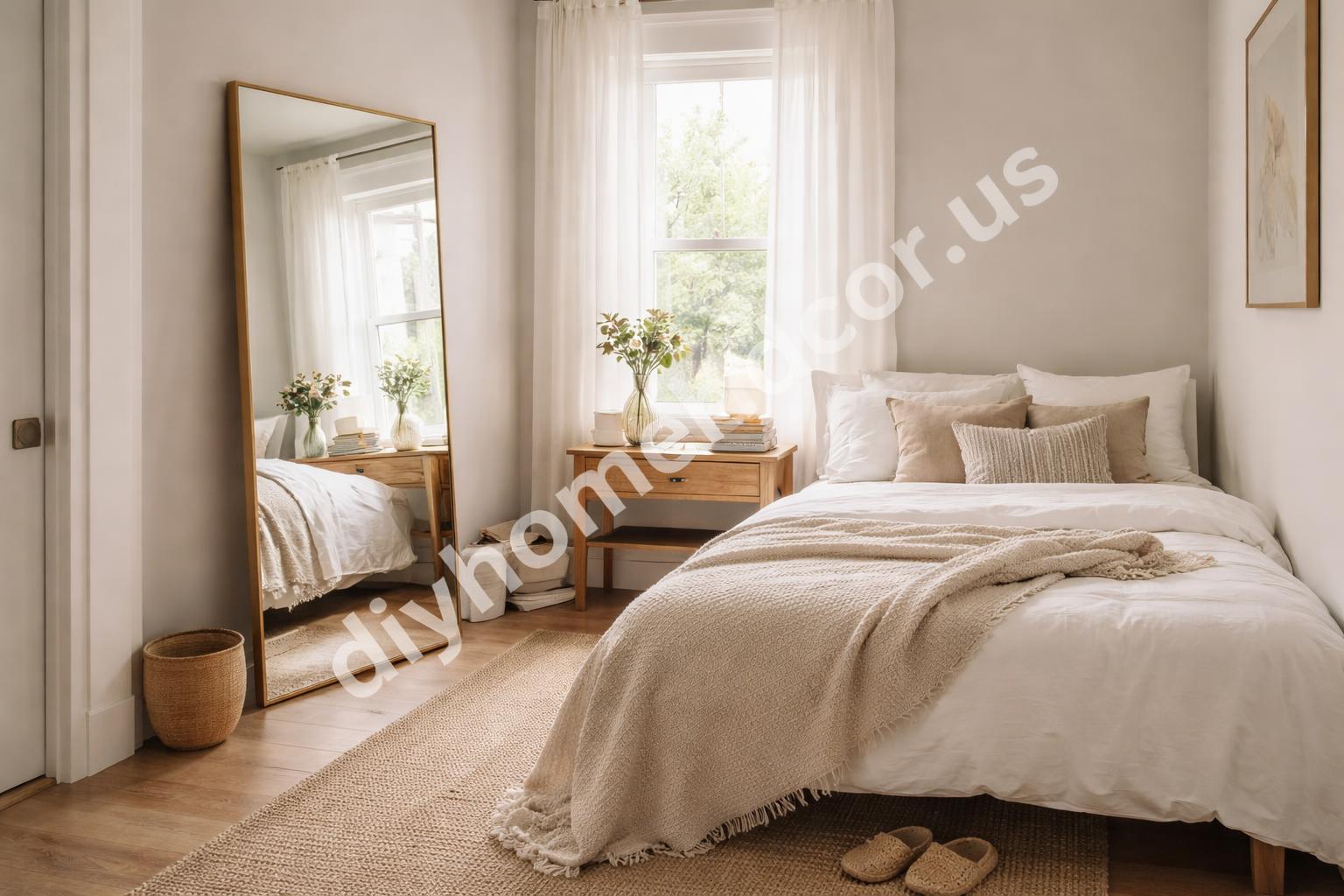
I’ve noticed that mirrors work best when they reflect something nice. If the mirror only shows clutter, it just doubles the problem.
A good trick is to place the mirror so it catches daylight, a plant, or a lamp glow at night. That feels thoughtful, not random.
Pick furniture that does two jobs
Small bedrooms don’t have room for “just because” pieces. Every item should earn its place.
A storage ottoman, a bench with shelves, or a nightstand with drawers can replace two separate pieces. That saves space, and it usually saves money too.
The goal is not to fill the room. The goal is to make the room do more with less.
Smart double-duty swaps
| Instead of this | Try this |
|---|---|
| Extra chair | Storage bench |
| Plain nightstand | Nightstand with drawers |
| Decorative basket only | Lidded basket under the bed |
| Separate dresser mirror | Wall-mounted mirror |
Most people don’t realize how much floor space disappears from one extra piece of furniture. Once that space is gone, the room gets harder to clean and harder to enjoy.
Go vertical before you buy anything else
When floor space is tight, the walls start looking pretty useful. And honestly, they should.
Floating shelves, wall hooks, and small wall-mounted lamps free up surfaces fast. That means fewer things fighting for the dresser and nightstand.
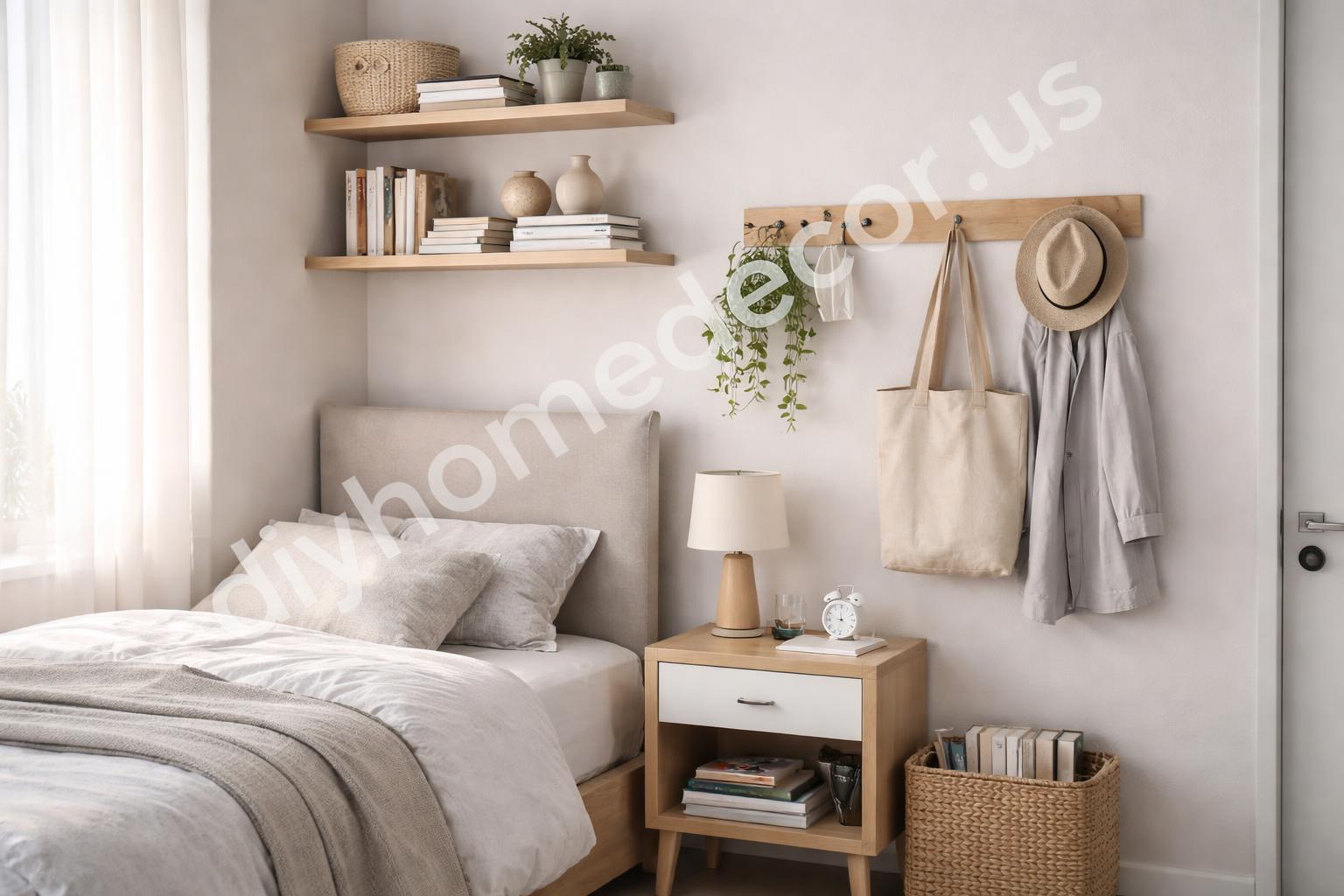
A wall shelf doesn’t have to become clutter central either. Use it for a few books, a candle, or a small tray. Keep it light.
Best places to use vertical storage
- Above the nightstand
- Over the bed, if it’s done safely and simply
- Beside the closet
- Behind the door
If you’re worried about drilling, start with adhesive hooks or a lightweight shelf system. It doesn’t need to be complicated to be useful.
Keep the color story soft and limited
A small room often looks bigger when the colors don’t fight each other. That doesn’t mean everything has to be white.
Soft neutrals, muted blues, warm grays, and dusty earth tones can all work. The trick is keeping the number of strong colors low.
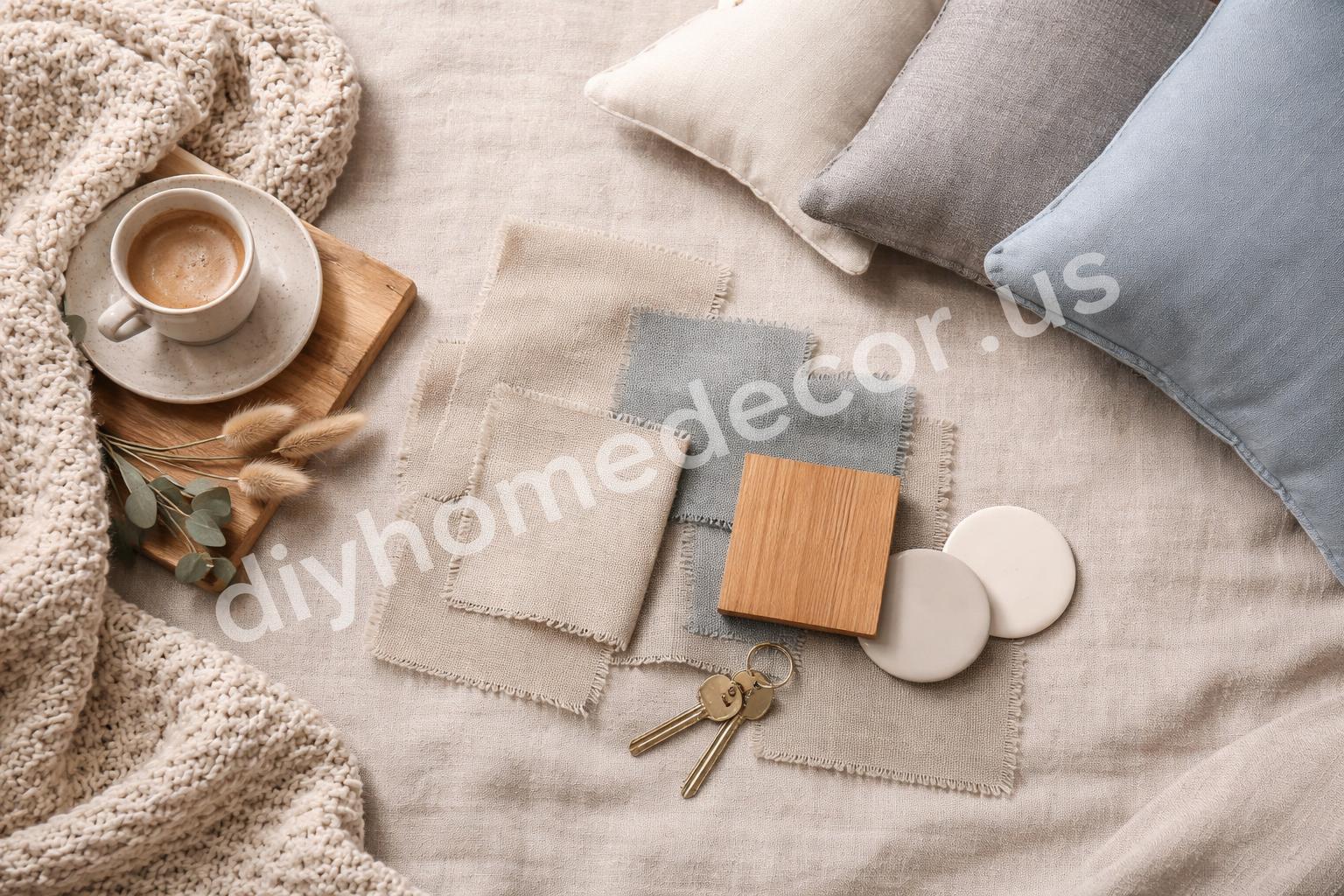
A limited palette doesn’t make a room boring. It usually makes the room feel calmer, which is the real point.
You can still add personality with texture. Think woven pillows, a linen throw, or a rug with a simple pattern. That gives the room character without making it feel busy.
Use lighting like a decorator, not just a lamp buyer
Lighting changes a bedroom more than people expect. One harsh overhead light can make even a pretty room feel flat and cold.
I like layering light instead. A bedside lamp, a small floor lamp, or a warm LED strip behind a headboard can make the room feel softer and more finished.
If you’re shopping, check practical details the same way you’d check any home item: bulb type, brightness, cord length, and whether it fits your space. Final cost matters too, so compare the lamp price, shipping, and return policy before you buy.
For the basics on safe lighting and general home electrical caution, the U.S. Consumer Product Safety Commission’s home electrical guidance is useful if you’re adding anything plugged in.
Make the wall behind the bed do the decorating
Not every bedroom needs a long list of wall decor. Sometimes the wall behind the bed can carry the whole room.
A single large print, a pair of matching frames, or even a simple fabric wall hanging can look intentional without taking up floor space. That’s a nice trade in a small room.
One small mistake I see a lot is hanging too many tiny pieces. They can make the room feel busy and oddly unfinished. One larger piece usually feels calmer and more expensive.
If you like a cozy look, these romantic bedroom décor ideas for the perfect cozy escape have some nice examples of how wall decor can soften a space.
Choose bedding that looks good without extra layers
Layered bedding looks nice, but too many layers can make a small bedroom feel stuffed. You don’t need five pillows, two throws, and a decorative blanket to make the bed feel finished.
A good formula is simple:
- Fitted sheet and top sheet.
- One duvet or quilt.
- Two sleeping pillows.
- One or two accent pillows, max.
- One throw if the room needs warmth or texture.
That’s usually enough.
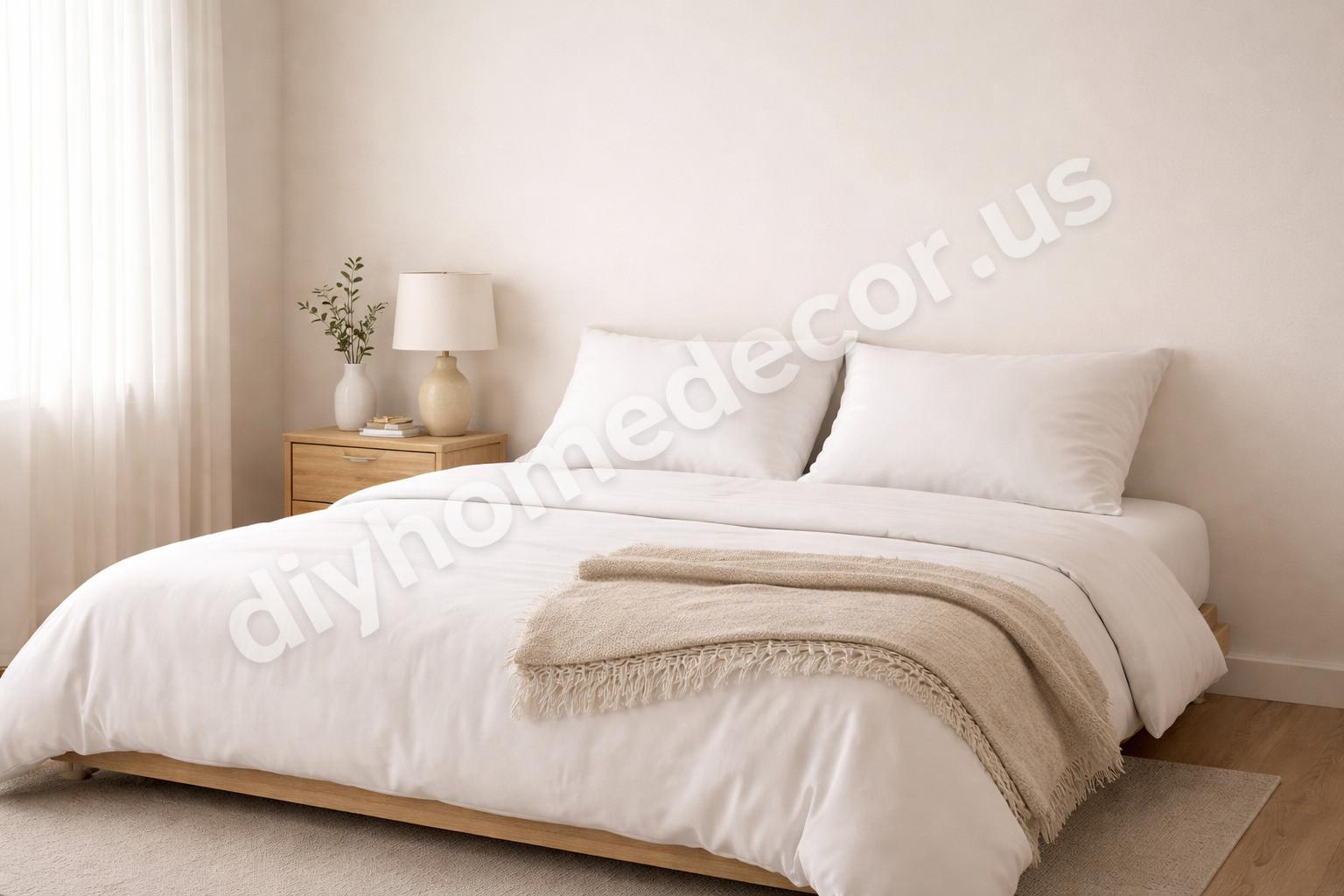
I’ve found that fewer pillows means the bed gets made more often. That sounds small, but it changes the whole room. A bed you can fix in under a minute is a lot easier to keep nice.
Add texture instead of clutter
If a room feels plain, the usual reaction is to add more stuff. But texture often works better than more objects.
A knit blanket, a woven basket, a jute rug, or a textured lamp shade can make the room feel richer without using much space. That’s the kind of detail that makes a room feel finished.
Texture gives you depth without crowding the floor.
Easy texture ideas that don’t cost much
- A cotton or linen duvet cover
- A woven laundry basket
- A chunky throw at the foot of the bed
- A small rug with subtle pattern
- Natural wood frames
I think this is where a lot of people overspend. They buy another decorative item when one better material would have done more.
Use under-bed space on purpose
Under-bed storage gets ignored because it’s not pretty, but it’s one of the best money-saving tricks in a small bedroom.
Flat storage boxes, rolling bins, or lidded containers can hold out-of-season clothes, extra bedding, or shoes you don’t reach for every week. That clears closets and drawers, which helps the whole room feel less jammed.
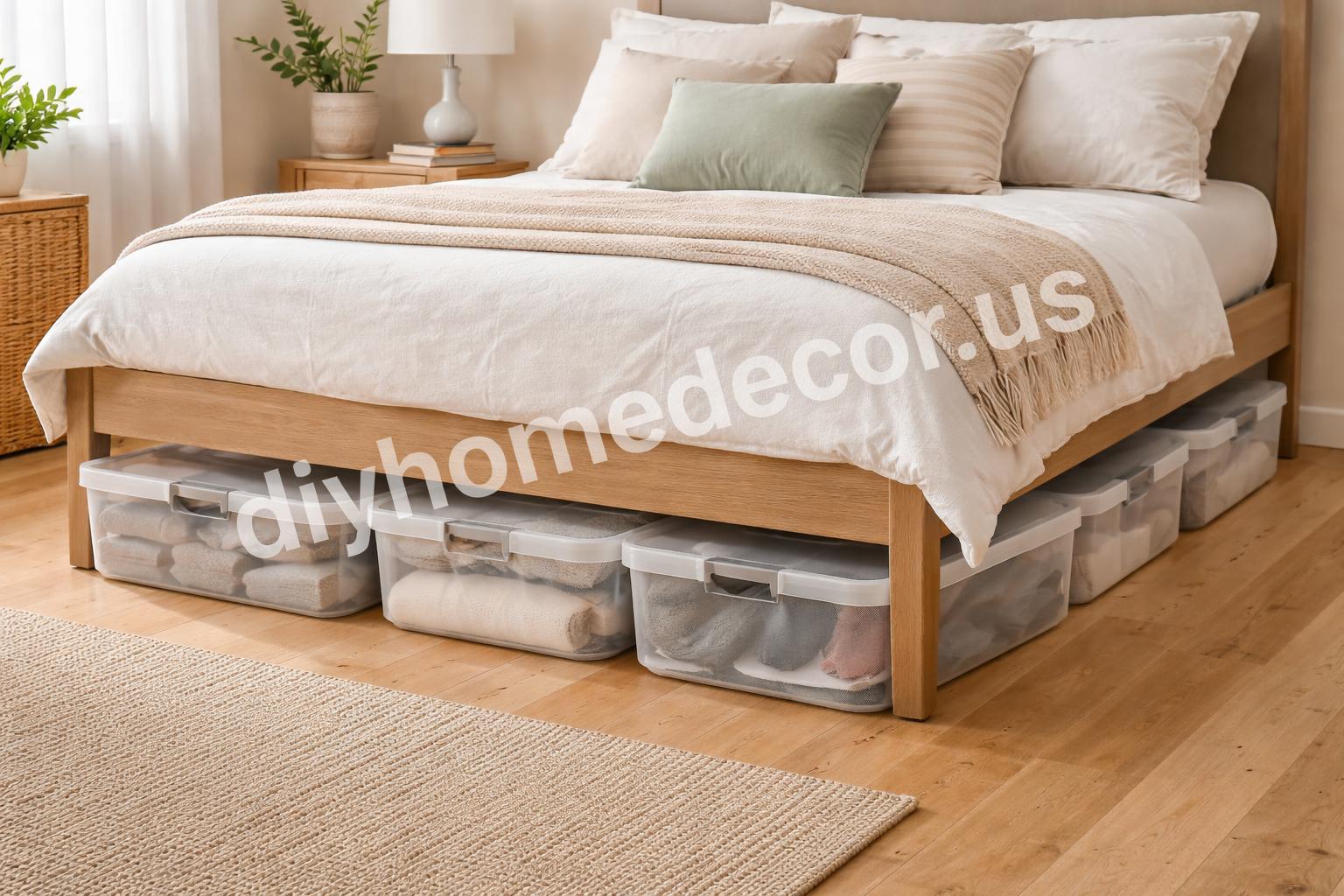
A small warning: don’t shove random stuff under there and call it storage. It turns into a mess fast. Use matching bins if you can, or at least label them.
The best under-bed setup is the one you can pull out without a fight. If it’s annoying, you won’t use it.
Hang curtains higher than you think you should
This is one of those old decorating tricks that still works. Hanging curtains closer to the ceiling draws the eye upward and makes the room feel taller.
Even if the window is small, long curtains can help the room look more finished. Short curtains can cut the wall in half and make the ceiling feel lower than it really is.
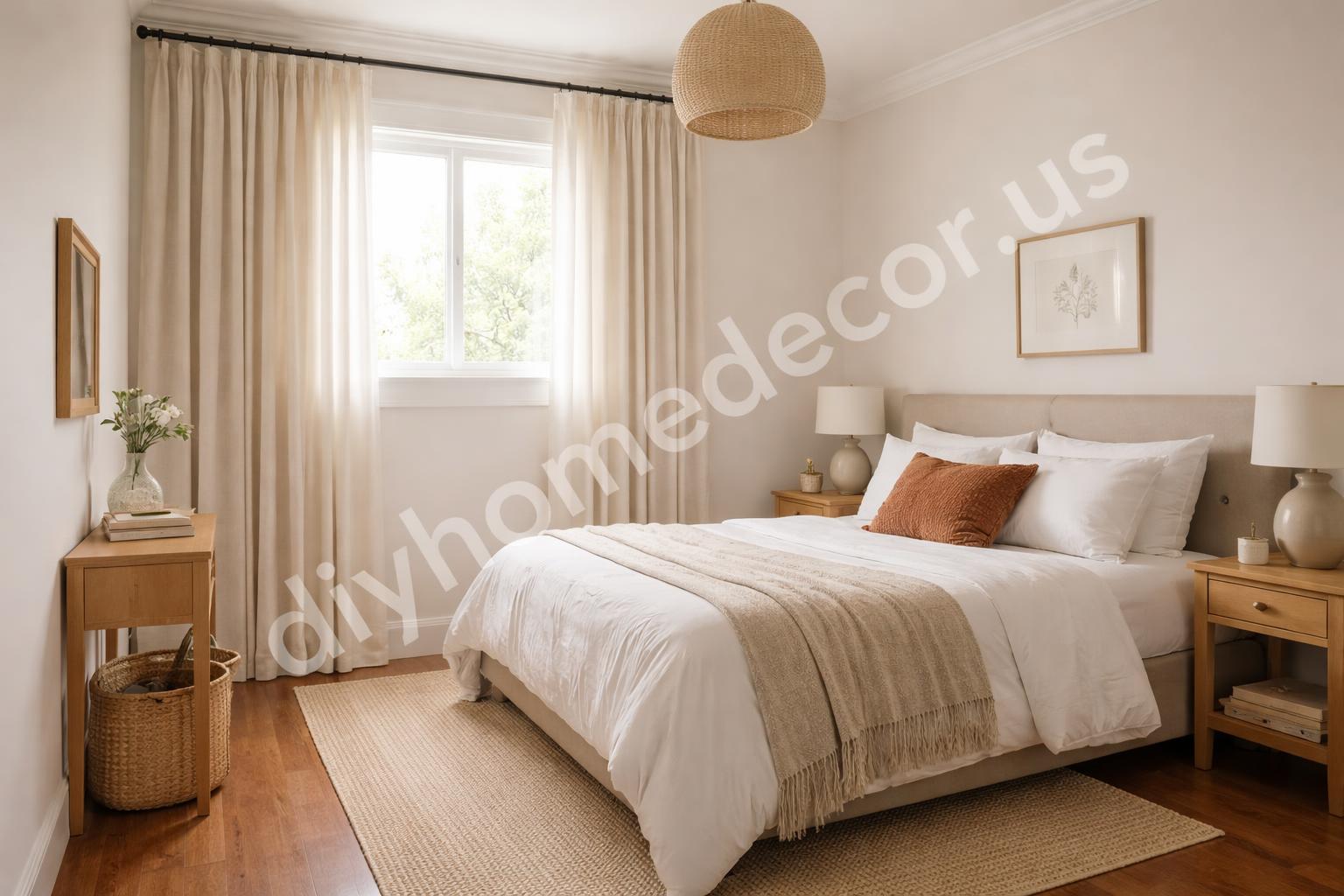
You don’t need expensive curtains either. Simple panels in a soft color often look better than heavy patterned ones in a small room.
One thing I noticed after trying this in different rooms: the rod placement matters more than the curtain itself. Move it up, and the room changes faster than you’d expect.
Use one bold thing, not five small ones
A small bedroom can handle personality, but not chaos. That’s why one bold item usually works better than five little statement pieces.
That bold thing might be a patterned pillow, a painted nightstand, an interesting lamp, or a thrifted chair. One item gives the eye somewhere to land.
If you spread the drama around too much, the room starts feeling cramped again. It’s the same reason a crowded shelf never feels calm.
Good one-piece statement ideas
- A painted accent nightstand
- A vintage lamp
- A framed oversized print
- A colorful throw
- A unique headboard
Choose one, then keep everything else quieter.
Think thrift, not just store-bought
Some of the best bedroom decorating hacks come from secondhand finds. And no, that doesn’t mean the room has to look dated or pieced together.
A used mirror, lamp base, side table, or frame can be cleaned up and used again easily. If the shape is good, the finish can often be changed later.
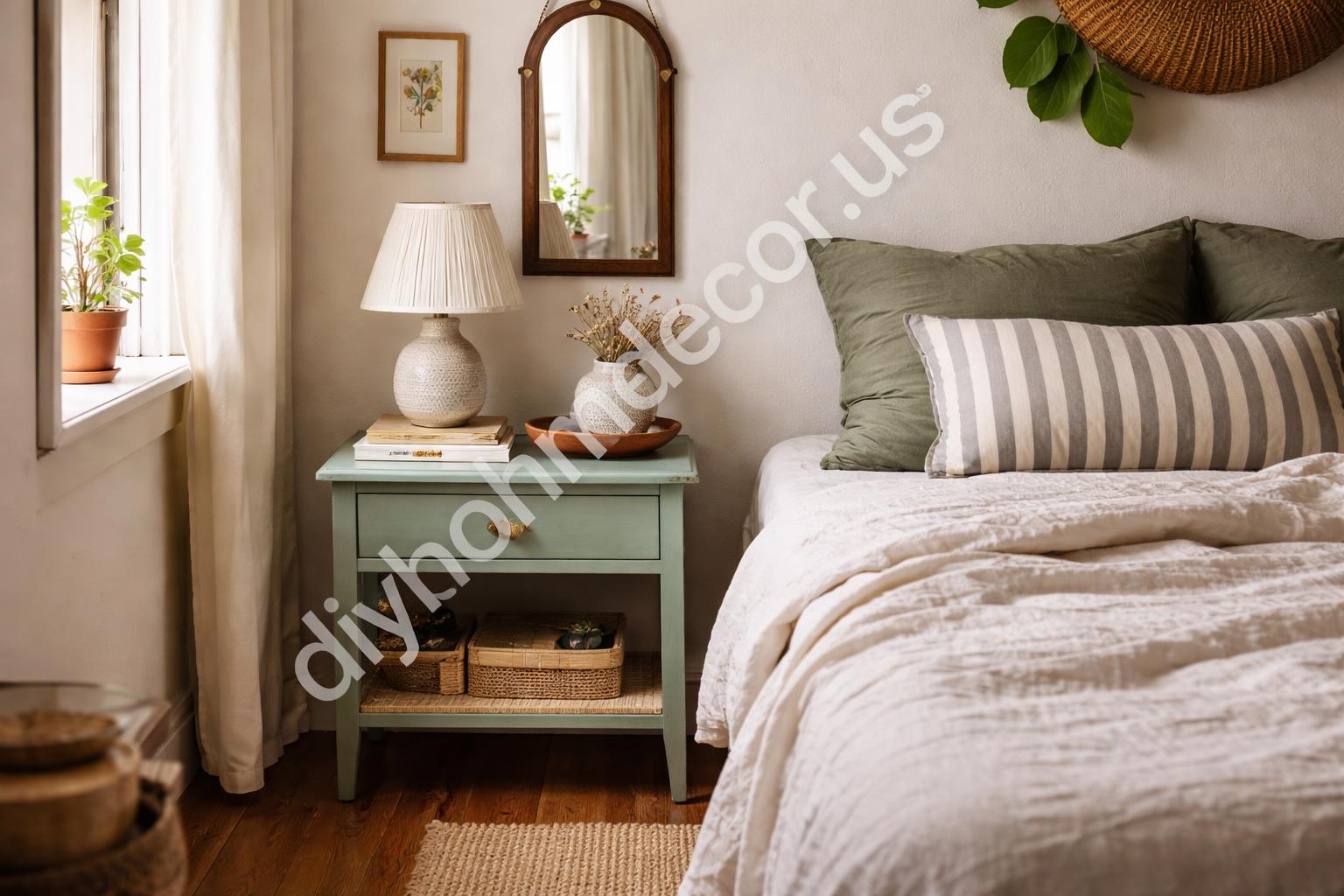
I’ve seen a lot of people skip thrift stores because they want the room done fast. That’s fair. But if you’re trying to save money, secondhand pieces are often where the budget stretches the farthest.
Just check for wobble, missing hardware, water damage, and weird smells before you bring anything home.
Keep surfaces almost empty
Dresser tops and nightstands get cluttered so quickly. That’s where a room starts feeling small, even if the furniture is fine.
A tray can help. So can a small dish for jewelry, one lamp, and maybe a book. That’s enough for most bedrooms.
A good habit is to remove one thing every time you add something new. It sounds simple, but it keeps the room from slowly drifting into clutter.
Flat surfaces need breathing room. The more crowded they are, the smaller the room feels.
Don’t ignore the floor
People spend a lot of time on walls and beds, then leave the floor feeling random. But the floor carries the whole room visually.
A rug can anchor the bed and make the space feel planned. It doesn’t have to be large or pricey. It just has to fit.
Too small, and it looks accidental. Too thick, and it can overwhelm the room. Somewhere in the middle usually works best.
For a compact room, a rug that extends a bit beyond the sides of the bed often does enough. If you’re unsure, lay it out with painter’s tape first. That little step saves a lot of regret.
A simple order for decorating without wasting money
If you’re starting from scratch or fixing a room that feels off, I’d do it in this order:
- Clear out anything you don’t use.
- Pick a calm color palette.
- Decide what the bed will look like.
- Add storage that hides mess.
- Bring in lighting.
- Finish with one or two decor pieces.
That order keeps you from buying random items just because they look nice in the store. I’ve done that before, and it’s how rooms get cluttered while still somehow missing something.
A few mistakes that make small bedrooms feel worse
These are the ones I see over and over.
- Buying furniture before measuring.
- Using too many dark colors.
- Hanging too many small decor pieces.
- Ignoring storage under the bed.
- Choosing oversized bedding.
- Letting cords and chargers take over the nightstand.
None of these are huge mistakes on their own. But together, they make a room feel tighter and more expensive to fix than it really is.
If you’re trying to stay on budget, it helps to remember that less visual noise usually beats more decor.
Final thoughts
A small bedroom doesn’t need a full makeover to feel better. A few smart choices can save space, cut clutter, and make the room feel more relaxed without spending much.
That’s the part I always come back to: the best bedroom hacks aren’t the flashy ones. They’re the ones you stop noticing because life gets easier when they’re in place.
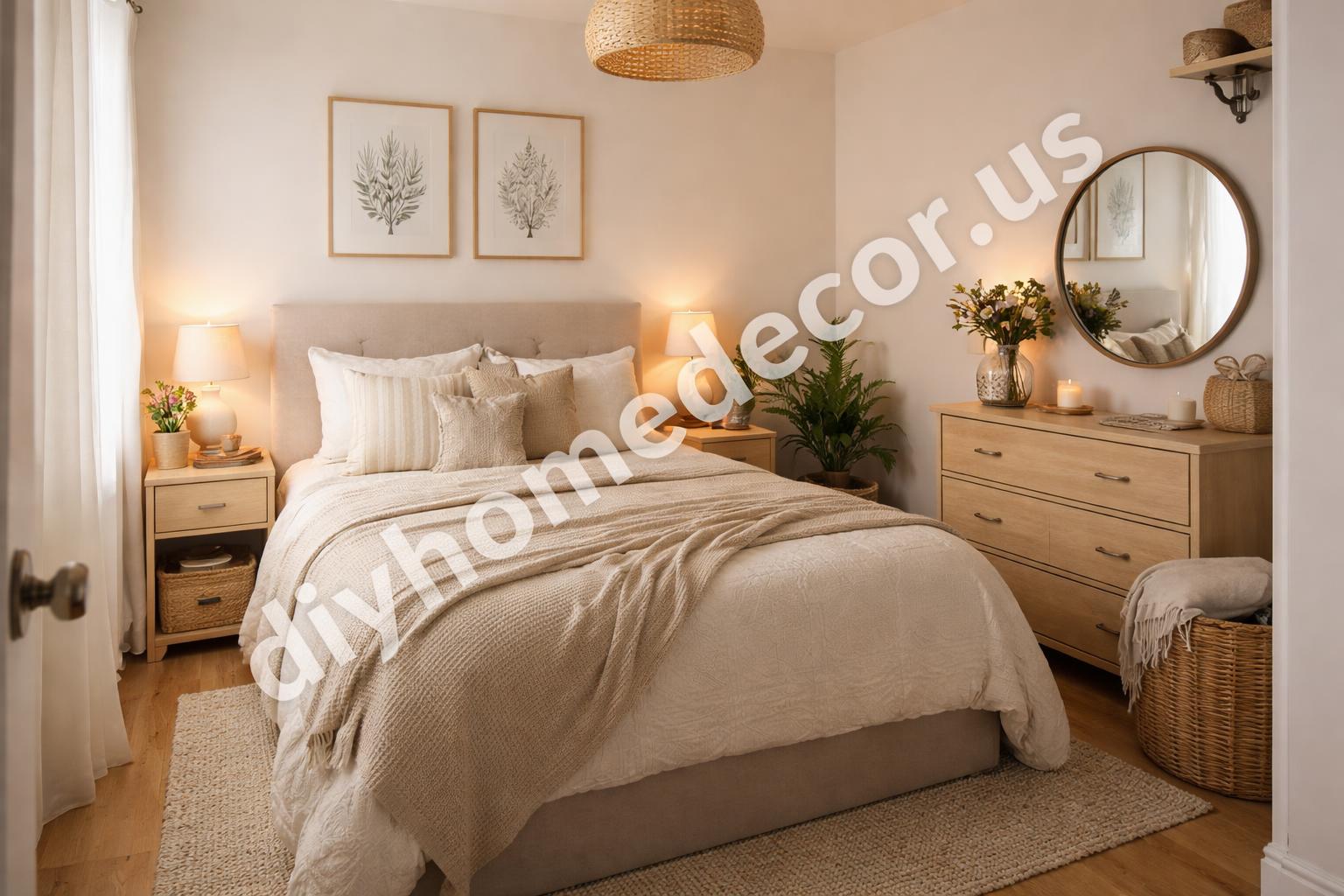
Save This Guide on Pinterest
Save this image to Pinterest so you can easily return to this guide later.