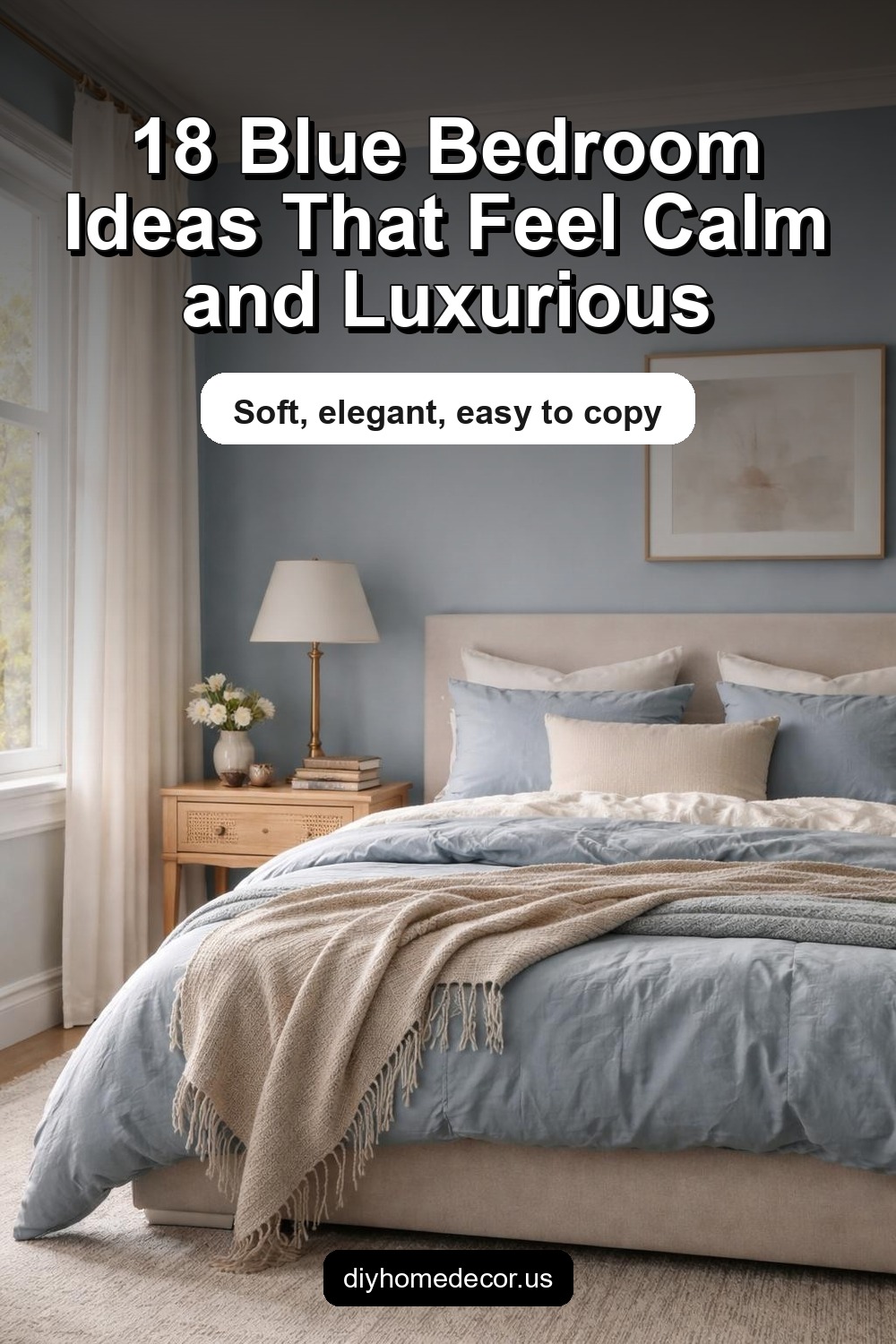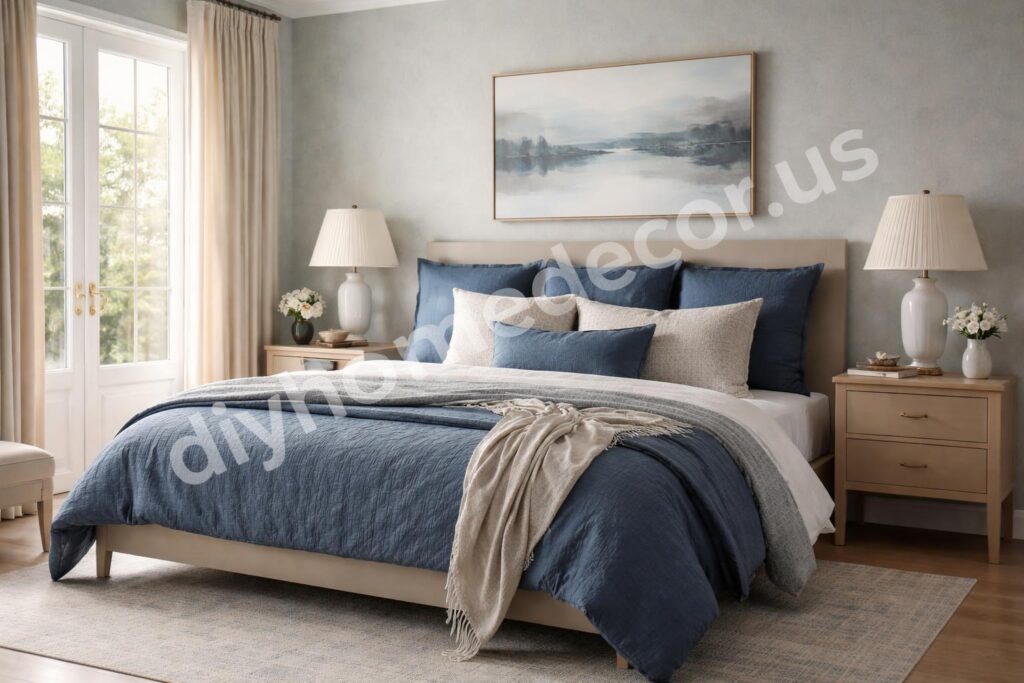
Blue bedrooms can go one of two ways. They can feel soft and restful, or they can feel cold and flat if the shades and textures don’t work together.
That’s usually the problem. A room with too much one-note blue starts looking unfinished, and then people blame the color instead of the styling. The good news is that blue is one of the easiest bedroom colors to make feel calm, layered, and expensive-looking if you use it the right way.
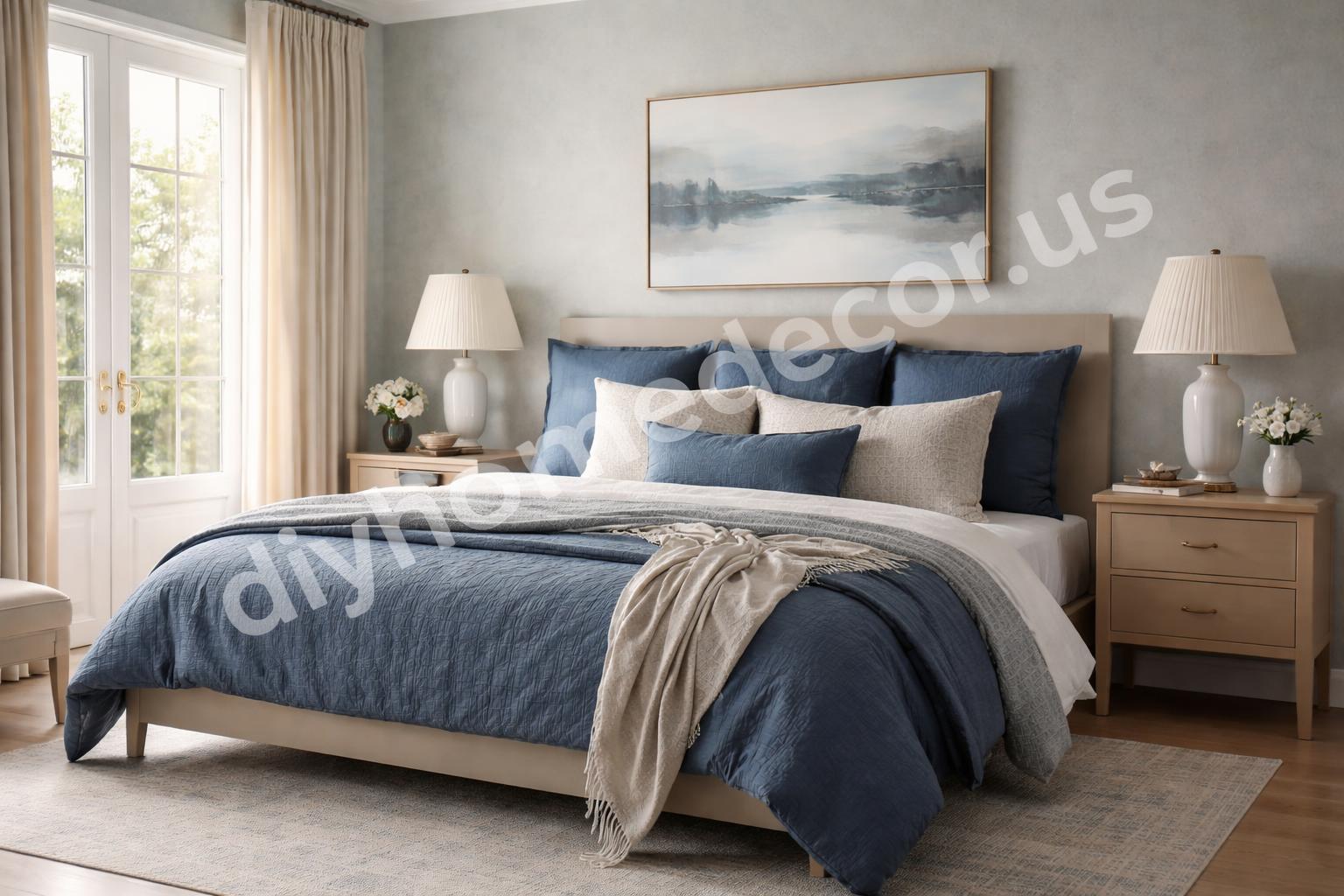
In this article, I’m walking through 18 blue bedroom décor ideas that feel polished without trying too hard. I’ll keep it practical, because the small choices matter more than people think.
Start with the blue that fits the room
Not every blue does the same job. Navy gives weight, dusty blue softens the space, and pale blue opens things up.
I’ve noticed that the room itself usually tells you what it wants. A bedroom with little natural light often looks better in mid-tone or dusty blues, while a brighter room can handle deeper colors without feeling heavy.
A simple rule helps here: deeper blue = more drama, lighter blue = more air.
If you’re stuck, test three things before buying a bunch of décor:
– the wall color in morning light
– the same color at night
– how it looks next to your bedding
That last one surprises people. A blue that looks beautiful on a paint chip can feel completely wrong once it meets your sheets and rug.
1. Use navy bedding for instant depth
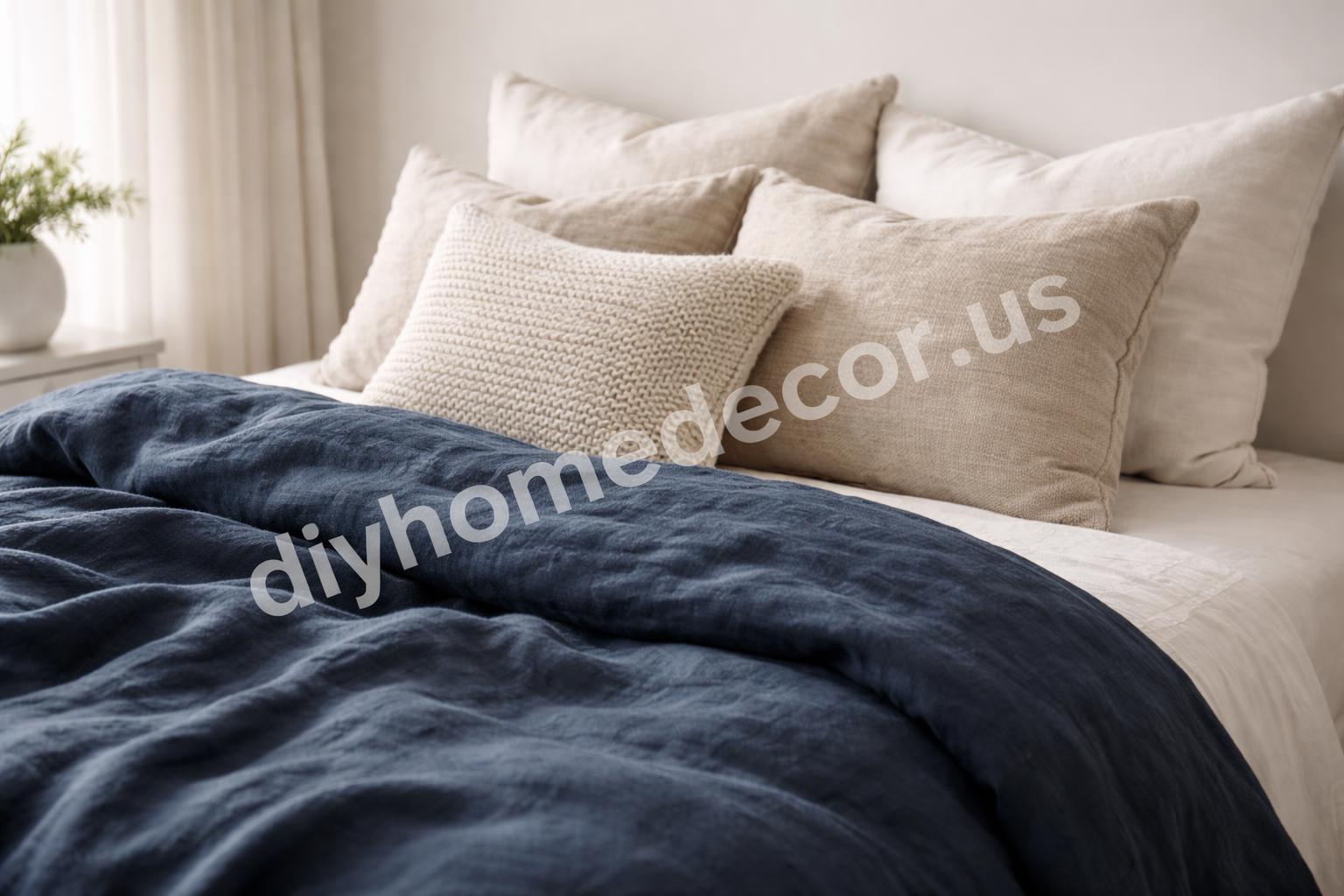
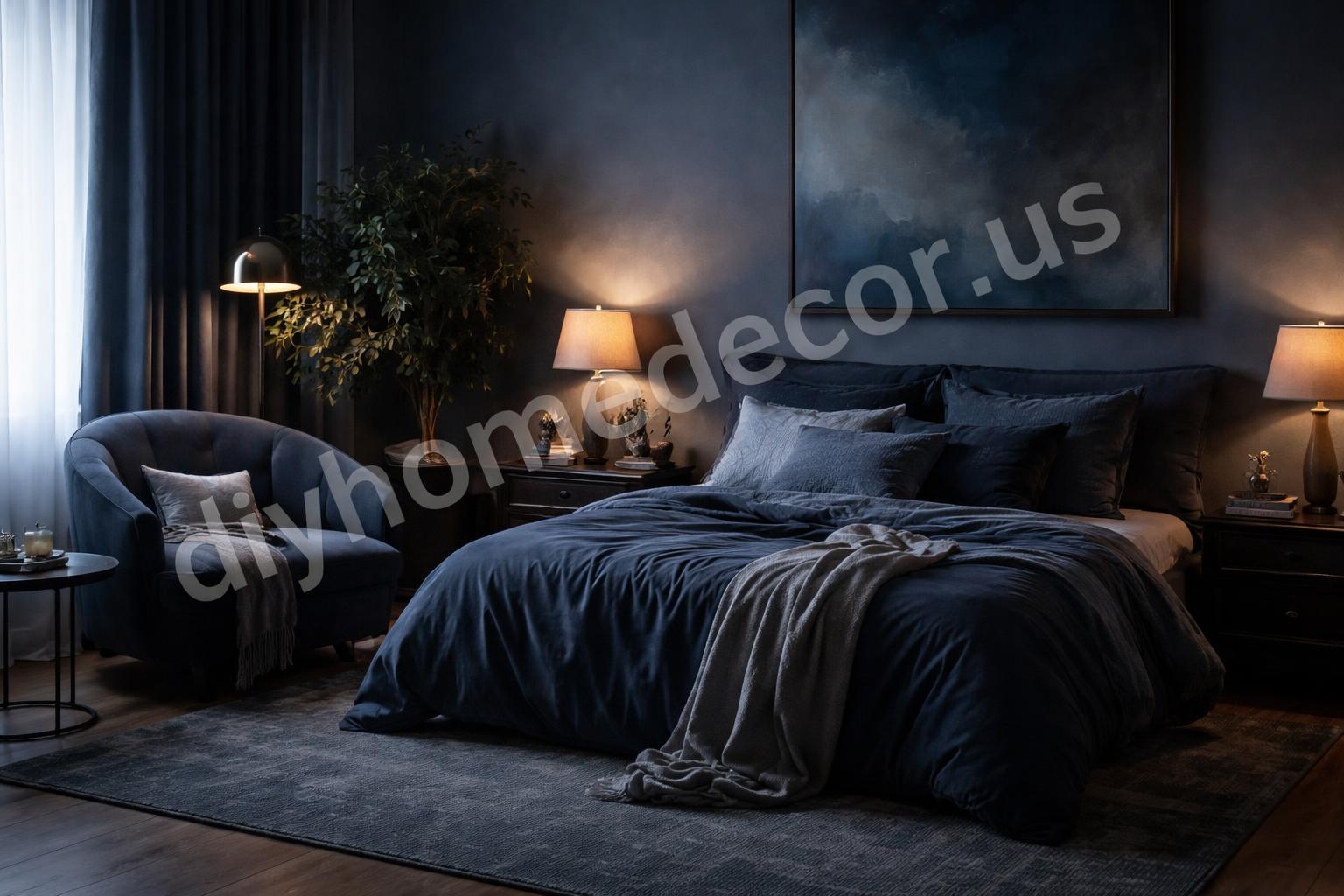
Navy bedding is the quickest way to make a bedroom feel composed. It gives the room a grounded look, especially when the walls are lighter.
The key is mixing it with soft textures, not shiny ones. Matte cotton, washed linen, or a cotton-linen blend feels calmer than anything too crisp.
2. Try a blue-and-cream palette
Blue and cream is one of those combinations that just works. It keeps the room calm, but it doesn’t feel stark the way black and white sometimes can.
Cream softens the stronger blue tones and makes the whole space feel more lived-in. For me, this is one of the easiest ways to get a luxury look without overthinking it.
3. Layer different shades of blue
One of the easiest mistakes is using only one blue everywhere. The room ends up flat.
Instead, mix three tones. Maybe a dusty blue duvet, a deeper blue throw, and pale blue art on the wall. That layered look feels more intentional and a lot less matchy-matchy.
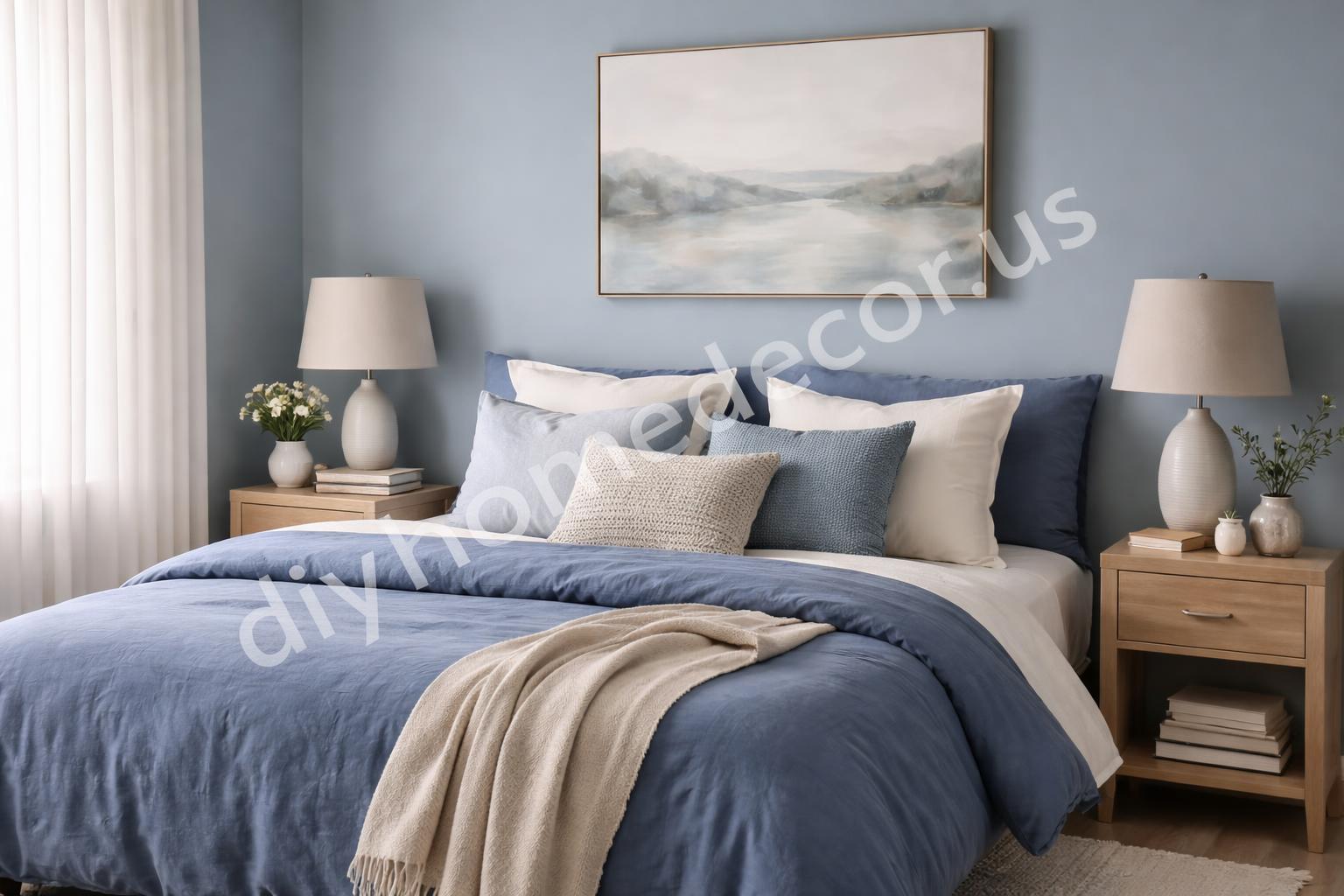
A small tip: keep at least one blue muted. If every shade is bright, the room starts looking busy fast.
4. Add velvet in a deep blue tone
Velvet is one of those materials that instantly changes the mood of a bedroom. In blue, it adds softness and a little shine without feeling loud.
A velvet pillow, ottoman, or headboard can carry the whole room if the rest stays simple. The texture does a lot of the work.
5. Choose a blue upholstered headboard
A blue upholstered headboard makes the bed look finished right away. It also gives the room a custom feel, even if the rest of the furniture is basic.
I’d lean toward curved or softly tailored shapes if you want calm. Sharp, boxy forms can look nice too, but they read more formal.
This small-bedroom décor guide with space-saving ideas is useful if your bedroom feels cramped and you want the blue to work harder without crowding the room.
Make blue feel warmer, not colder
Blue bedrooms get chilly when they don’t have enough contrast. That’s why texture matters so much.
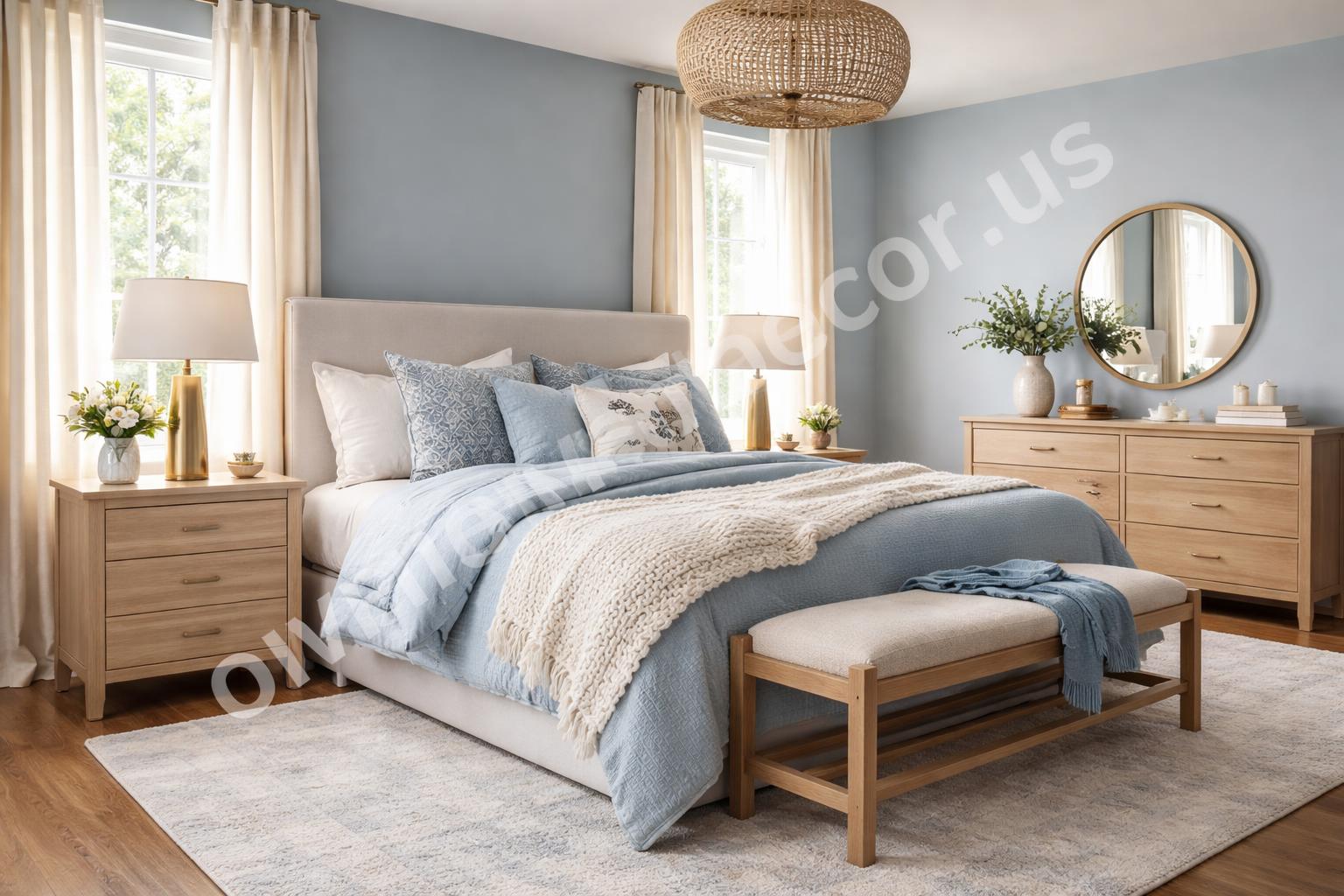
Wood, brass, woven baskets, and warm white fabrics keep the room from feeling too sharp. Even one or two warm details can make a huge difference.
6. Bring in light wood furniture
Light oak or ash tones work especially well with blue walls or bedding. They soften the color and keep the room from feeling heavy.
Dark wood can also work, but it usually pushes the room toward a more dramatic look. Light wood stays easier and more relaxed.
7. Use brass or gold accents sparingly
A little brass goes a long way in a blue room. Lamps, drawer pulls, or a mirror frame can be enough.
The mistake I see most often is using too many shiny accents. Then the room starts feeling decorative in a fussy way, not luxurious.
Think small, not glittery.
8. Mix blue with natural linen
Linen is almost always a good call in a blue bedroom. It breaks up the smoothness and makes the room feel more comfortable.
A linen duvet or curtain panel takes the edge off deeper blues. It’s one of the simplest ways to make the space feel calm instead of formal.
9. Add a patterned rug with blue in it
A rug can tie the room together fast. If it has a bit of blue in the pattern, even better.
I like rugs that don’t match the bedding exactly. Slightly off is usually better. It feels collected, not staged.
Use art and wall color to build the mood
Walls set the tone faster than almost anything else. If the room feels plain, the walls are often the reason.
Blue doesn’t have to mean an all-blue room. Sometimes one painted wall, a framed print, or a wallpaper panel is enough to create the look.
10. Paint the walls a dusty blue
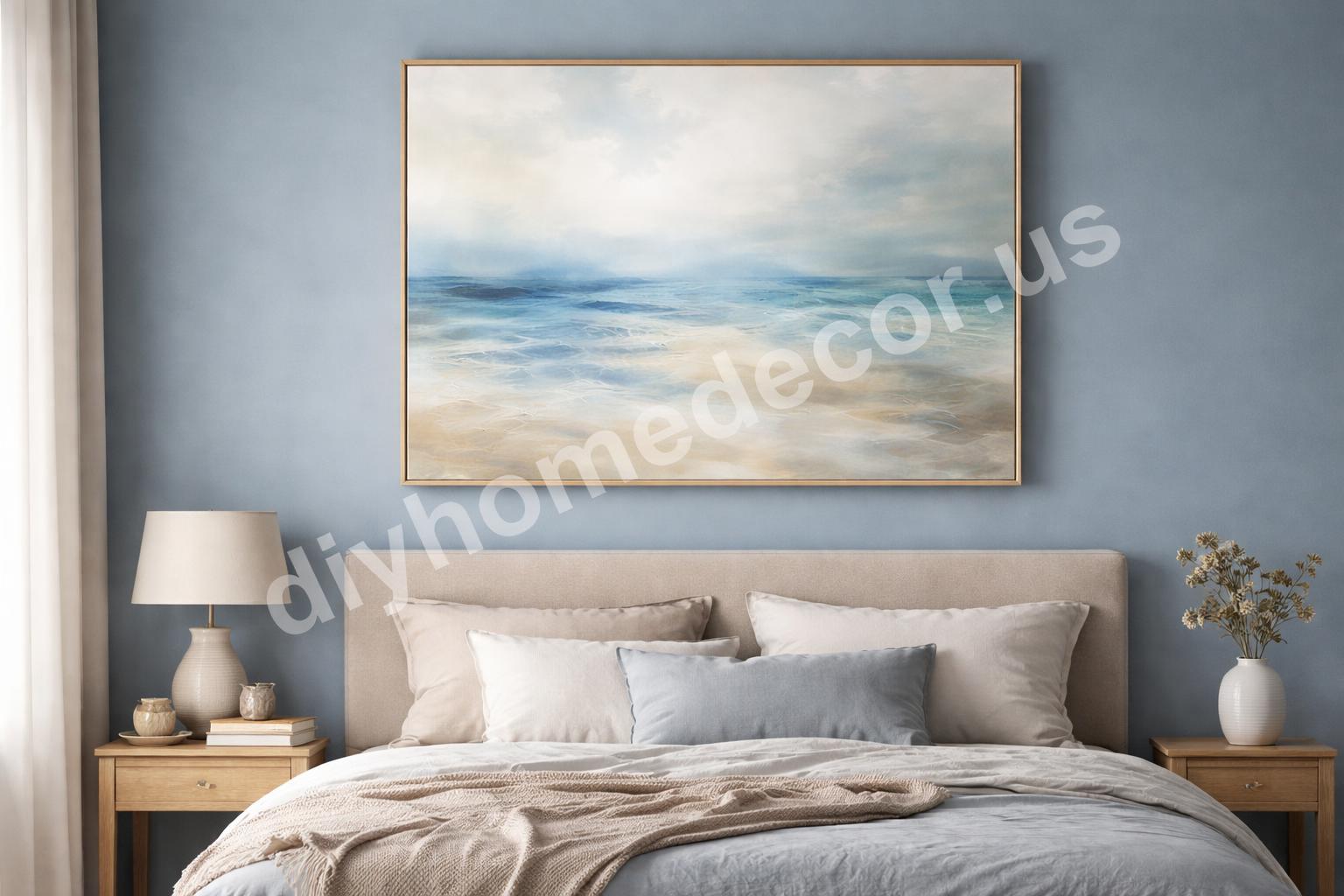
Dusty blue is one of the safest choices if you want calm and a little elegance. It feels softer than navy and less icy than pale blue.
It also works with a lot of bedding colors. White, cream, tan, gray, and deeper blue all sit well against it.
11. Try a blue accent wall behind the bed
If you don’t want the whole room painted, the wall behind the bed is usually the best one to color. It gives the room a focal point and makes the bed feel more grounded.
That said, an accent wall only works when the rest of the room is quiet. Too many competing patterns and colors will dilute the effect.
12. Hang oversized art with blue tones
Big art helps a bedroom feel more thoughtful. It fills the wall without making the room look cluttered.
I’d choose art that includes blue instead of art that is only blue. That tiny bit of variation keeps the room from feeling overly themed.
13. Use a subtle wallpaper
A soft blue wallpaper with texture, stripes, or a small-scale pattern can feel really elegant. It gives the room character without shouting for attention.
This is especially helpful in rooms that feel boxy or plain. The wallpaper adds personality, which plain paint sometimes can’t do on its own.
One thing I learned: if a pattern feels too noticeable in the sample, it’ll usually feel even louder on a full wall.
Make the bed look layered, not overdone
Most bedrooms live or die by the bed. If the bedding feels flat, the whole room does too.
The trick is keeping the bed simple but not plain. Blue works best when it has at least one soft layer and one structured layer.
14. Stack pillows in mixed blue tones
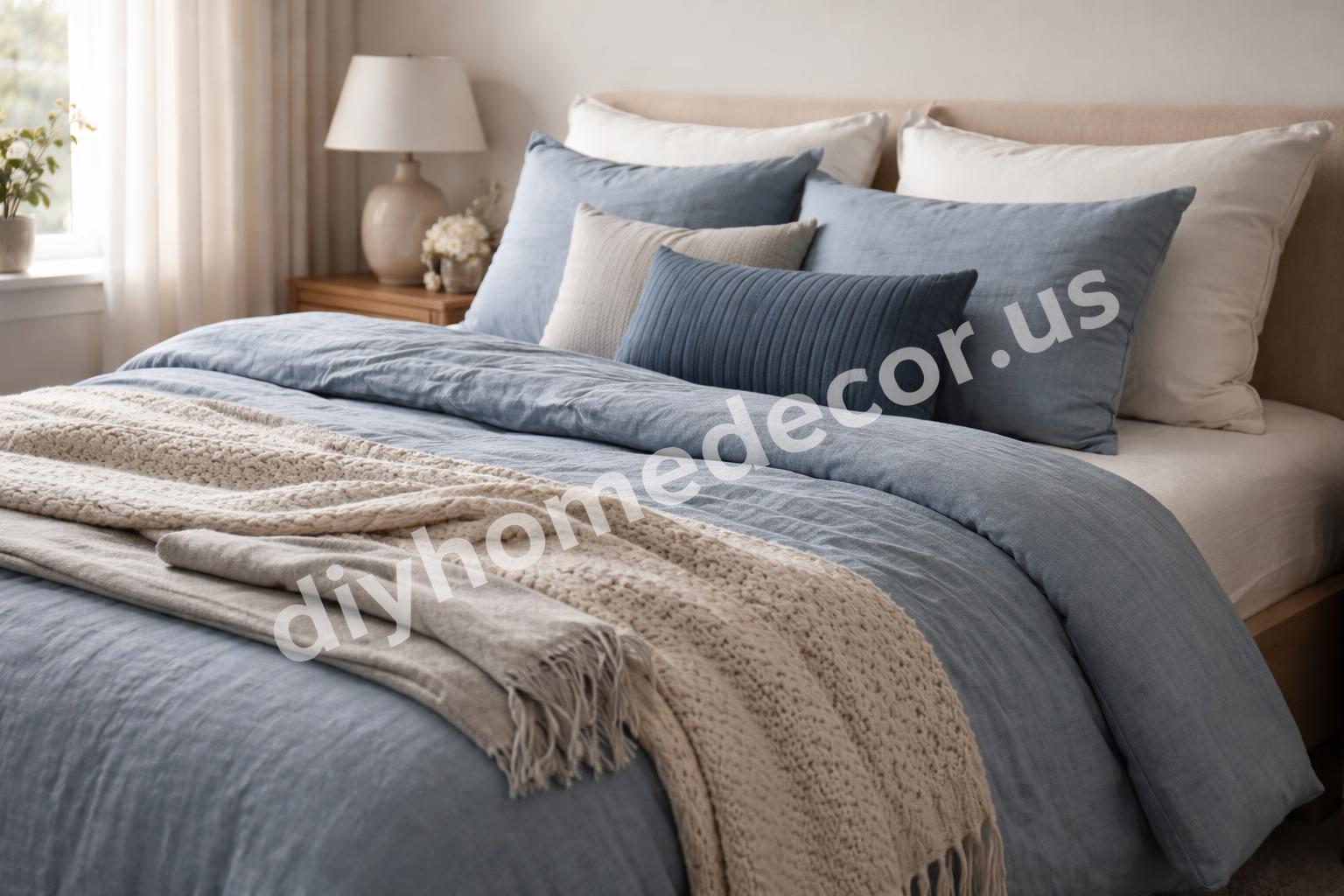
A few pillows in related shades can make the bed look much more polished. You don’t need a huge pile.
Try a simple mix:
– one or two solid blue pillows
– one lighter neutral pillow
– one texture-rich accent, like bouclé or velvet
That’s usually enough. More than that can start feeling fussy.
15. Add a textured throw at the foot of the bed
A throw blanket is practical, but it also changes the whole feel of the room. In blue, it adds another layer without much effort.
Chunky knit, waffle weave, or soft brushed cotton all work. The texture matters more than the brand name.
16. Keep the sheets lighter than the top layers
This is a small thing, but it helps a lot. Light sheets under darker blue blankets make the bed feel cleaner and less heavy.
White, ivory, or pale gray sheets also give your eyes a place to rest. The room feels calmer because not every layer is competing for attention.
17. Use matching bedside lamps for symmetry
A pair of lamps brings order to a blue bedroom. Symmetry creates a quiet sense of luxury, even when the rest of the room is simple.
I’ve found that matching lamps look especially good in rooms with blue walls, because they stop the eye from jumping around. That little bit of balance makes the whole room feel finished.
These elegant bedroom décor ideas that look five-star worthy are worth a look if you want more ways to push the room toward a hotel-style feel.
18. Finish with one moody statement piece
A blue bedroom doesn’t need a lot of drama. It just needs one thing with presence.
That could be a dark bench, a sculptural mirror, a tall plant in a ceramic pot, or a bold chair in a rich fabric. One strong piece gives the room personality without crowding it.
A few mistakes that make blue bedrooms feel cold
Blue is easy to overdo in a bedroom. When that happens, the room usually feels more chilly than calm.
Here are the main problems I see:
– Too much bright blue with no soft colors to balance it
– Only smooth surfaces, which makes the room feel flat
– No warm metal or wood, so everything reads cool
– Too many matching pieces, which makes the room feel staged
The fix is usually simple. Add texture, soften the contrast, and stop trying to make every blue item perfectly match.
Quick ways to make a blue bedroom feel more expensive
If you want the room to feel luxe without buying a lot, focus on the details people notice first.
Try this order:
- Pick one main blue shade.
- Add one lighter neutral.
- Add one warm material, like wood or brass.
- Layer two textures on the bed.
- Keep the floor and nightstands visually calm.
That sequence tends to work better than buying random décor pieces and hoping they fit together. It took me a while to realize that a bedroom often looks expensive because it’s restrained, not because it’s full.
Closing thought
Blue bedrooms work best when they feel soft at first glance and a little richer the longer you look. That’s usually the sweet spot.
If you keep the palette steady, add texture, and leave a little breathing room, blue can do almost all the heavy lifting for you. And honestly, that’s what makes it such a good bedroom color in the first place.
Save This Guide on Pinterest
Save this image to Pinterest so you can easily return to this guide later.