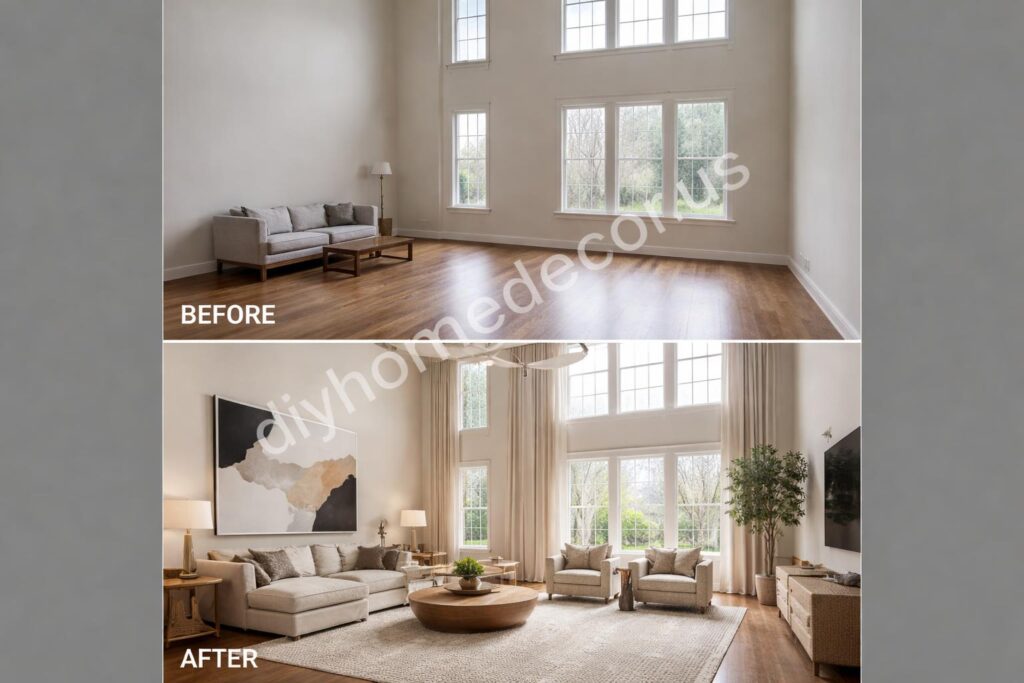
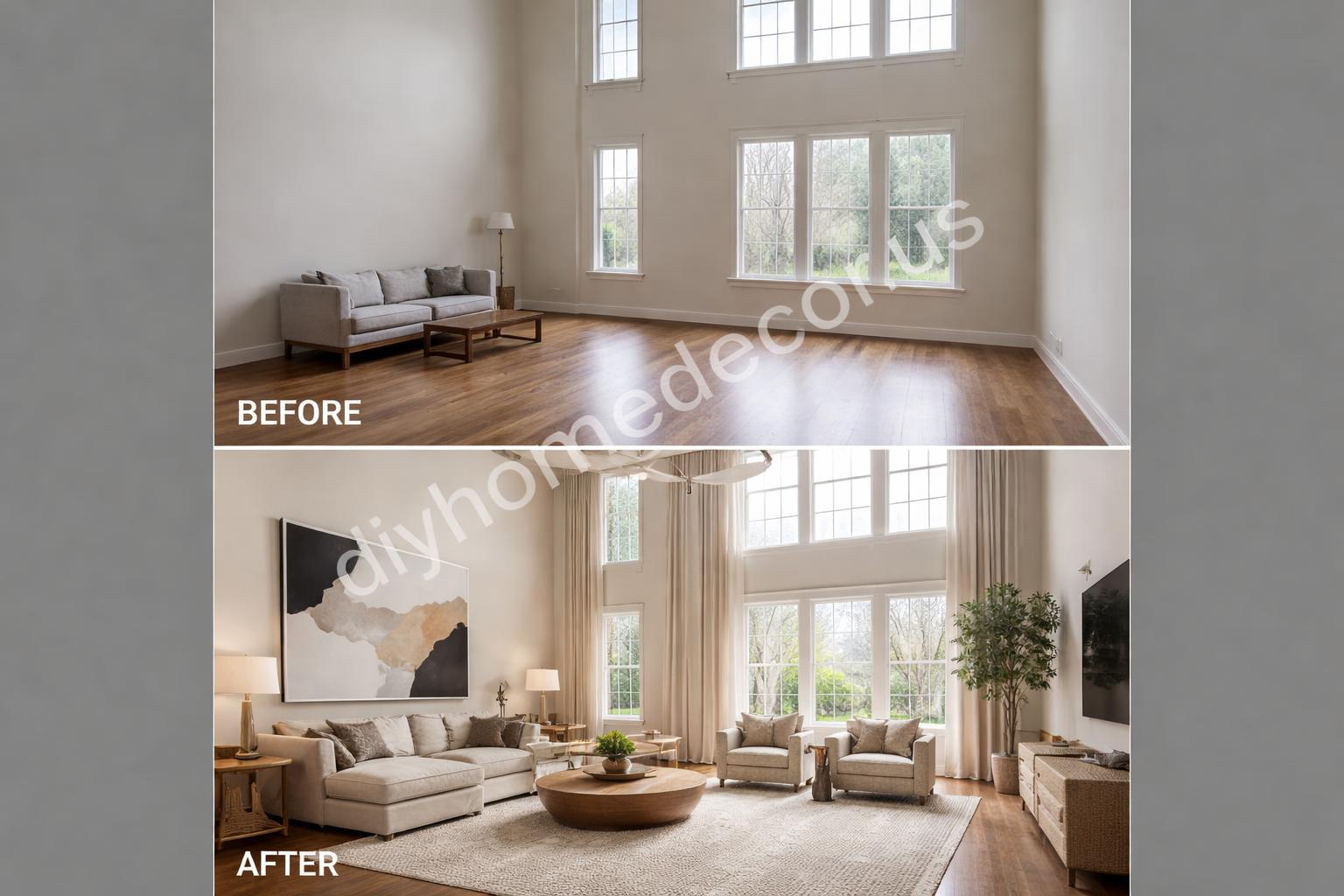
High ceilings sound great until the room starts feeling a little empty, echoey, or oddly unfinished.
That’s usually when people realize the problem isn’t the size. It’s the balance. If you leave all the visual weight down low, the room can feel like it’s floating away from you.
The good news is that you don’t need a huge budget or fancy custom furniture to fix it. You just need to work with the height instead of ignoring it, and a few smart choices make a big difference. Here’s how I’d approach decorating a high-ceiling living room so it feels warm, grounded, and pulled together.
Start by giving the room a vertical reason to exist
A room with tall walls needs something that visually climbs. Otherwise, all that height just turns into blank space.
That doesn’t mean you need to fill every wall. It means you need one or two strong vertical moments, like tall curtains, a large piece of art, an oversized mirror, or built-in shelving that draws the eye upward.
I’ve seen people make the mistake of buying small decor because they’re afraid of “too much” in a big room. But in a tall room, small pieces usually look timid. Scale matters more than quantity.
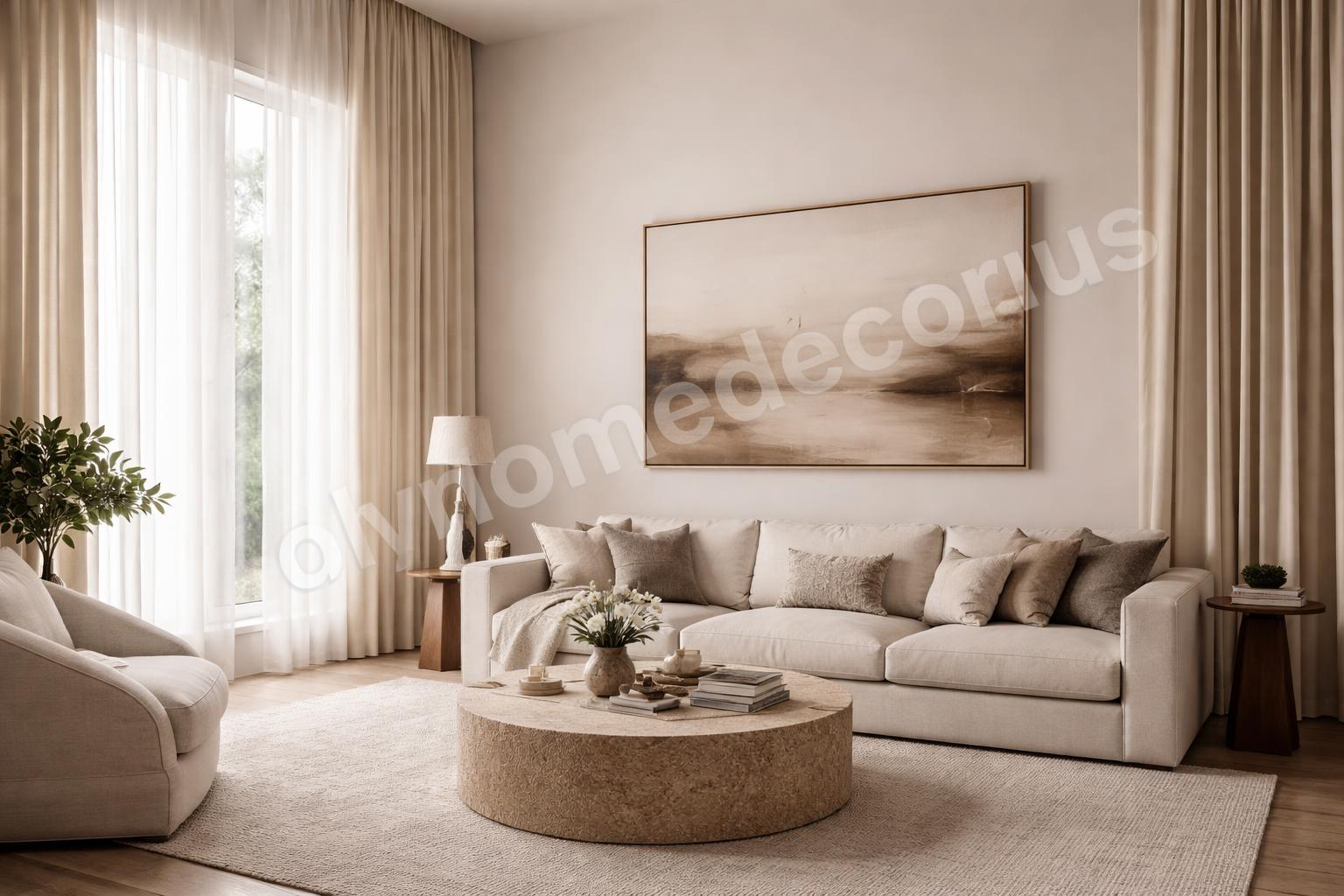
A simple rule helps here:
- Use tall items near the walls
- Use heavier, wider pieces near the floor
- Repeat shapes so the room feels connected
That balance keeps the room from feeling top-heavy or bare.
Pick furniture that anchors the space
High ceilings can make regular furniture look even smaller than it really is. So the first thing I look at is not decor, but the size and shape of the main furniture.
A low, shallow sofa can get lost in the room. A deeper sofa with a larger silhouette usually feels better. The same goes for coffee tables, side chairs, and console tables. They should hold their own.
This is also where the room’s “visual center” matters. Most living rooms with tall ceilings need a strong anchor in the middle. A big sectional, a substantial rug, or a wide coffee table can do that job.
A quick furniture check
If your room feels sparse, ask yourself:
- Is the sofa too small for the wall behind it?
- Is the rug too tiny to hold the seating area together?
- Are the side tables so light that they disappear?
- Does the room need one piece with real weight?
A lot of people try to fix tall walls with wall decor alone. That rarely works. The furniture has to carry some of the visual load first.
Use rugs to make the room feel closer to human scale
This part gets overlooked a lot. A rug can completely change how a high-ceiling room feels because it brings the eye back down.
A too-small rug makes the room look scattered. A properly sized rug, on the other hand, pulls the seating area into one clear zone. That’s especially helpful when the room has extra height and maybe even an open floor plan.
For me, this was one of those small lessons that took a while to sink in. I used to think any rug would help. It doesn’t. The wrong rug just looks like a rug that got dropped into the room by accident.
A good rug should usually extend under at least the front legs of the sofa and chairs. In larger spaces, going bigger often looks better than trying to save money with a smaller size.
Tip: If you’re unsure, go one size larger than your first instinct. In tall rooms, undersized usually reads worse than oversized.
Layer the walls instead of leaving them blank
Blank walls are the biggest giveaway that a high-ceiling room hasn’t been finished yet. But the answer isn’t always one giant framed print.
Sometimes the room looks better with layered wall treatment. Think gallery walls, pairs of art, sconces, picture ledges, or even a mix of art and shelves.
The key is to keep the arrangement connected to the furniture below it. Art that floats too high can make the room feel detached.
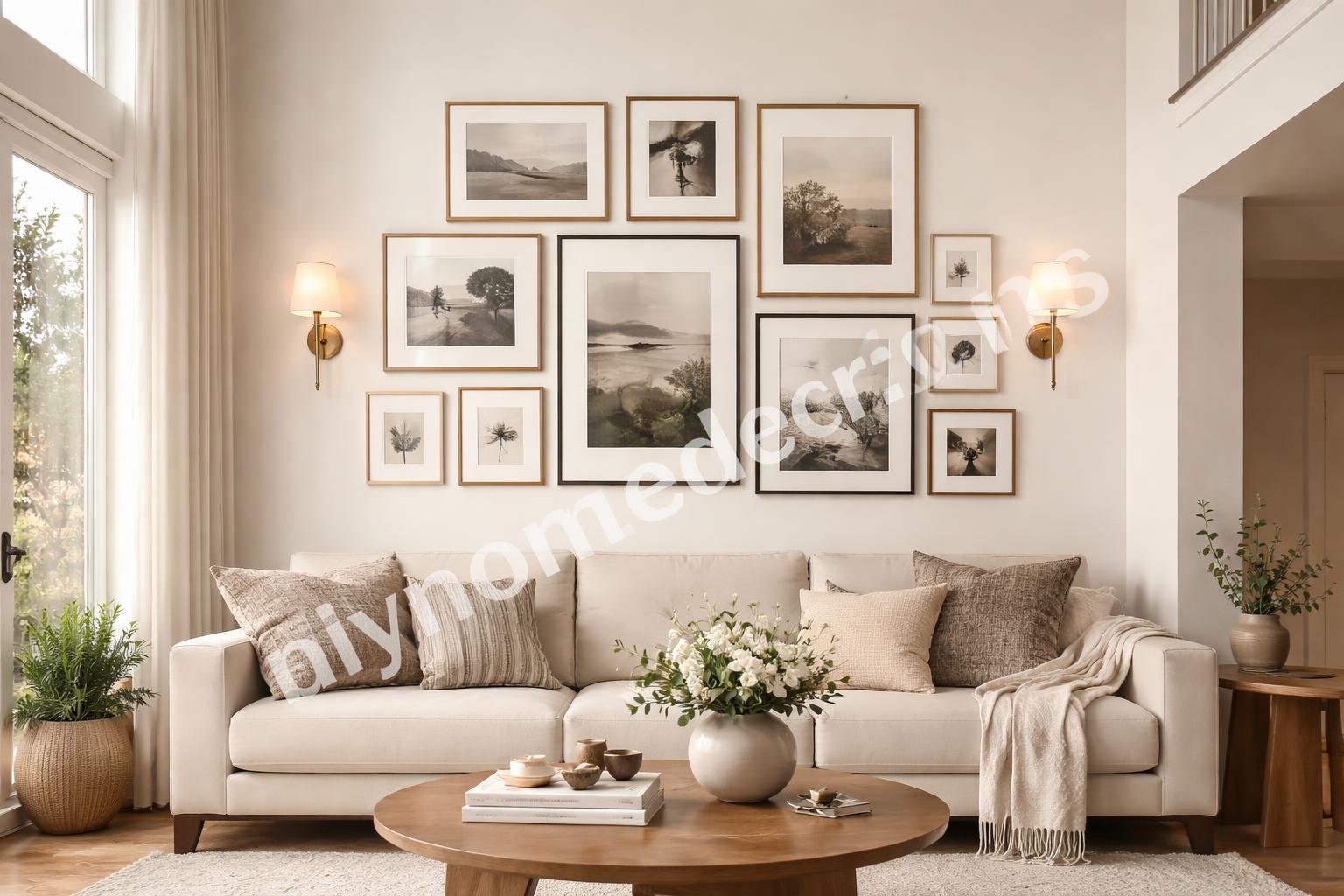
Here are a few wall ideas that work well in high spaces:
- One oversized artwork above the sofa
- A symmetrical pair of pieces on a large wall
- A gallery wall that rises upward in a loose grid
- Tall shelving with decor layered at different heights
If the ceiling is really high, I like using art that starts lower than people expect. That helps the room feel grounded instead of formal and stiff.
Choose lighting that reaches up
Lighting does a lot more than brighten a room. In a high-ceiling space, it also helps define the room’s scale.
A small flush mount on a tall ceiling usually looks like an afterthought. A larger pendant, a chandelier, or even a statement ceiling fan with integrated lighting can give the room presence.
And because the ceiling is high, the light source often needs to be slightly bolder than you’d use in a standard room.
You don’t need the fanciest fixture. You just need one that feels proportionate.
If you’re thinking about mixing light sources inside and around the room, I like the same kind of logic used in outdoor design. This guide on how to mix solar and LED garden lighting decor like a designer is outdoors-focused, but the broader lesson applies indoors too: combine different layers so the space feels intentional, not flat.
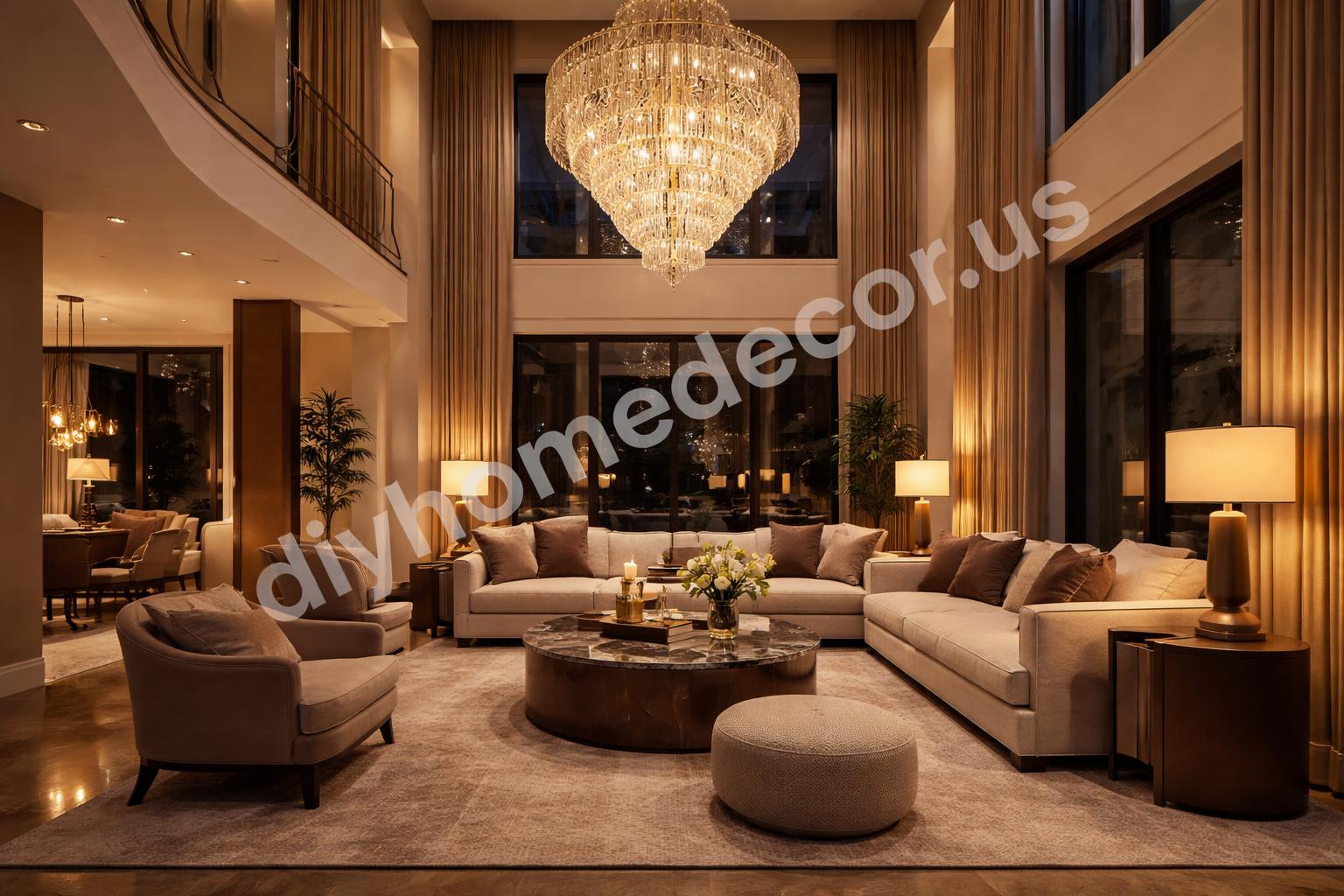
A simple lighting setup often works best:
- One main overhead fixture
- Floor lamps near seating corners
- Table lamps for softer evening light
- Accent lighting for shelves or art
That mix helps a tall room feel cozy after dark. Without it, the room can turn into one bright ceiling with a dark bottom half, which is never flattering.
Bring the ceiling down visually with repeated shapes
This is one of those tricks people don’t always notice, but they feel it.
If you repeat similar shapes at different heights, the room becomes easier to read. For example, a round coffee table, a round mirror, and a round light fixture create a kind of rhythm. Same with arches, curves, or even a series of tall rectangular forms.
It keeps the eye moving without making the space feel busy.
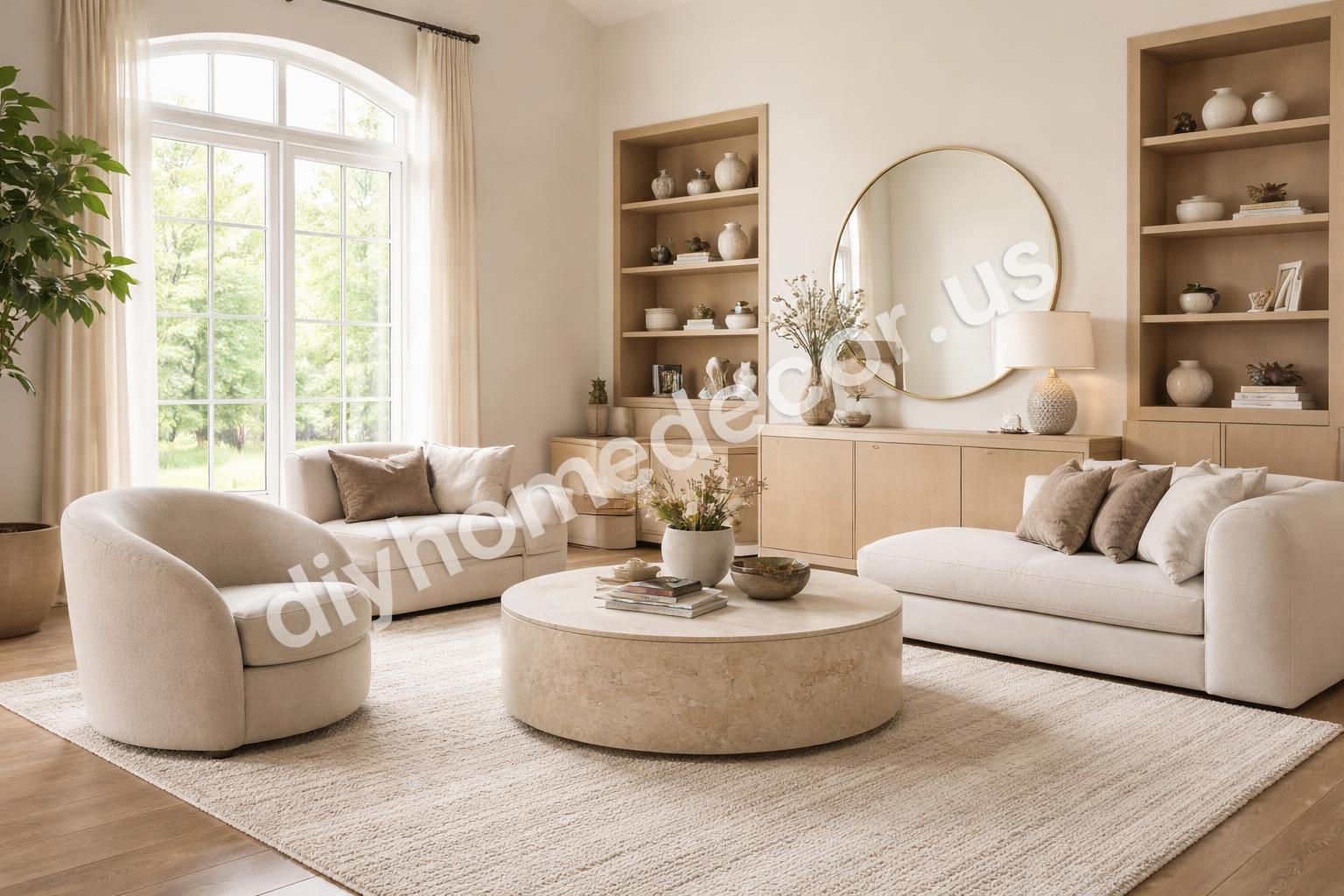
A few ways to do that:
- Match the shape of your mirror to your coffee table
- Echo the lines of the ceiling with tall bookcases
- Repeat the same finish in a few places, like black metal or warm brass
- Use pairs when one item looks too lonely
That last point matters more than people think. In tall rooms, one little lamp on one side of the room can look stranded.
Add softness so the room doesn’t feel like a lobby
High ceilings can make a living room feel elegant, but they can also make it feel cold. That’s where soft textures save the day.
Curtains, cushions, throws, upholstered chairs, fabric shades, and even woven baskets all help take the edge off. A room with height needs some softness or it starts feeling too architectural.
I’ve noticed that a lot of people stop after buying one nice sofa and maybe a rug. The room still feels empty because there’s nothing soft above eye level or along the edges. That’s when drapes and layered textiles start earning their keep.

A few good texture choices:
- Linen or velvet curtains
- A chunky knit throw
- Upholstered accent chairs
- Cane, wicker, or rattan details
- Fabric lampshades instead of hard metal ones
And yes, you can still keep it modern. Cozy doesn’t have to mean cluttered.
Use curtains to make the windows feel taller and the room feel finished
If there’s one thing I’d call almost non-negotiable in a tall living room, it’s curtains hung high and wide.
Hanging curtain rods close to the ceiling, or at least well above the window frame, makes the windows feel more generous. It also helps connect the wall space to the floor, which is useful when the room feels too stretched out.
The trick is not just height. Width matters too. Curtains should ideally extend beyond the window frame so they don’t block the glass when open.
If you want a simple place to browse modern-looking options without overpaying, this roundup on where to buy modern living room decor online for less is a useful starting point. When you compare stores, look at final price, shipping, fabric length, return policy, and seller trust, not just the first number you see.
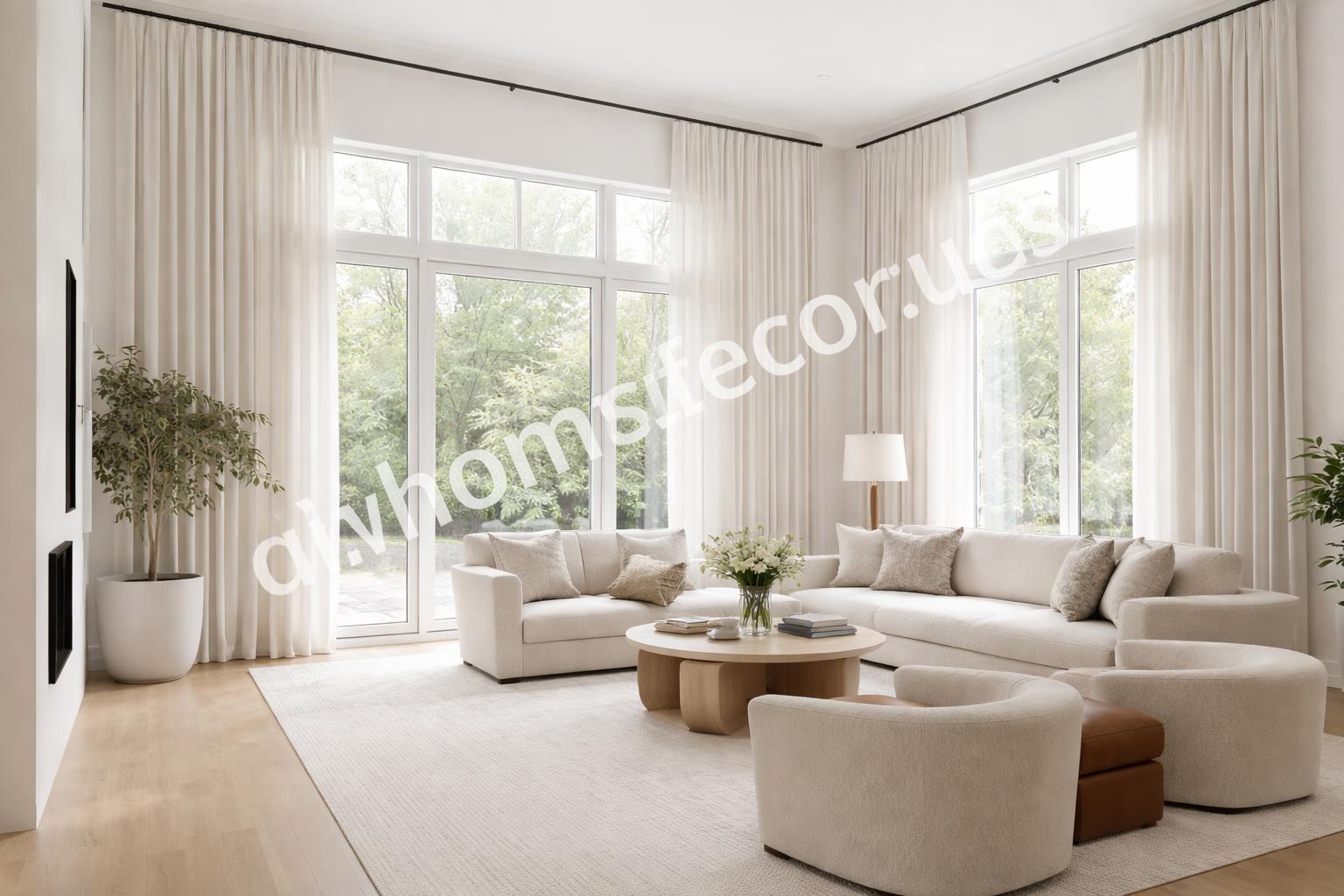
Curtains are one of the fastest ways to make a room feel more finished. They do a lot with very little effort.
Don’t forget the ceiling itself
A lot of people decorate around the ceiling and never actually look at it. That’s a missed opportunity.
In a room with tall ceilings, the ceiling is part of the design. A simple paint treatment, wood beams, subtle molding, or even a softer ceiling color can change the whole feel of the room.
You don’t need a dramatic architectural feature. Sometimes just painting the ceiling the same warm tone as the walls makes the room feel less echoey and more connected.
That said, the ceiling shouldn’t fight the rest of the room. If your decor is already busy, keep the ceiling calm.
Good ceiling moves in a high room
- Paint it a warmer white instead of a bright cold white
- Add simple beams if the style fits
- Use subtle trim to define the upper wall
- Keep huge lighting fixtures balanced, not oversized for the sake of it
A high ceiling can handle drama, but it still needs restraint somewhere else.
Style shelves and corners so they don’t look forgotten
Corners and shelves are usually where high-ceiling rooms start to fall apart. Those are the places that end up looking empty or random.
Tall bookcases, open shelving, or a built-in cabinet can make a corner feel deliberate. Even a single plant on a stand can help if the rest of the room already has enough furniture.
One thing I learned is that floor-level decor matters more than people expect in big rooms. A tall vase, stacked books, a basket, or a substantial plant can stop the room from feeling like everything is hovering in the middle.

When styling shelves, keep this simple:
- Mix books with a few larger objects
- Leave some open space
- Repeat materials so it doesn’t look random
- Use height changes, not tiny filler pieces
Too many small decorative objects just get swallowed by a tall room.
A simple order of operations helps
If you’re starting from scratch, don’t try to decorate everything at once. It usually leads to random purchases and a room that never quite lands.
Start with the big pieces first, then layer in the finishing touches.
- Choose the rug
- Place the main seating
- Pick the lighting
- Add curtains
- Fill the walls
- Style the corners
- Finish with soft decor and accessories
That sequence sounds basic, but it saves a lot of backtracking. If you pick small decor too early, you’ll end up trying to build a room around things that were never the right size to begin with.
Big takeaway: In a high-ceiling living room, the order matters almost as much as the decor itself.
A few mistakes that keep showing up
Some decorating mistakes are really common in tall rooms, and once you notice them, you can’t unsee them.
- Tiny art above a large sofa
- Curtains hung too low
- Small lamps used as the main lighting
- A rug that’s too small for the seating zone
- Too many small accessories with no visual anchor
I’ve also seen people try to make the room feel cozy by adding lots of little items everywhere. That usually backfires. The room ends up looking busy, not warm.
A few larger pieces almost always work better than a pile of small ones.
What makes a high-ceiling living room feel good to live in
The nicest high-ceiling rooms usually share the same feel: they’re balanced, a little layered, and not afraid of scale.
They don’t try to hide the height. They use it. But they also give your eye enough places to rest, so the room still feels comfortable.
If you want one final filter, use this: does the room feel grounded from the sofa level upward? If the answer is no, you probably need bigger anchors, softer textures, or more vertical balance.

A room like that doesn’t happen by accident. But once the main pieces are in place, it gets much easier to make the rest of it feel natural.
And honestly, that’s the part I like most. A high-ceiling living room can look impressive, sure, but the real win is when it also feels like a place you actually want to sit down and stay awhile.
Save This Guide on Pinterest
Save this image to Pinterest so you can easily return to this guide later.