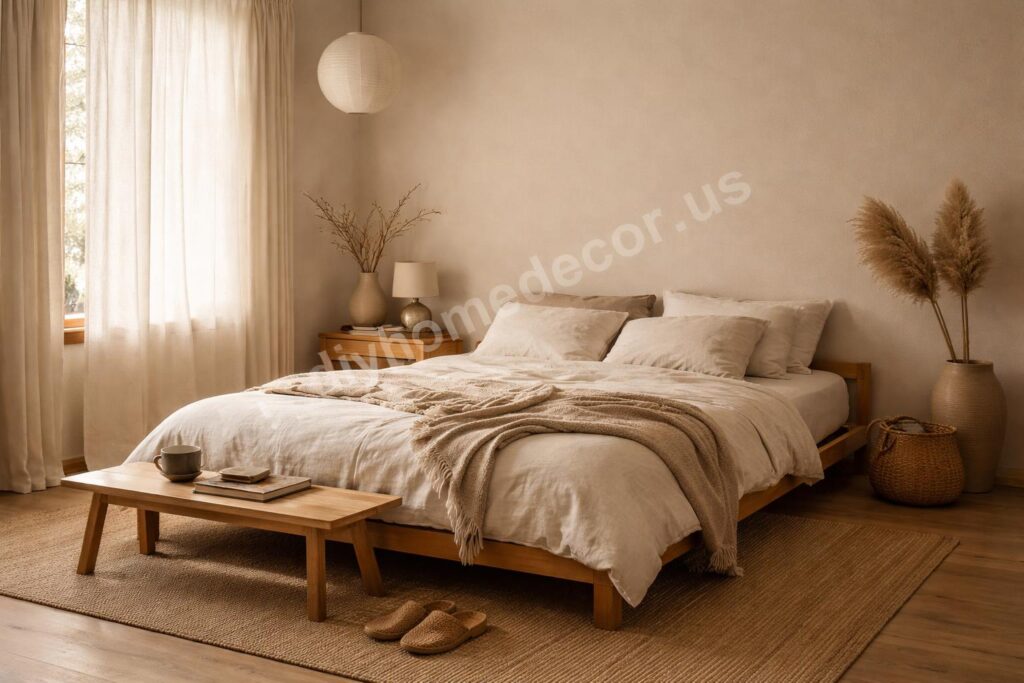
A bedroom can look calm on paper and still feel messy in real life. Too much contrast, too many objects, or just one wrong texture can throw the whole mood off.
That’s where Japandi style helps. It keeps the room soft, simple, and warm, so the space feels restful instead of empty.
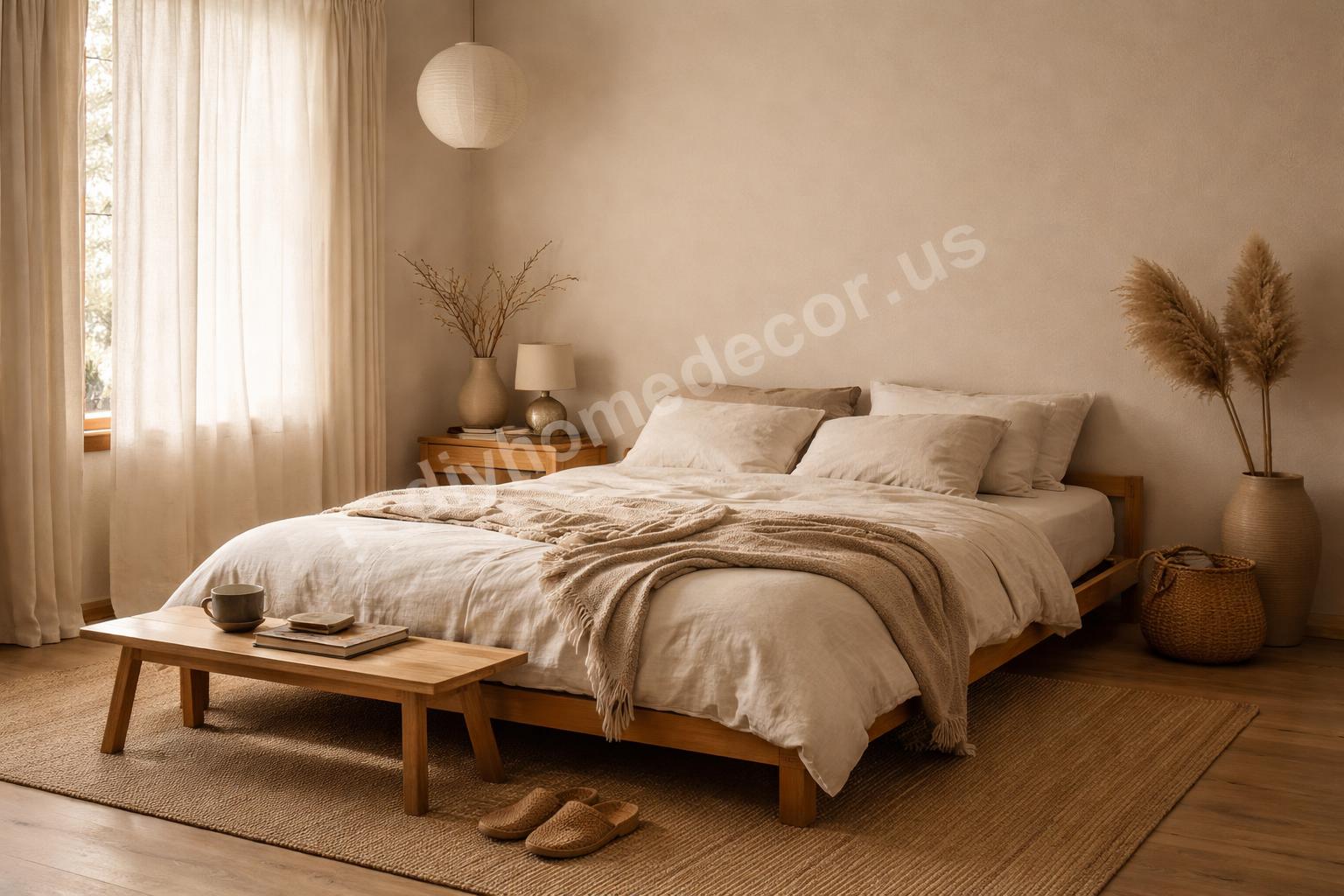
If you’ve been trying to make your bedroom feel quieter without making it cold, you’re in the right place. I’m walking through 17 Japandi bedroom décor ideas that make sense in real homes, not just styled photos.
Start with the Japandi basics
Japandi works because it pulls from two ideas that already get along well: Japanese simplicity and Scandinavian comfort. The result is a room that feels neat, but still lived in.
The biggest mistake is trying to make it look “minimal” by removing everything. That usually leaves a bedroom feeling flat. Japandi is about restraint, not emptiness.
A few things should show up again and again:
- natural wood
- low, simple furniture
- soft neutral colors
- clean lines
- cozy but unfussy textures
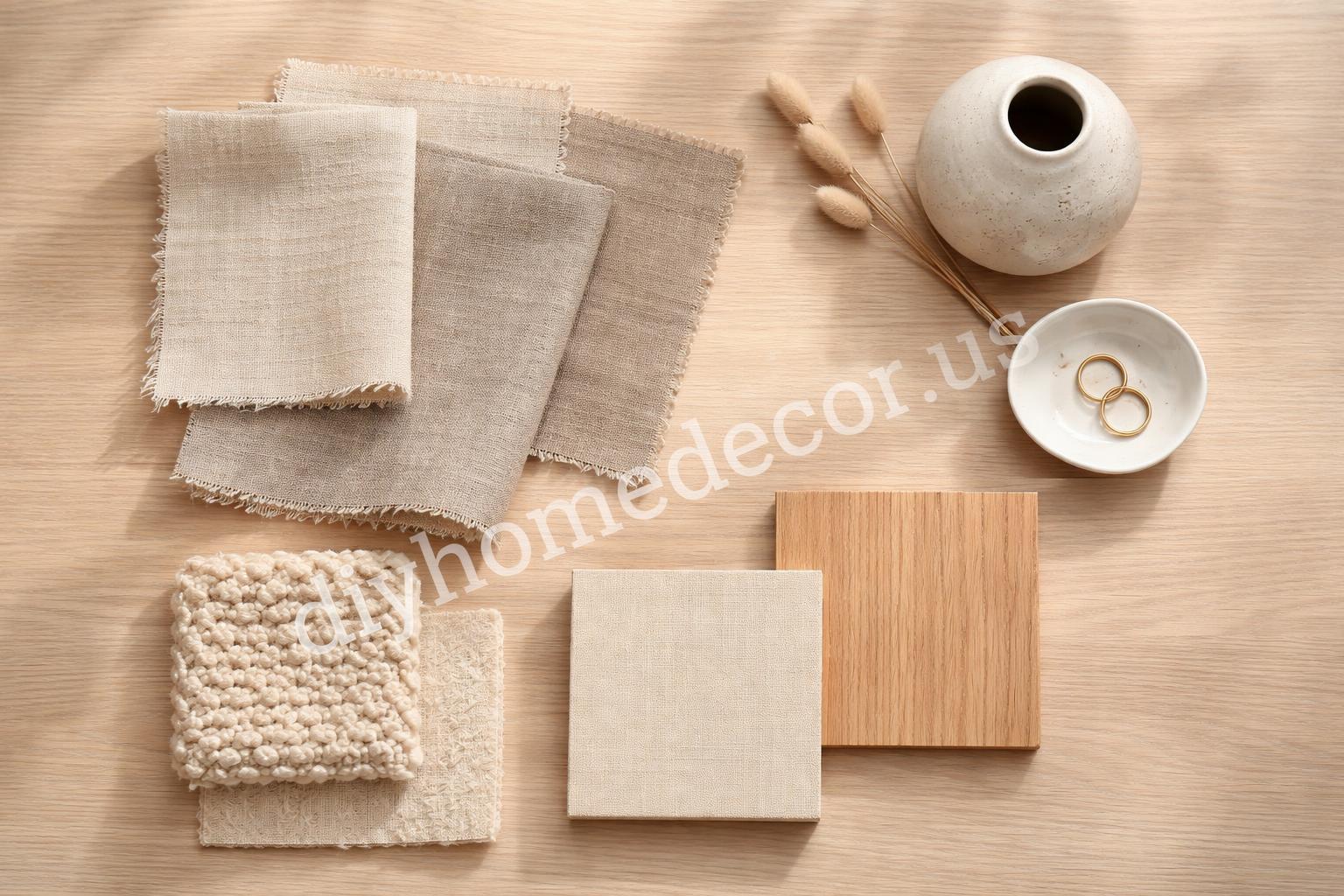
One thing I noticed with this style is that texture matters more than décor count. A plain room can still feel rich if the bedding, rug, and wood tones work together.
1. Pick a low bed frame
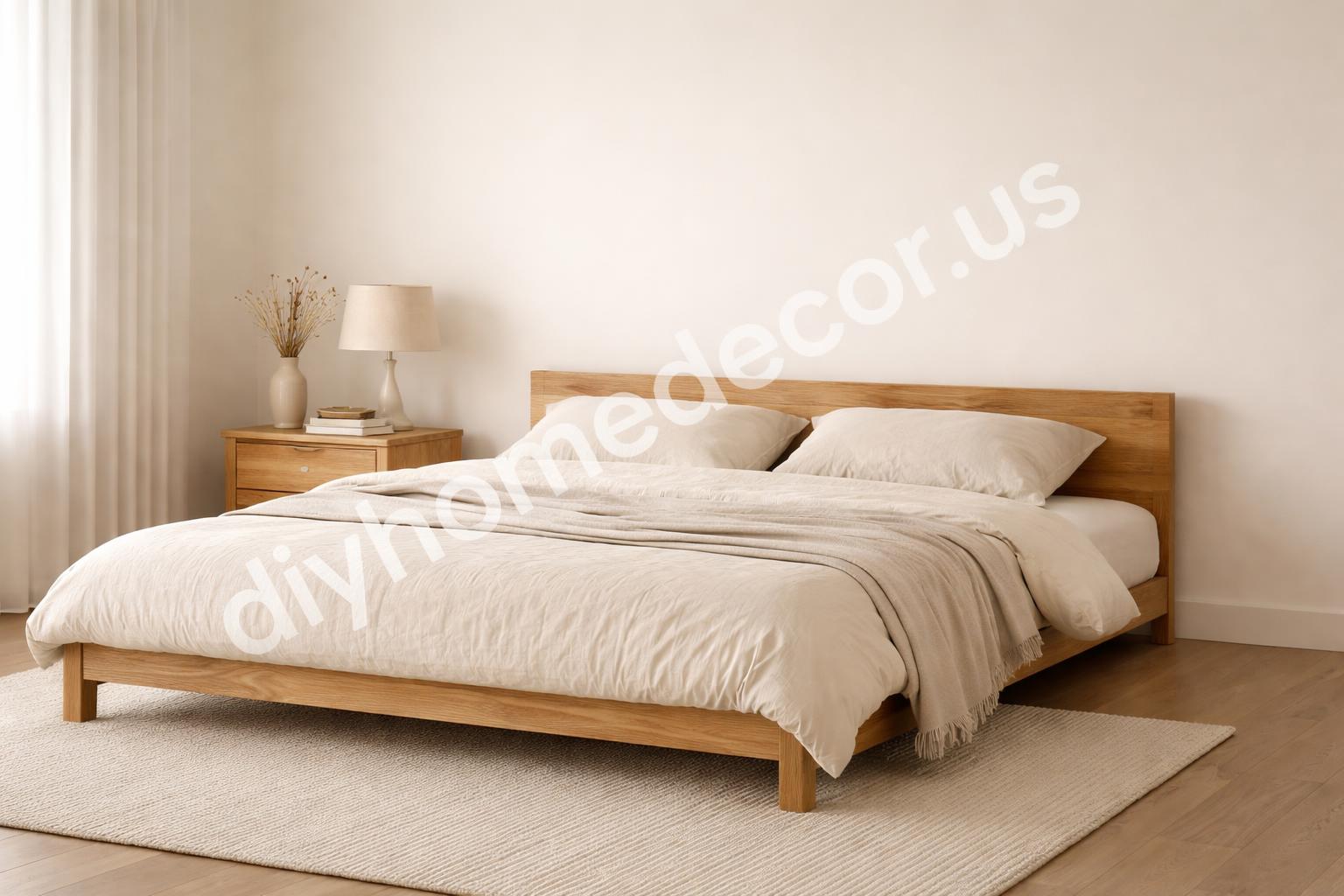
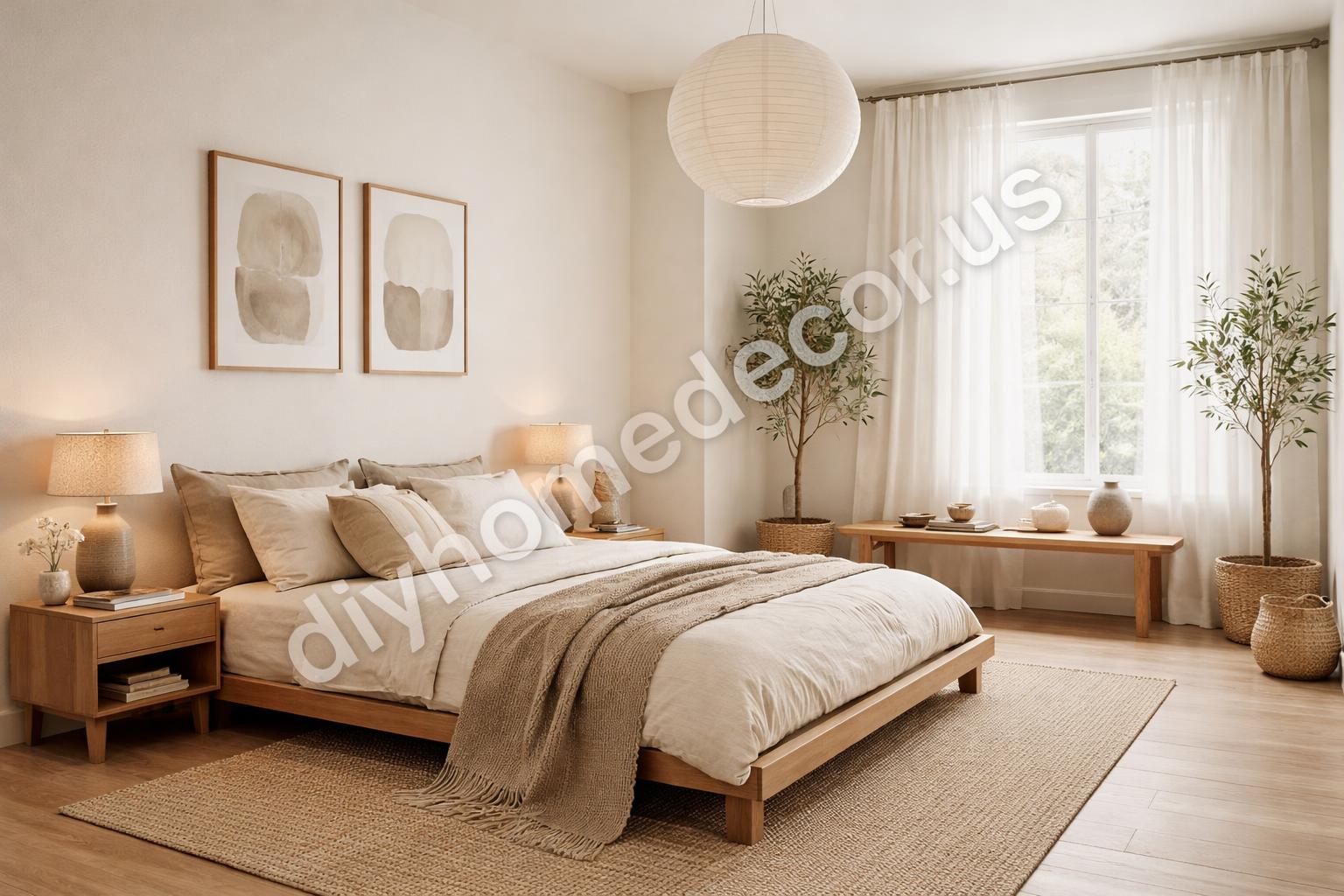
A low bed frame is one of the easiest ways to get that Japandi feel right away. It brings the eye down and makes the room feel calmer.
It also changes how the whole room moves. A lower bed makes ceilings feel a little higher and the layout feel more grounded.
If you’re shopping, look for wood, oak-toned finishes, or simple upholstered frames with no heavy ornament. The lower and cleaner the shape, the better it tends to work.
2. Keep the bedding soft and plain
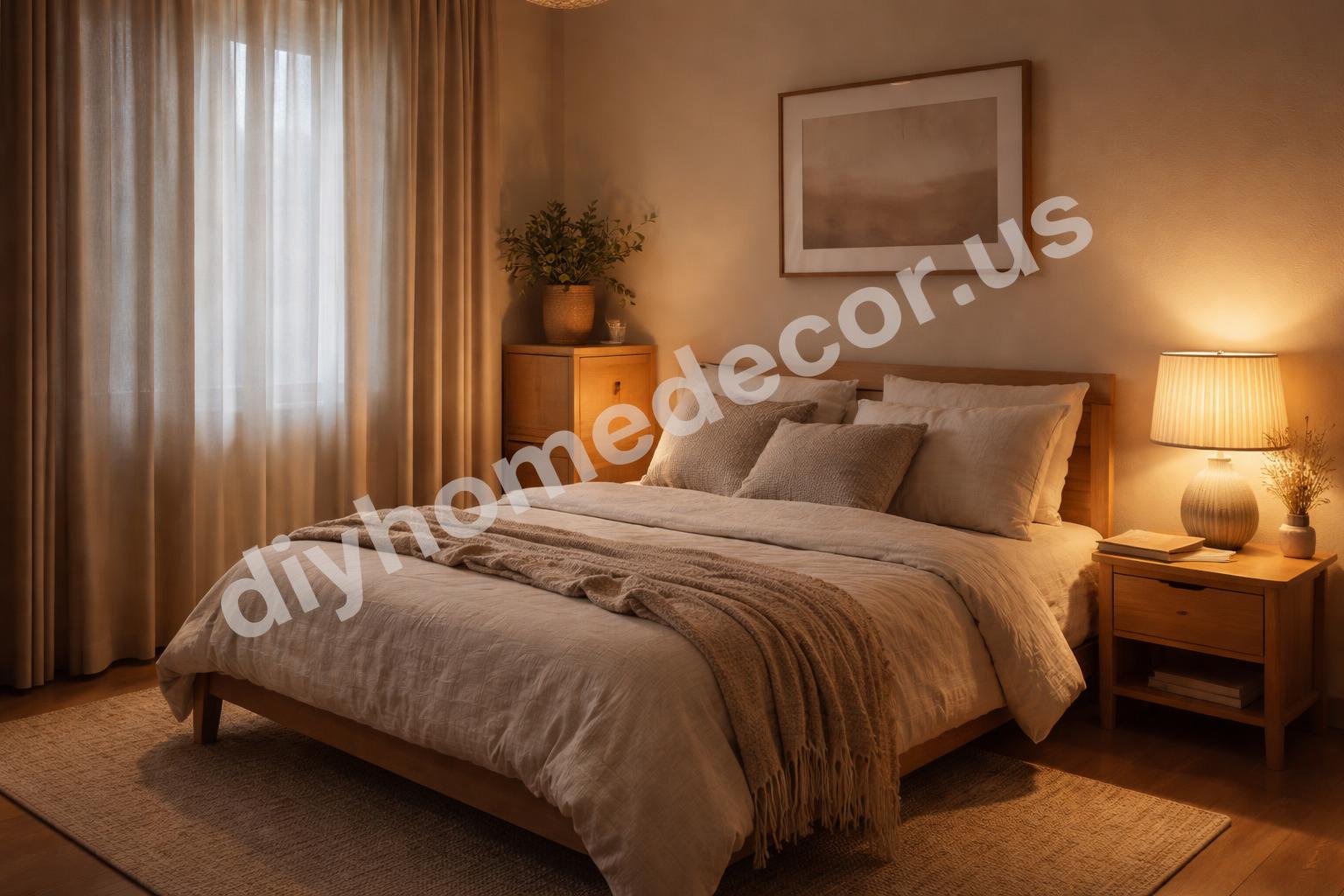
Japandi bedrooms usually look best with bedding that doesn’t fight for attention. Think ivory, oatmeal, warm gray, taupe, or soft mushroom tones.
The trick is to keep it plain without making it boring. A good linen duvet or lightly textured cotton can do more than a busy pattern ever will.
Bold prints usually pull the room away from that calm Japandi mood. If you want some interest, use texture instead of pattern.
What works well here
- washed linen
- crisp cotton
- quilted coverlets
- layered neutral throws

For a wider look at bedroom styling ideas that feel expensive without being fussy, this guide on budget bedroom décor ideas that look surprisingly expensive is worth saving.
3. Use warm wood, not shiny finishes
Japandi loves wood, but it doesn’t love glossy wood. Shiny finishes can make the room feel more formal than relaxed.
Matte oak, ash, walnut, and other softly finished woods work better because they feel natural. They also age in a nicer way, which matters if you don’t want the room to feel trendy for six months and then dated.
I’ve seen plenty of rooms where the bed was right but the nightstands were too polished. That tiny mismatch can throw off the whole space.
4. Choose one quiet wall color
If you’re repainting, pick one muted wall color and let it do the heavy lifting. Off-white, beige, clay-beige, pale greige, or dusty stone tones are all good starting points.
The main goal is to avoid harsh contrast. Strong white can feel too sharp, and dark accent walls can work against the soft Japandi look unless the room is very balanced.
A calm wall color makes every other choice easier. It gives your bed, wood pieces, and textiles room to breathe.
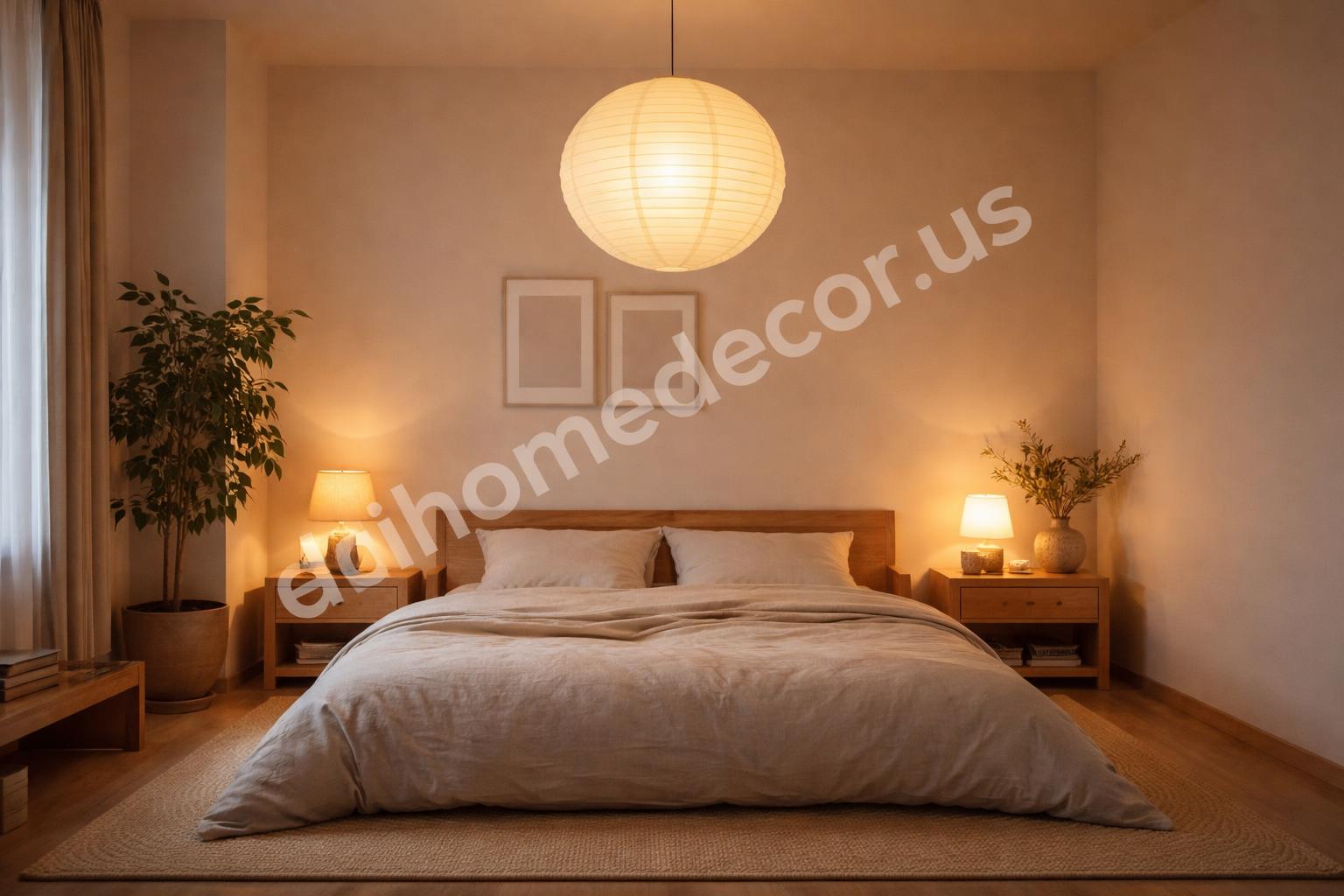
5. Add a paper lantern or soft pendant
Lighting changes Japandi rooms fast. A hard overhead light can make even a nice bedroom feel awkward at night.
A paper lantern, rice paper pendant, or another softly diffused light helps the room feel warm and relaxed. It’s a small change, but it makes evenings feel better right away.
The part people don’t always expect is how much the bulb matters. Warm light usually fits this style better than bright white light.
6. Bring in a small bench or stool
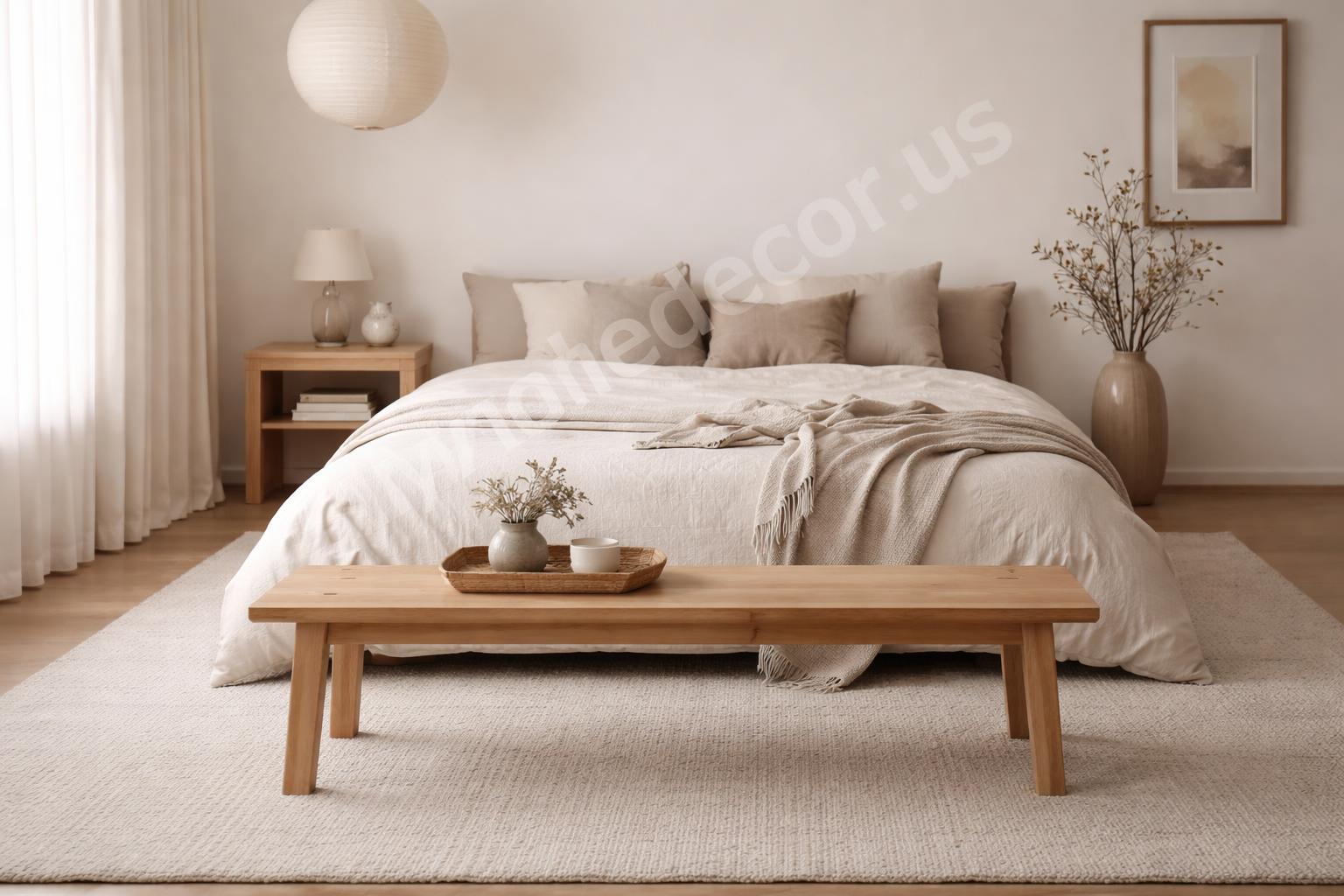
A simple bench at the foot of the bed or a small stool in a corner adds function without clutter. That’s very Japandi.
Look for something in wood, woven rope, or textured fabric. The shape should stay simple. No carved legs, no heavy curves, no extra detail.
It gives you a place to set clothes, a tray, or a book, and the room still feels open.
Good rule of thumb
If the piece looks like it belongs in a quiet guesthouse, it probably fits Japandi well.
7. Mix linen, wool, and cotton
Texture keeps the room from feeling too stark. In Japandi bedrooms, the textures are usually soft and natural rather than shiny or overly plush.
A wool throw, a linen duvet, and cotton pillowcases can work together beautifully. You don’t need all three to match exactly, either. Slight differences make the room feel more real.
One mistake I see a lot is using only smooth fabrics. The room starts to feel flat, even if the colors are right.

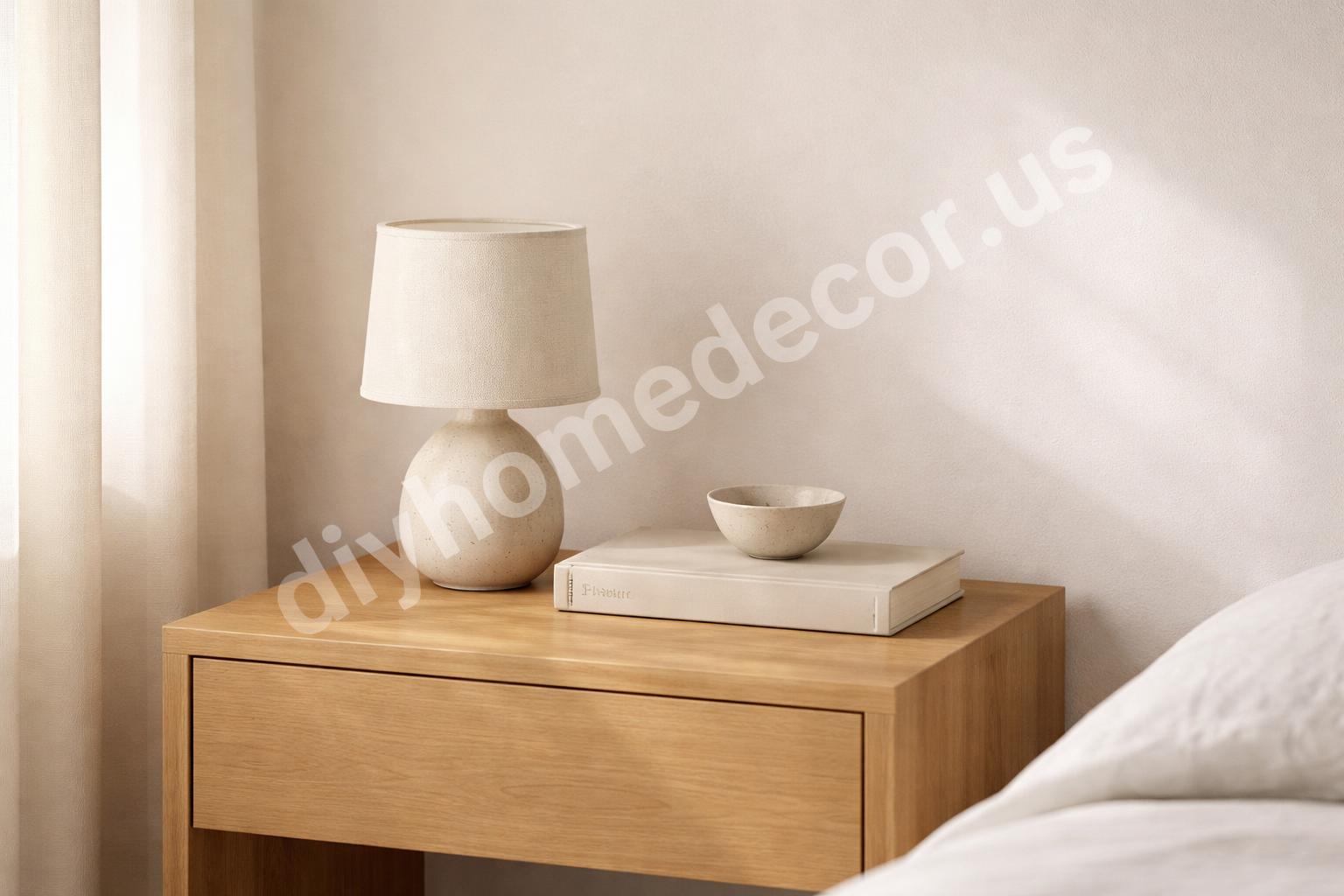
8. Keep the nightstands simple
Nightstands in a Japandi room should do their job quietly. You don’t need a large piece with drawers everywhere unless the room really needs storage.
A small wood table, a block-style nightstand, or even a pared-back floating shelf can be enough. Leave some negative space on top.
The top should usually hold just a lamp, one book, maybe a small bowl, and that’s it. Anything more starts to crowd the mood.
Less clutter on the nightstand usually means better sleep vibes too. At least that’s how it feels when the room doesn’t look visually busy.
9. Use one or two handmade-looking accents
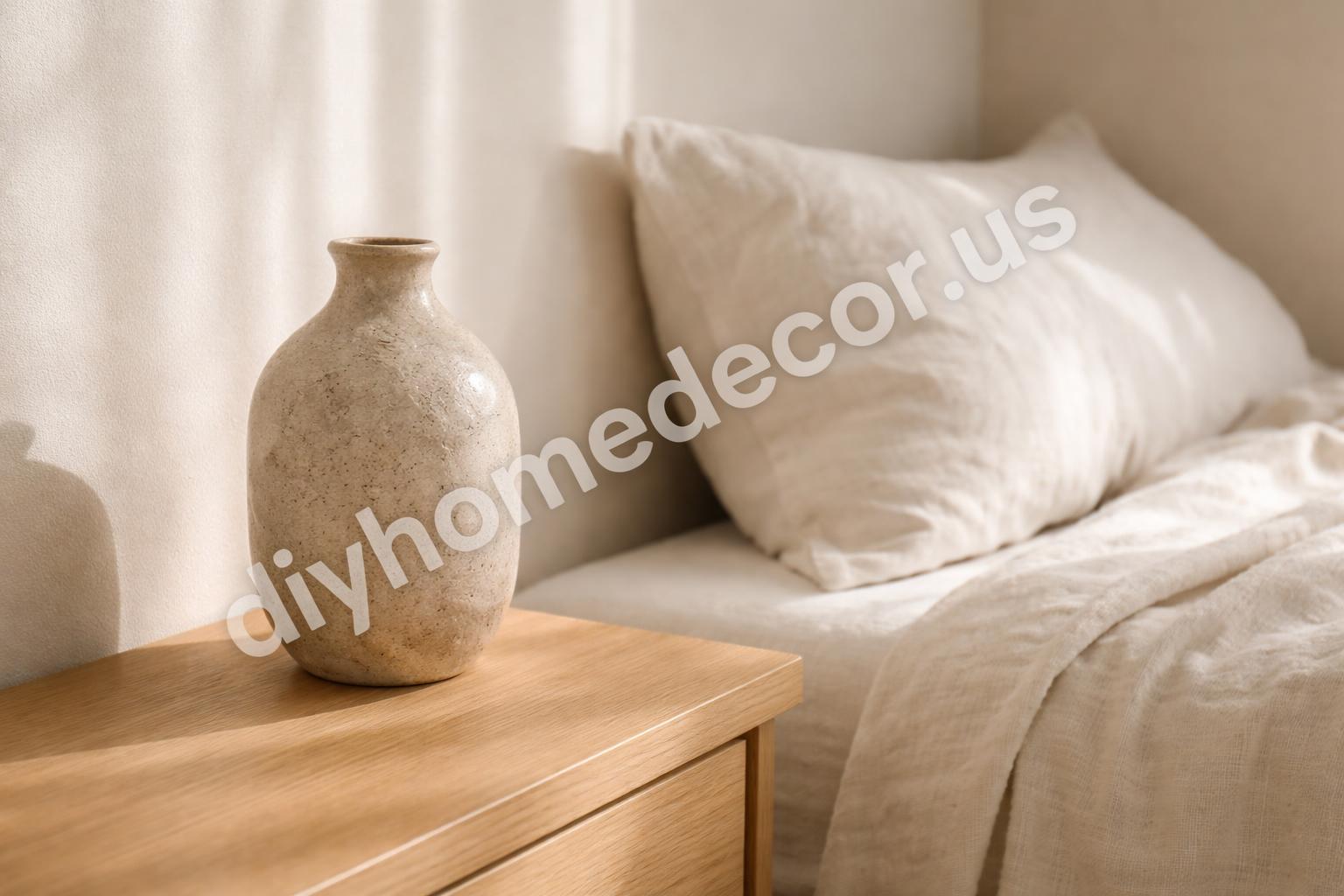
Japandi décor gets a lot of its charm from imperfect, tactile pieces. Think ceramic vases, a hand-thrown bowl, or a textured tray.
These pieces shouldn’t look too perfect. The slight irregularity is what makes them feel warm and human.
If the room feels a little too clean, one handmade-looking object can fix that fast.
10. Add a woven rug for warmth
A rug is one of the easiest ways to stop a Japandi bedroom from feeling cold. Woven jute, wool, or a low-pile neutral rug can ground the bed nicely.
The size matters more than people think. A tiny rug often looks like an afterthought.
If you want the bed to feel anchored, choose a rug that extends beyond the sides of the bed enough to look intentional.
Quick tip
If your floors are already warm wood, go for a rug with subtle texture rather than strong contrast. It usually looks softer.
For smaller bedrooms, this approach works especially well with space-saving layout choices like the ones in small bedroom décor ideas that instantly create more space.
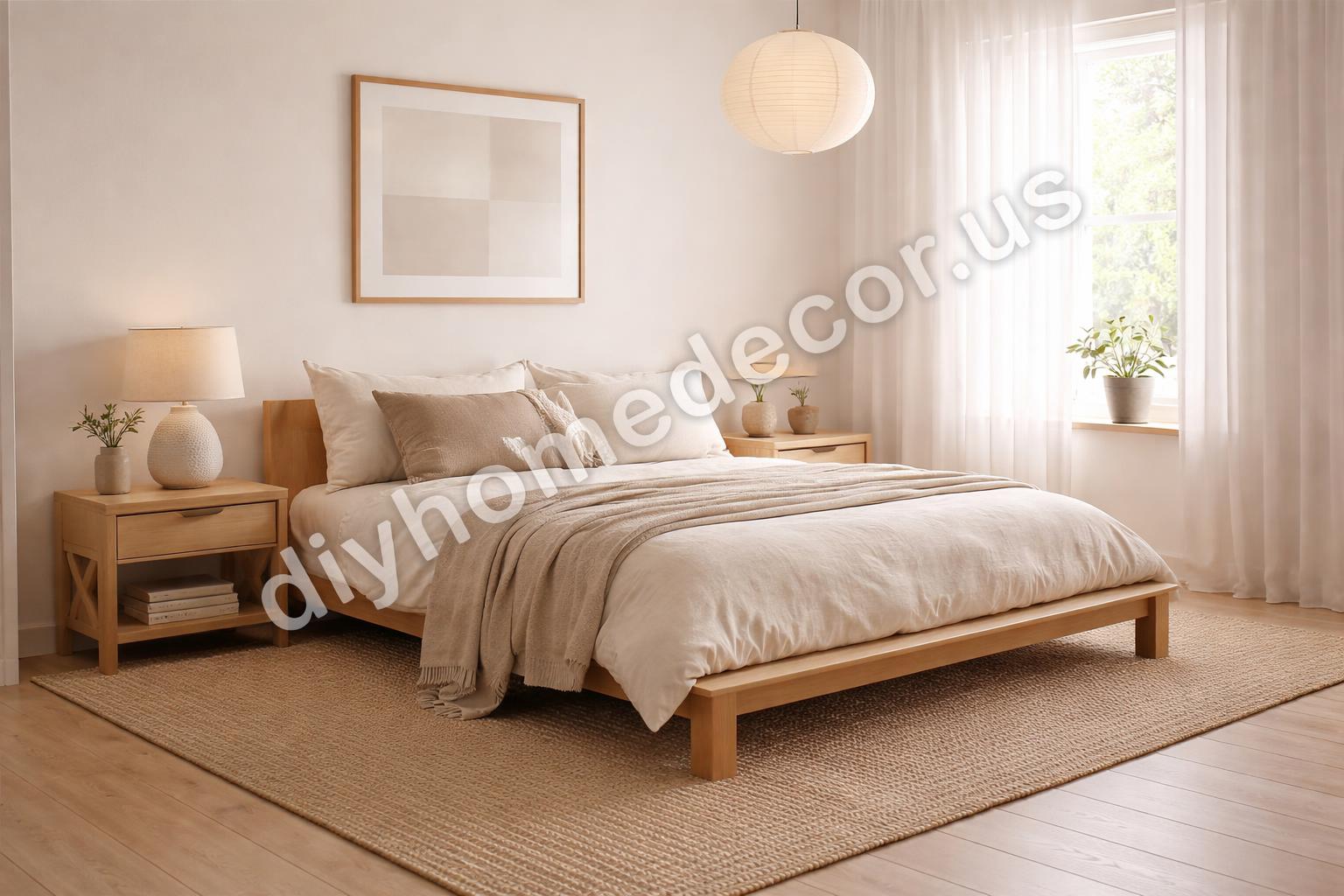
11. Keep wall art sparse
Japandi art tends to be quiet. One framed print, a line drawing, or a soft landscape is often enough.
You don’t need a full gallery wall unless you’re being very careful with spacing and color. Most of the time, a few larger pieces work better than many small ones.
The frames should stay simple too. Black can work, but wood or soft neutral frames usually feel more at home.
12. Use blackout curtains in a soft fabric
Curtains affect the whole tone of the room. In Japandi spaces, heavy or glossy curtains can feel out of place fast.
Soft blackout curtains in oatmeal, fog gray, or muted beige give you privacy and help the room feel finished. They also add a gentle vertical line, which helps if the room needs a bit of height.
I learned this the hard way in one bedroom setup I styled in my head more than in reality. The curtains were technically fine, but they looked too sharp next to everything else.
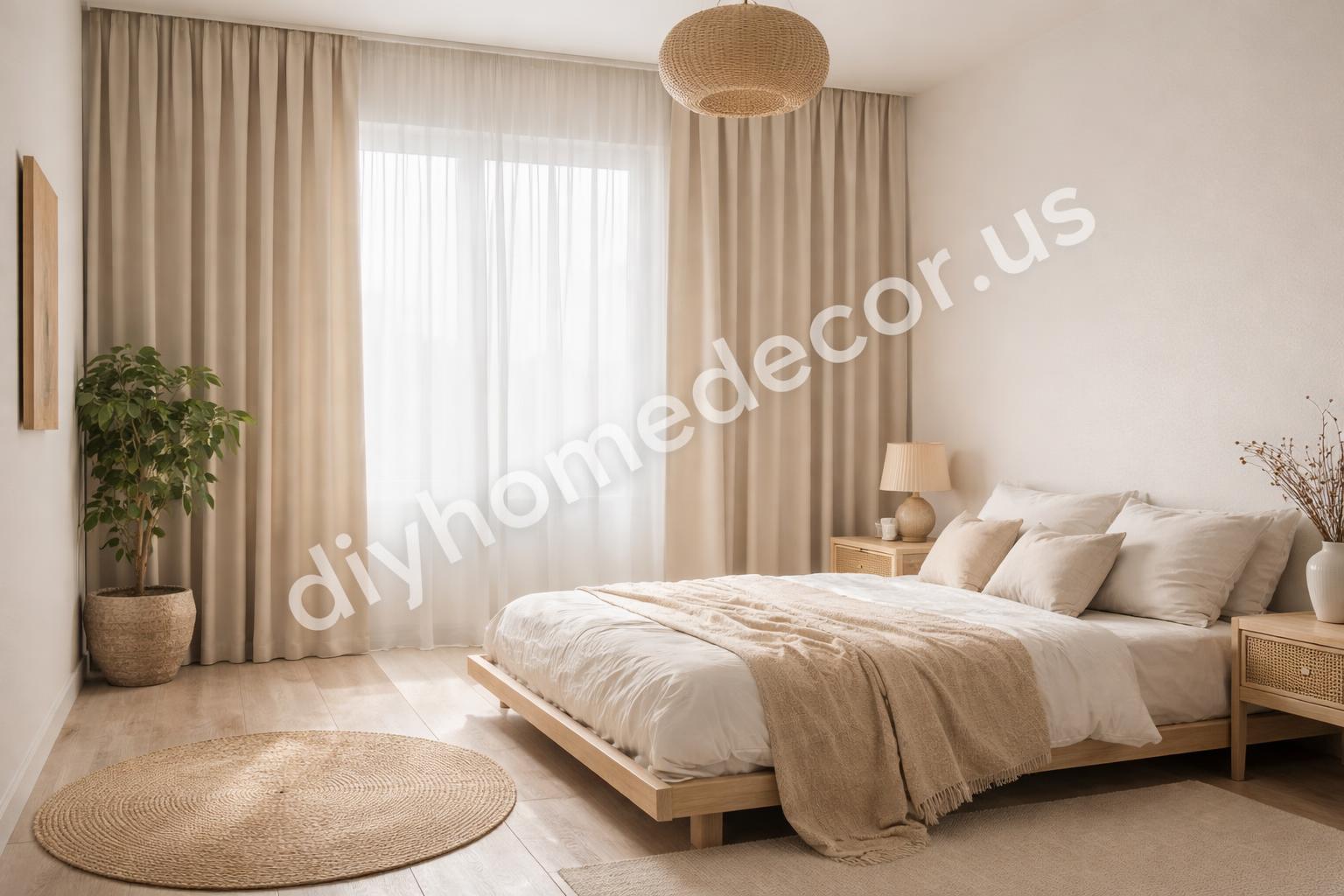
13. Leave some surfaces empty on purpose
This sounds obvious, but it’s probably the hardest part. Japandi style depends on open surfaces.
A dresser doesn’t need to be decorated just because it’s there. Sometimes one vase or one tray is enough. Empty space lets the room feel restful instead of staged.
A bedroom with breathing room usually feels more luxurious than a crowded one. That’s especially true in Japandi spaces, where the calm is the point.
14. Add plants carefully, not everywhere
Plants can work beautifully in Japandi bedrooms, but too many can push the room into a different style. One or two sculptural plants are usually enough.
Choose plants with clean shapes. A simple olive tree, a snake plant, or a branch arrangement can look more fitting than a jungle of leaves.
The container matters too. A plain ceramic or matte pot feels more natural than a bright decorative planter.
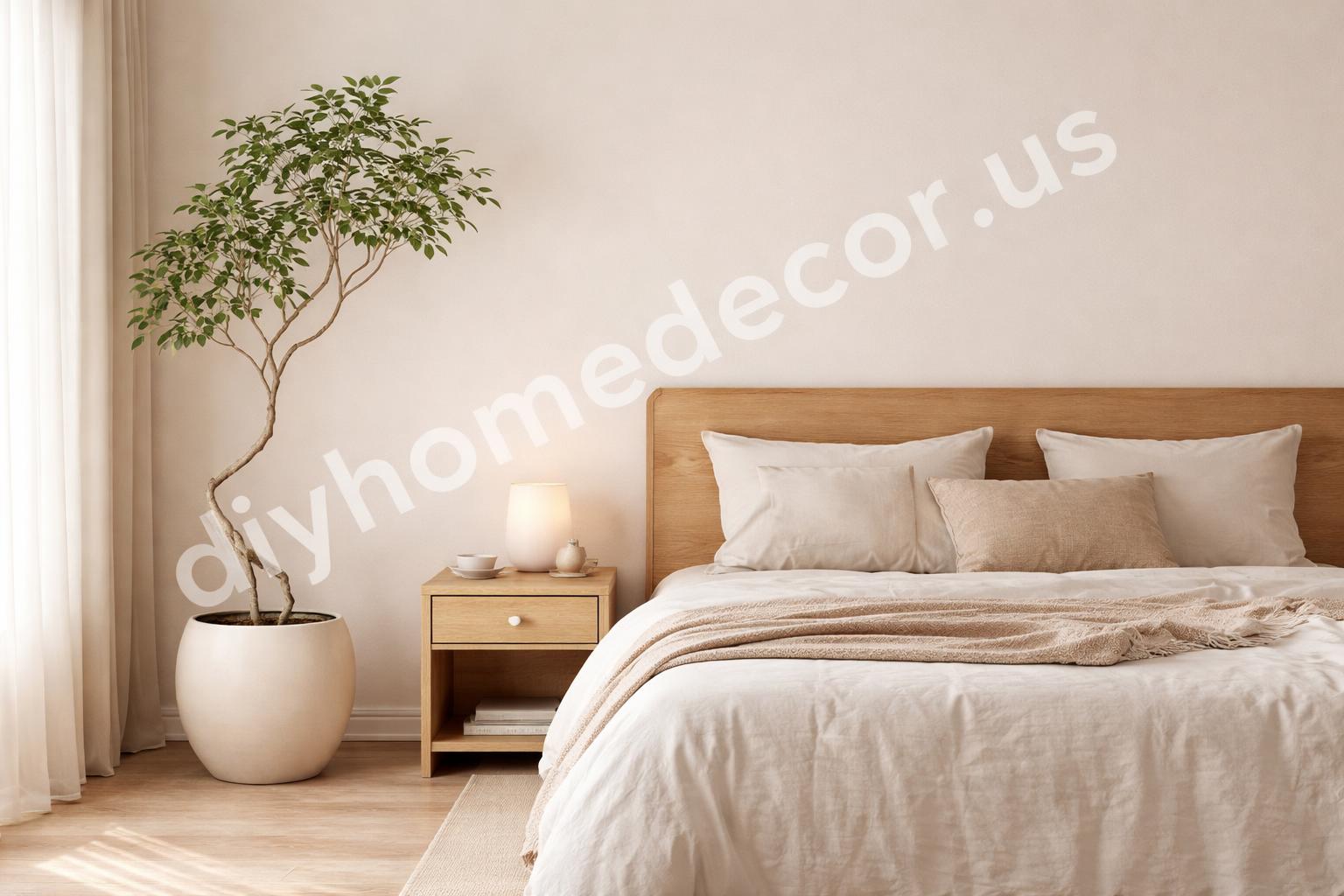
15. Try built-in or concealed storage
Japandi bedrooms look best when storage disappears into the background. Closed storage reduces the little visual distractions that make a room feel busy.
That can mean drawers under the bed, a closed wardrobe, or simple boxes that match the room’s palette. You don’t need to hide everything, just the random stuff that clutters surfaces.
Open shelves are fine if they’re edited carefully. But if you know you tend to pile things up, closed storage will save you a lot of frustration.
16. Keep décor personal, but edited
Japandi doesn’t mean your room has to feel cold or staged. A few personal items make the space feel more lived in.
Try one favorite book, a small framed photo, or a tray with an object you actually use. The key is to keep it edited so it still feels calm.
Most people don’t realize that personality shows up better when there’s less competing for attention. One meaningful thing stands out more in a quiet room.
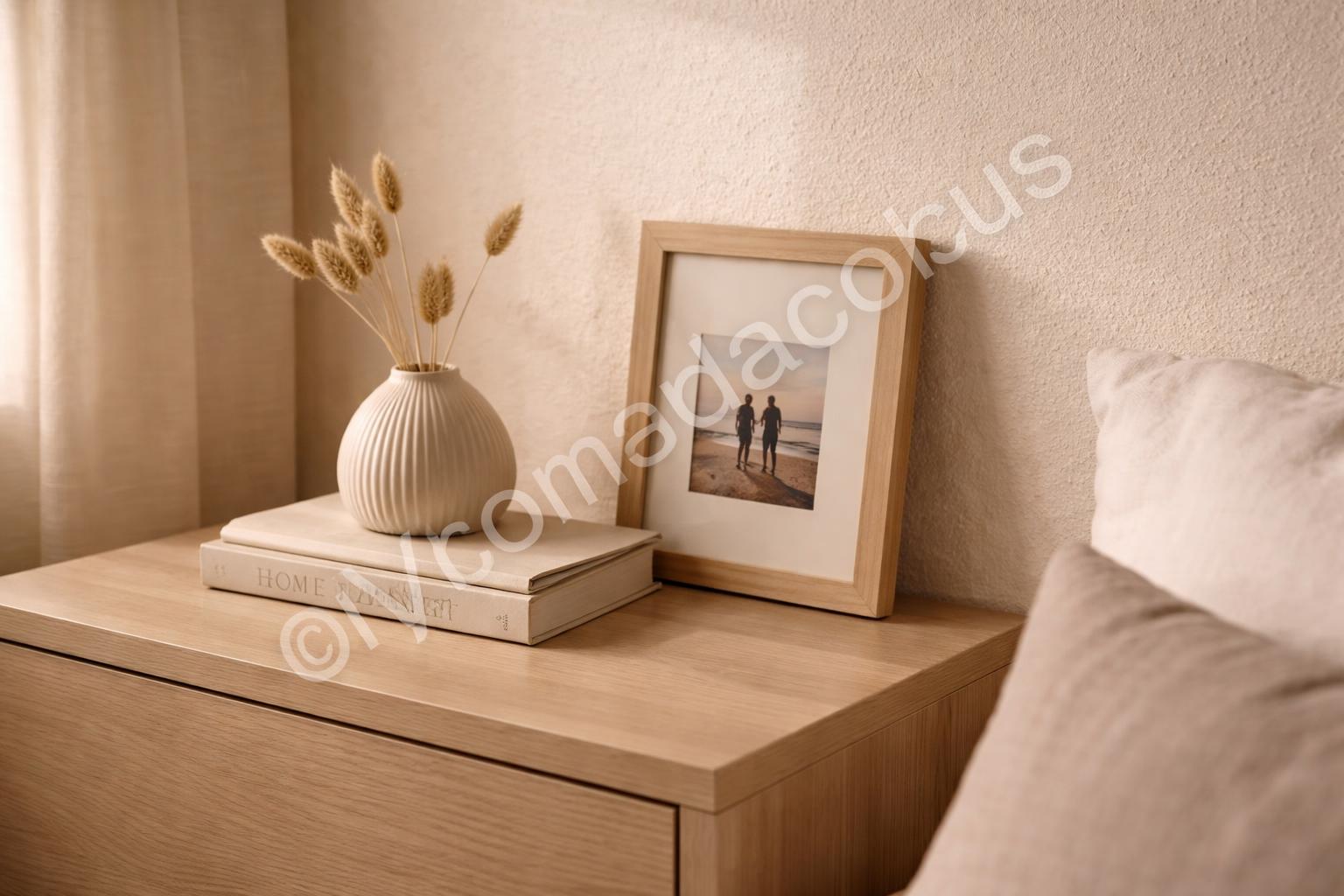
17. Build the room around calm routines
This is the part that gets missed. Japandi isn’t only about what the room looks like. It’s also about how the room works.
If your nightstand holds your water, your book, and a lamp you can switch off without thinking, the room already supports a calmer night. If your bed is easy to make, you’ll probably keep it tidier.
That’s the real beauty of this style. It makes good habits easier.
A simple Japandi reset checklist
- remove one thing from every surface
- swap one shiny finish for matte
- add one soft texture
- keep only one or two decorative objects per surface
- use warmer light at night
A few mistakes worth avoiding
Japandi is easy to overdo. A room can lose its warmth if you go too bare or too beige without texture.
Watch out for these common missteps:
- too many cold gray tones
- glossy furniture
- tiny rugs
- overdecorated shelves
- harsh white lighting
A bedroom doesn’t need to be perfect to feel peaceful. It just needs a few good choices that work together.
Final thoughts
What I like most about Japandi bedrooms is that they don’t ask for much. They reward calm choices, not expensive ones.
If you start with soft bedding, warm wood, and a little negative space, you’re already close. The rest is just editing until the room stops feeling busy and starts feeling like somewhere you actually want to be.
Save This Guide on Pinterest
Save this image to Pinterest so you can easily return to this guide later.