Mixing solar and LED garden lights sounds easy until the yard starts looking messy.
One corner is too bright, another one never turns on in time, and suddenly the whole space feels random instead of pulled together. If you ignore that problem, the garden usually ends up with uneven light, wasted money, and a setup that looks more like a hardware aisle than a design choice.
The good news is that you don’t need a big yard or a huge budget to make solar and LED lighting look intentional. You just need a simple plan, a few placement rules, and a better eye for how the lights work together. I’ll walk through the parts that matter most, from choosing the right lights to layering them so the whole space feels calm, warm, and designed.
Start with the mood, not the bulbs
The biggest mistake people make is buying lights one by one and hoping they’ll somehow match later.
That rarely works. Solar lights and LED lights can absolutely live together, but they need a shared purpose. Are you trying to make a path safer? Highlight a tree? Add a soft glow around seating? That answer should guide everything else.
For small spaces, I like thinking in three layers:
- Path light for movement and safety
- Accent light for plants, walls, or a feature
- Ambient glow for mood
If all three are doing the same job, the yard gets flat. If each one has a different job, the space feels more designed. That’s the whole trick, honestly.
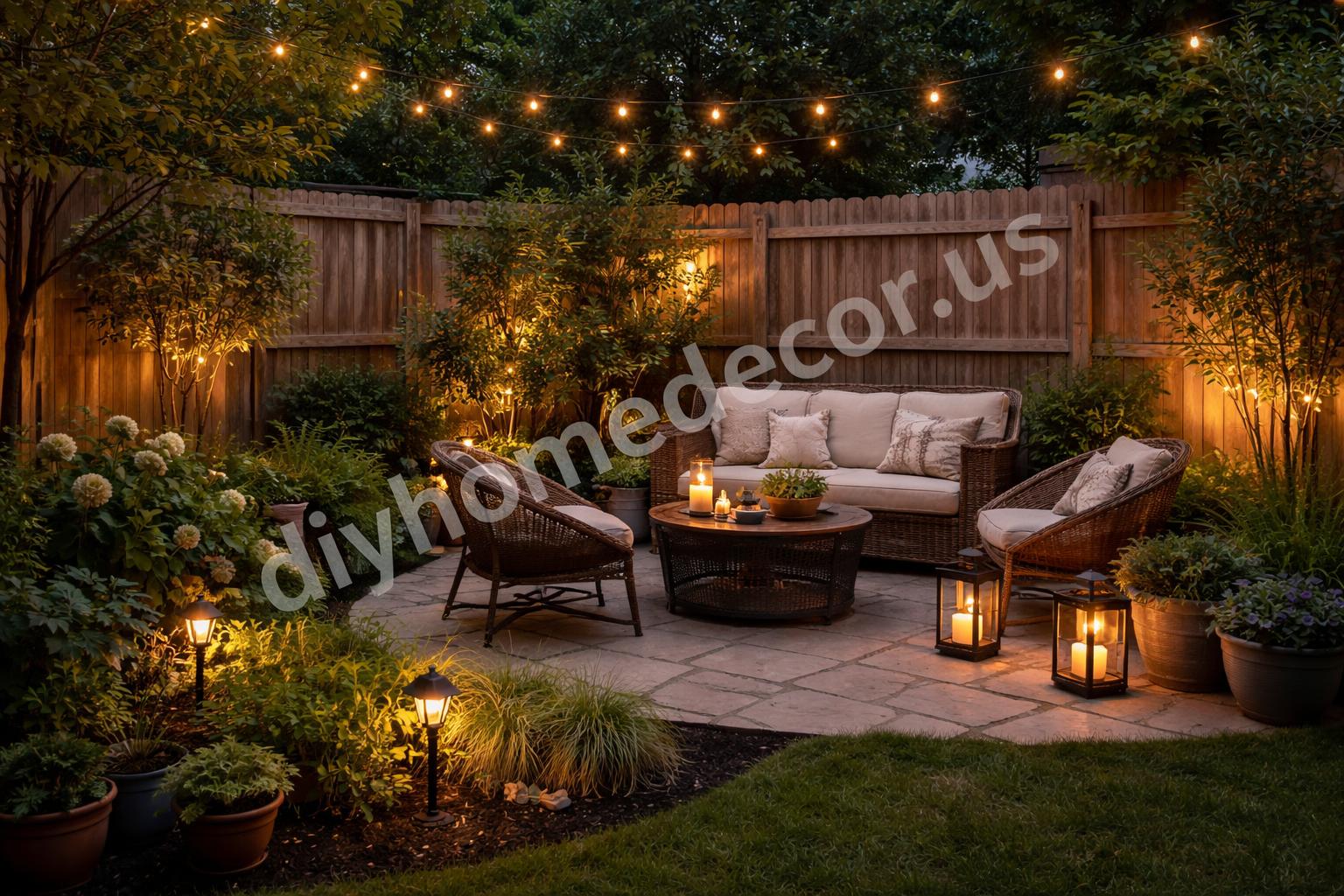
A small backyard especially needs restraint. If you overload it with too many points of light, the eye has nowhere to rest. I’ve seen tiny patios feel bigger just because the lighting was calmer and more selective.
If you need help thinking through the size and layout part first, this guide on how to choose garden lighting decor for small backyards is a useful place to start.
Know what solar does best, and where LED wins
Solar lights are great when you want easy placement and no wiring.
That’s their real strength. They work best in spots that get direct sun and don’t need extremely consistent brightness every single night. Path edges, fence lines, and scattered garden accents are the obvious places.
LED lights are stronger when you want control.
They’re better for areas where you need dependable brightness, dimming options, or a more polished feel. If you want the patio to feel cozy instead of patchy, LED usually gives you more control than solar. That matters more than most people think.
The easiest designer move is to let solar handle the background and let LED handle the focal points.
That division keeps the setup from competing with itself. Solar can quietly define the edges, while LED pulls attention to the places you actually want people to notice.
A simple rule that saves a lot of trial and error
Use solar where the sun is generous.
Use LED where the light needs to be steady.
That sounds obvious, but a lot of people do the opposite and then wonder why one side of the yard looks uneven. I learned the hard way that even a beautiful solar fixture looks underwhelming if it lives in shade half the day.
Pick a color temperature that makes the mix feel intentional
This part matters more than style, because mixed lighting can look awkward fast.
If your solar lights are a cool white and your LED lights are warm amber, the yard can end up looking like two different scenes. That contrast can work in a few modern spaces, but most backyards look better when the tones are close.
A safe rule:
- Warm white gives a softer, cozier feel
- Neutral white looks cleaner and more modern
- Cool white feels sharper, but can look harsh outside
For most garden decor, warm white is the easiest to live with. It flatters plants, stone, wood, and outdoor furniture without making everything look blue or sterile.
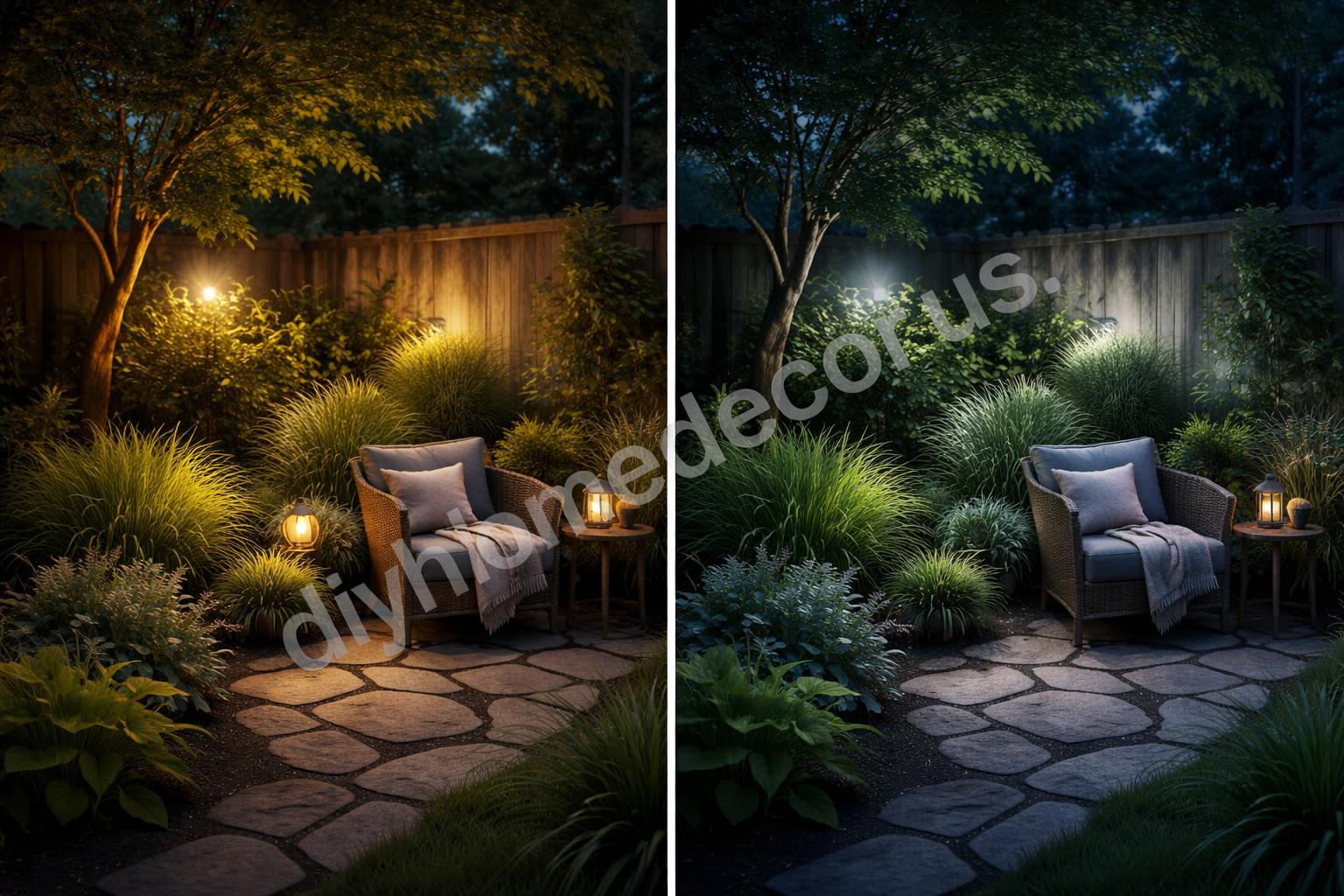
Surprisingly, this is one of the most common reasons a yard feels “off” even when the fixtures are nice. The shape can be good, the placement can be smart, but the color temperature fights itself. That’s a small detail that makes a big visual difference.
Mix heights the way designers do
A designer-looking yard usually has light at different levels.
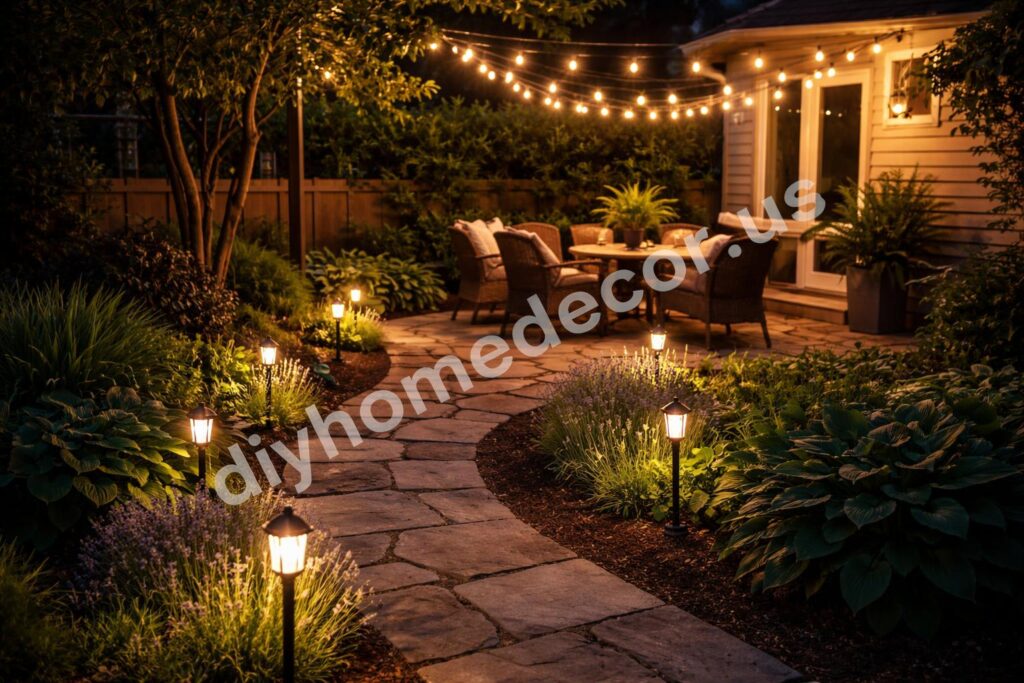
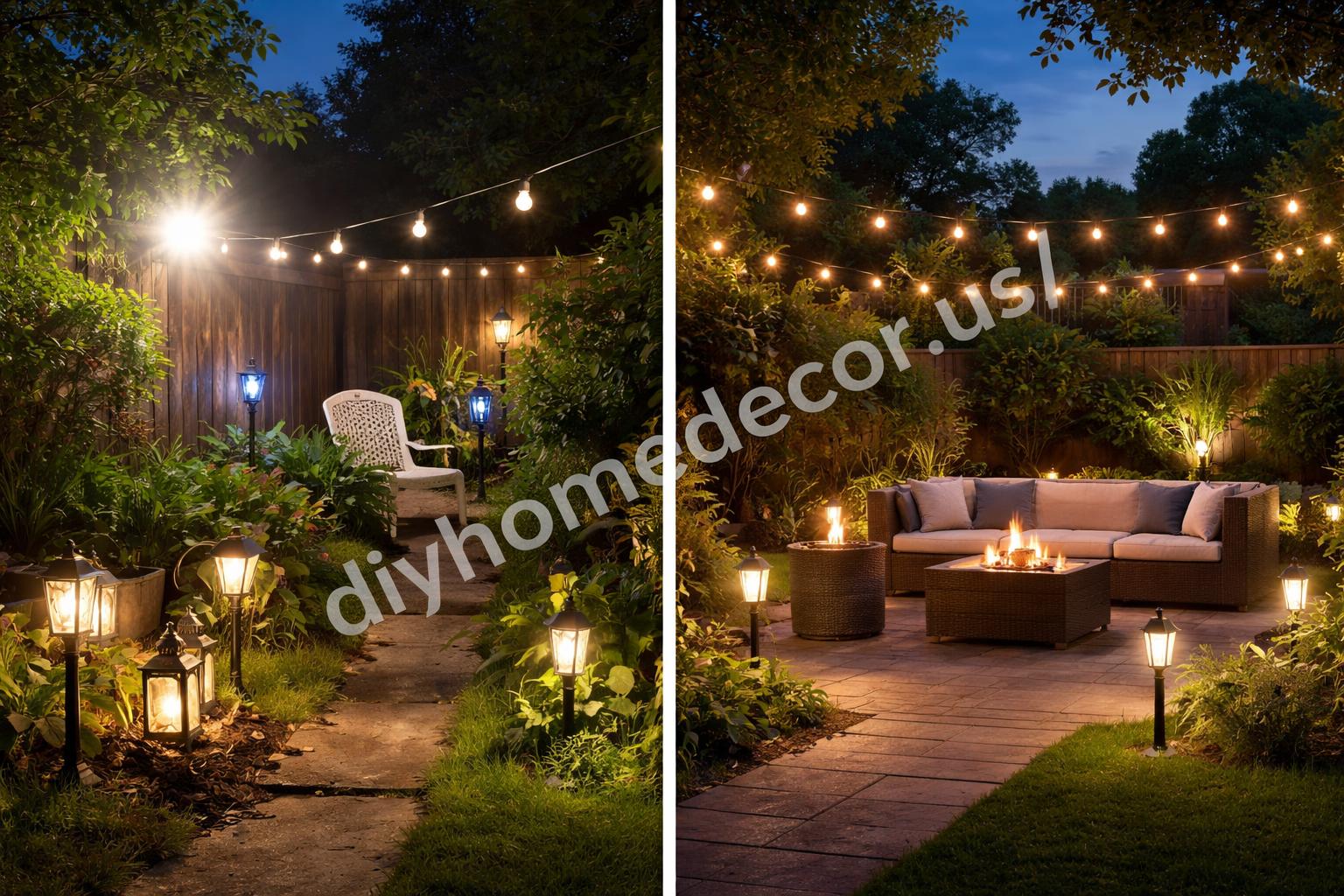
That doesn’t mean piling fixtures everywhere. It means letting the eye move from low to mid to slightly higher points. Solar stake lights can sit low along a path. LED string lights can live overhead or around a pergola. A small solar lantern or LED spotlight can finish the composition.
Here’s a simple height mix that works well:
- Low: stake lights, step lights, edge markers
- Mid: lanterns, wall sconces, planter lights
- High: string lights, hanging or canopy-style light
When all the lights sit at the same height, the space feels flat. When the heights vary a bit, the yard feels fuller and more layered.
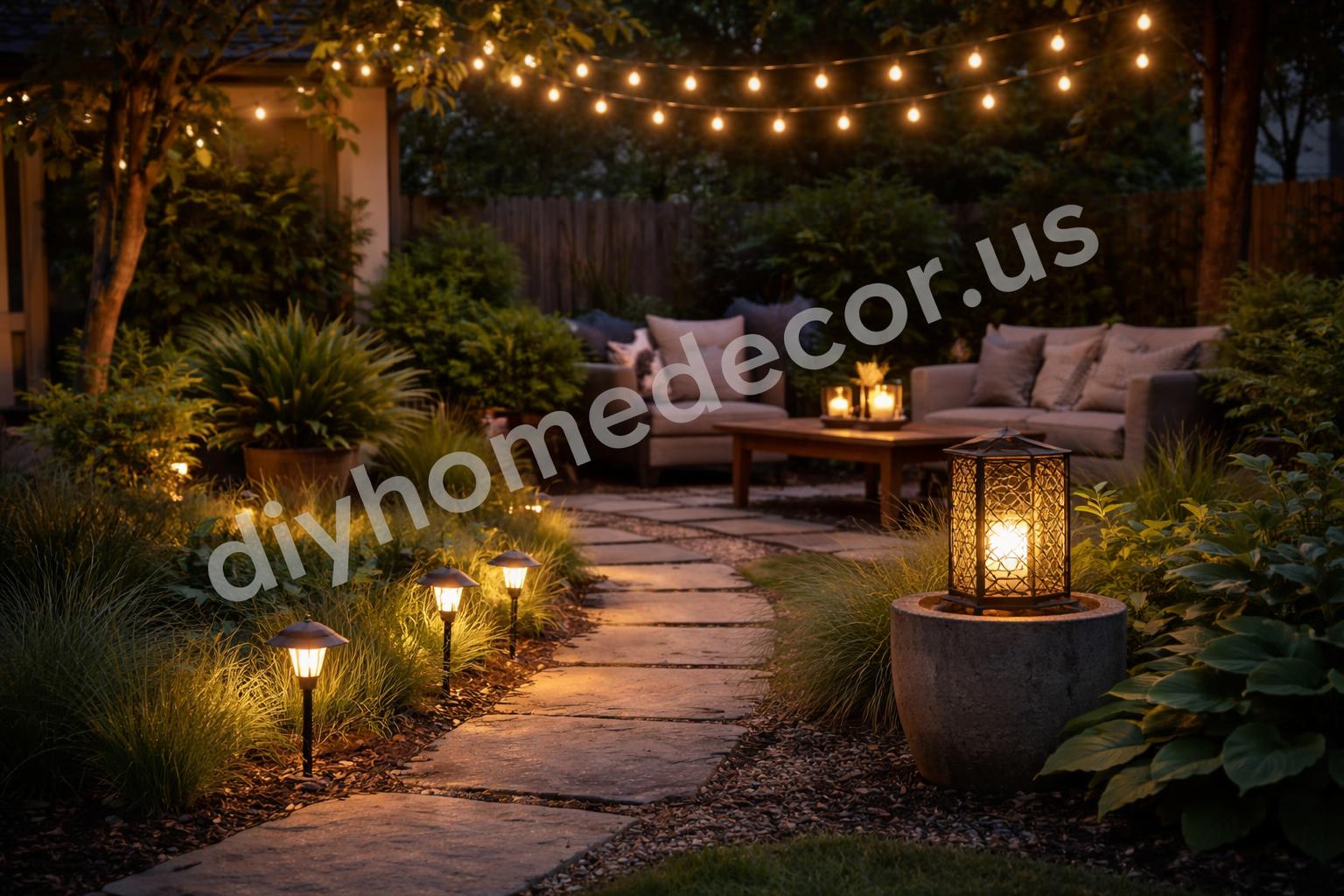
One thing I learned is that you don’t need many high lights. Just one overhead element can anchor everything else. Too many, and the backyard starts feeling busy instead of inviting.
Use solar for structure, not just decoration
A lot of people treat solar lights like little extras. That’s fine, but they’re better than that.
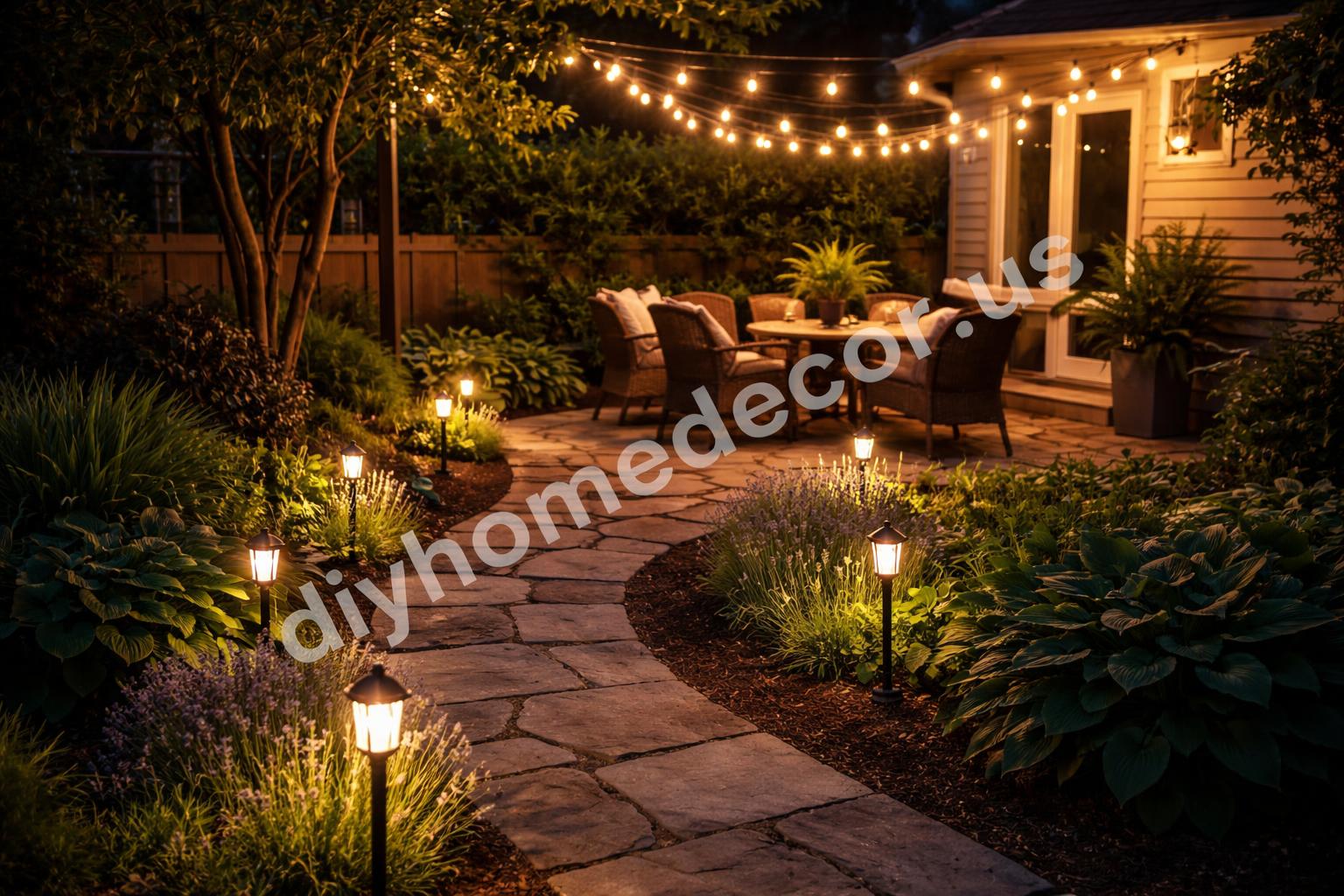
Solar can quietly shape the whole garden if you use it in the right places. Line a path. Mark the edge of a flower bed. Place a few lights where they frame, rather than compete with, the main seating area. That structure helps the eye understand the yard quickly.
The best solar decor ideas are usually simple on purpose. If you want more inspiration for types that add glow without using power, this collection of 17 solar garden lighting decor ideas that make your backyard glow is worth a look.
Good places for solar
- Path edges
- Fence lines
- Planter borders
- Around a tree base
- Along steps or borders that already get sun
Places solar often struggles
- Deep shade
- Covered patios with little daylight
- Under dense trees
- Corners that stay dark most of the day
That last point matters. If a light never gets enough sun, it won’t feel like a “bad product” so much as a bad location. I’ve seen people replace lights when moving them would have solved the problem.
Use LED where you want consistency and polish
LED lighting fills in the gaps solar can’t always handle.
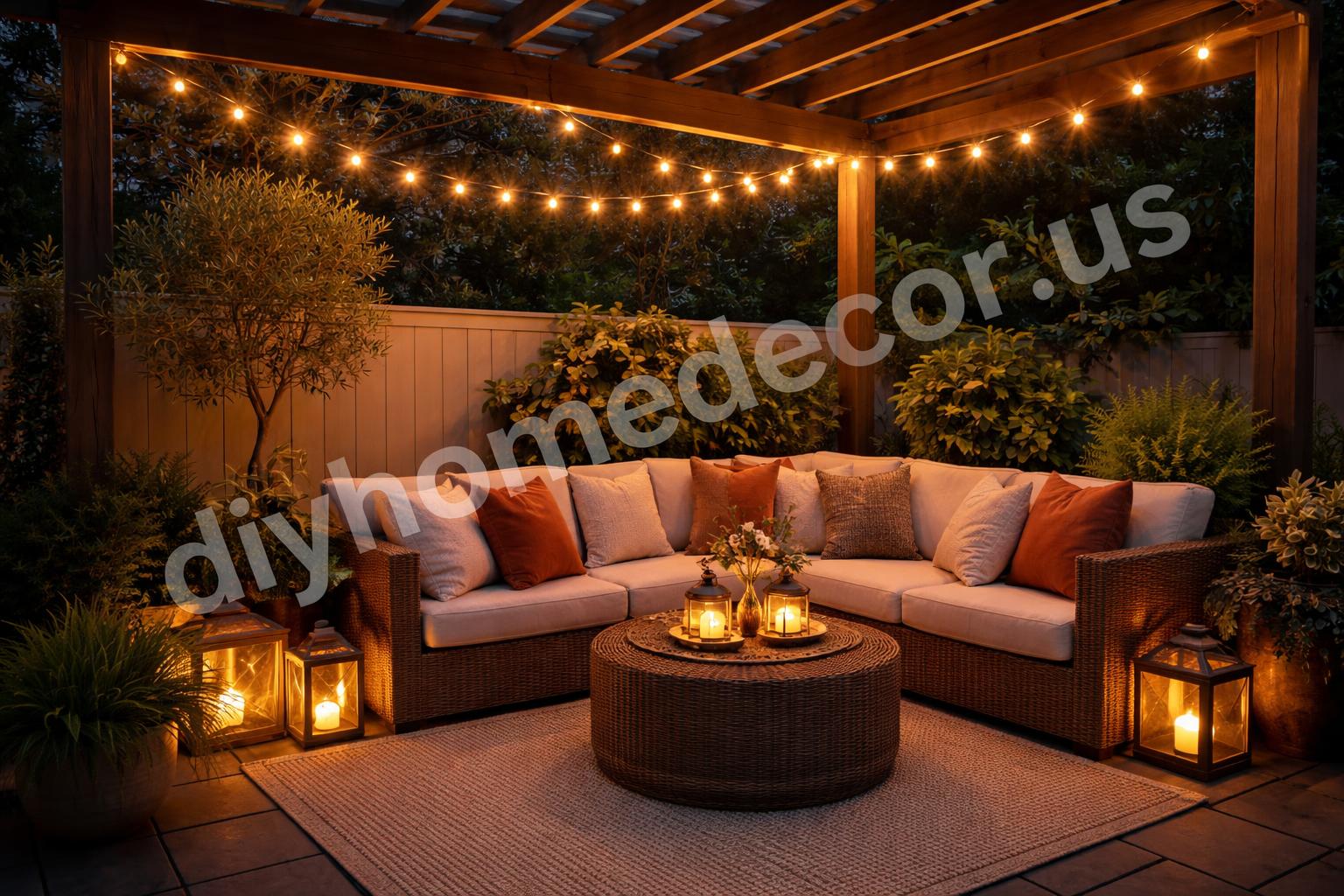
If your seating area is under a pergola, against a wall, or tucked into a shaded corner, LED gives you a steadier result. It also works better when you want the same look every night, no matter how much sun the garden got that day.
This is where LED can make a backyard feel more finished. The light is usually cleaner and more predictable, which helps the whole design feel intentional instead of improvised.
If you’re trying to keep costs down, the energy-saving angle is real too. For a practical breakdown of the types that help with that, see this guide to the best LED garden lighting decor to save energy and money.
A small caution here: don’t overdo brightness just because LEDs are efficient. Bright doesn’t always mean better outdoors. Often, a softer LED setup looks more expensive and more relaxing.
Build around one focal point
Every good garden lighting plan needs one thing the eye can land on first.
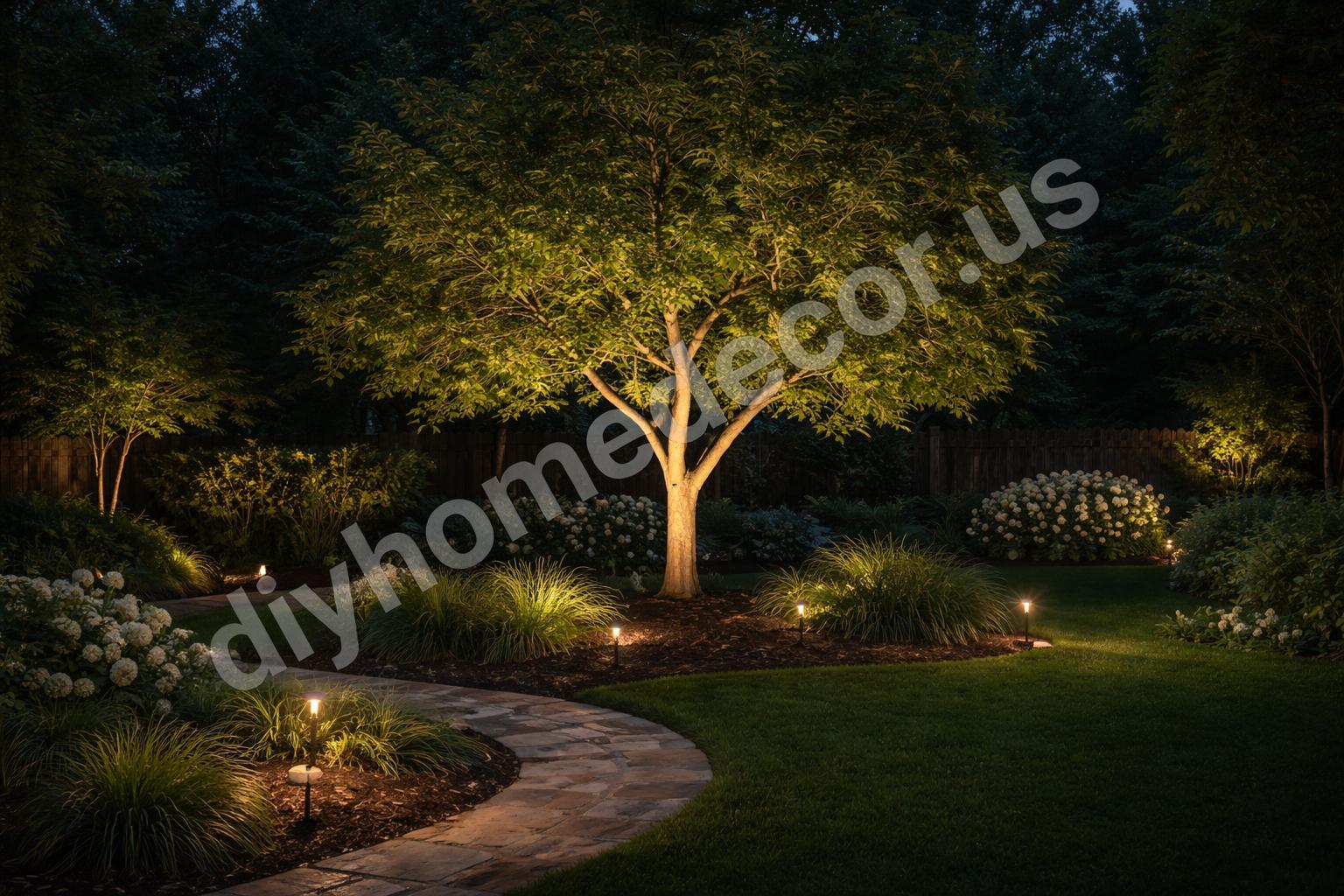
That might be a tree, a bench, a water feature, a planter, or even just the back wall of the patio. Once you choose that focal point, the rest of the lights become support instead of noise.
Here’s the easiest way to do it:
- Put the strongest light on the focal point
- Use softer solar accents nearby
- Keep nearby fixtures visually quiet
- Avoid placing another bright light right next to it
That one decision usually makes the biggest difference.
I’ve noticed that people often light every good feature equally, thinking more light means more beauty. But the yard gets stronger when one thing leads and the others back it up. A little contrast goes a long way.
Keep the fixtures visually related
This is where the designer look really comes from.
The lights don’t have to match exactly, but they should feel like they belong to the same family. If you mix rustic lanterns, sleek metal spotlights, fairy lights, and decorative orbs all in one tiny area, the design starts to lose focus.
A cleaner approach is to repeat one or two visual cues:
- similar finish, like black or bronze
- similar bulb tone
- similar shape, like round or linear
- similar spacing between fixtures
That repetition helps the space settle down visually. It’s a lot like choosing cushions or planters. You want variety, but not chaos.
A backyard rarely needs more style. It usually needs more repetition.
That’s one of those small design lessons that sounds boring until you see how well it works.
Don’t forget the dark spaces
People focus on the lit areas and forget the shadows.
But shadows are part of the design. If every corner glows evenly, the backyard can look flat and a little tiring. A few darker pockets make the lit spots feel more special.
That said, there’s a difference between a calm shadow and a safety problem.
Use light where people walk. Keep steps, edges, and changes in level clearly visible. Then let the rest fade a little. That balance gives you atmosphere without making the garden feel unsafe.
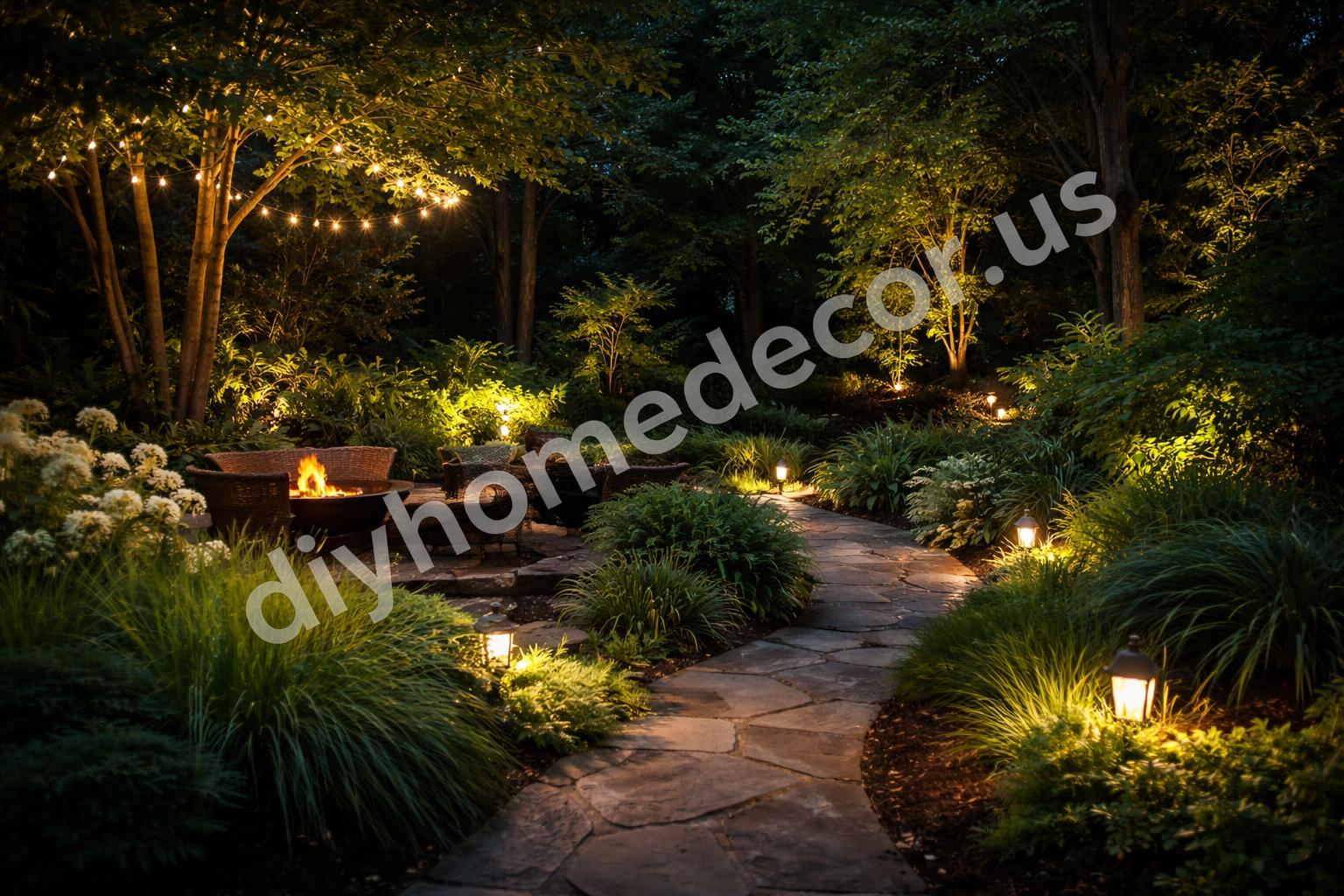
One tiny annoyance I see all the time is a light aimed too high. It lights the sky, not the garden. The fix is usually simple, but it’s easy to miss if you’re standing too close while adjusting it.
A quick mixing formula that usually works
If you want a straightforward plan, this is the one I’d start with.
For a small backyard
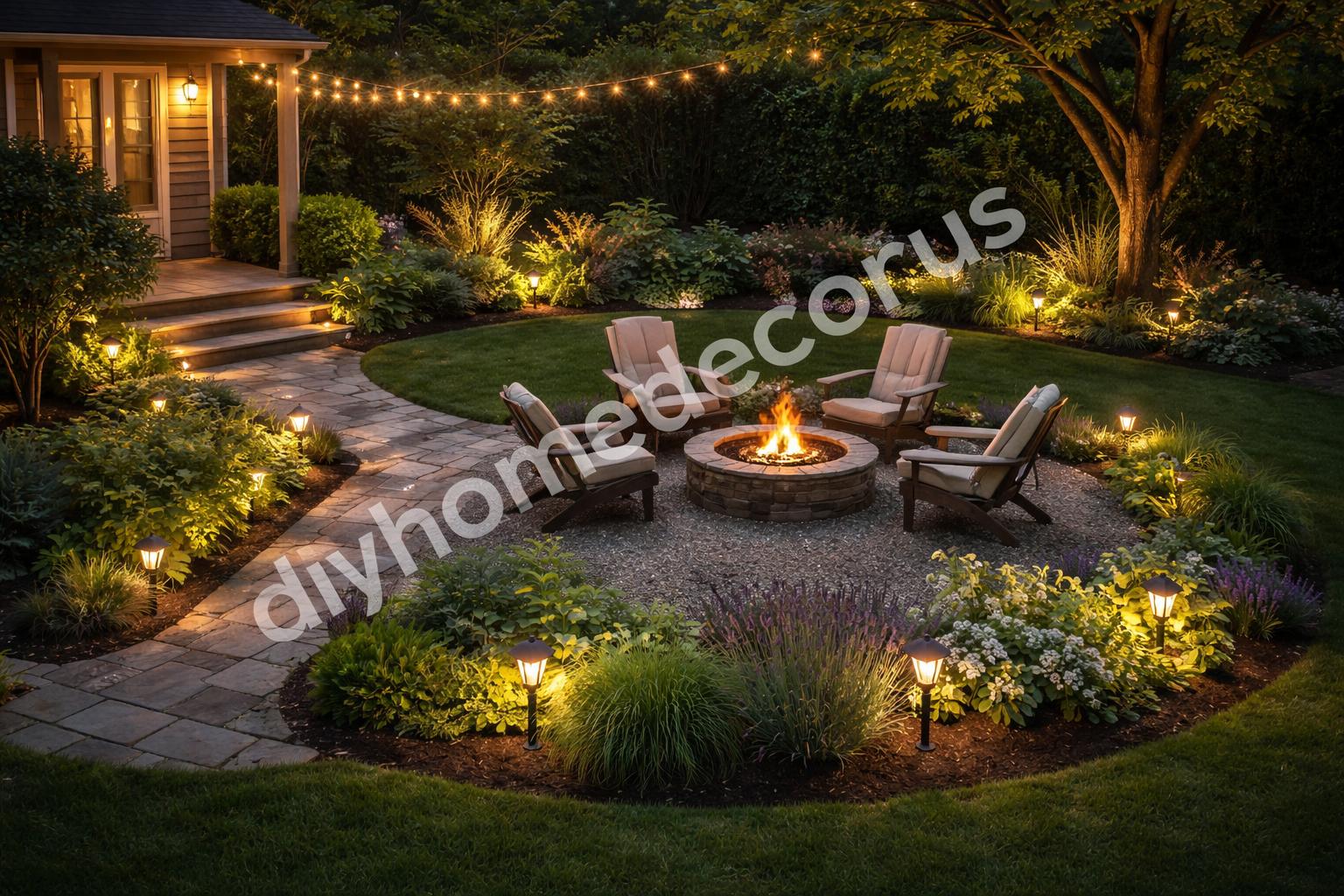
- 1 LED focal light
- 3–6 solar path or border lights
- 1 string or canopy light for mood
- 1 small accent lantern or spot, if needed
For a medium backyard
- 1–2 LED anchor lights
- a few solar edge lights
- one overhead string set
- optional lanterns around seating
For a cozy patio corner
- LED for the main seating area
- solar lights around the perimeter
- one decorative piece to soften the scene
You don’t need to use every kind at once. The point is balance, not inventory.
Common mistakes that make the mix look messy
A lot of good lighting plans go wrong for the same few reasons.
1. Too many competing styles
When every light has a different shape or finish, the yard starts feeling random.
2. No clear focal point
If everything is lit equally, nothing stands out.
3. Mixing very different color temperatures
Warm and cool can clash fast.
4. Placing solar in bad sunlight
That’s the easiest way to get disappointment.
5. Overlighting small spaces
Small yards need restraint more than quantity.
If you avoid those five mistakes, you’re already ahead of most setups I see.
A few finishing touches that make it feel designed
The last 10 percent matters.
You can have the right lights in the right places, but the scene still needs a little editing. Hide cords where you can. Space fixtures with intention. Keep the brightest points away from the seating area if glare is a problem. And if one light feels awkward, move it instead of trying to ignore it.
Small adjustments matter more than people think. I’ve spent more time shifting a single light than installing three others, and that usually pays off.
A few easy finishing tips:
- repeat the same bulb tone
- leave a little empty space
- angle lights downward when possible
- keep decorations from crowding the fixtures
- test the setup at dusk, not midday
That last one sounds obvious, but it’s where a lot of people catch problems. A setup that looks fine in daylight can feel totally different after sunset.
Final thought
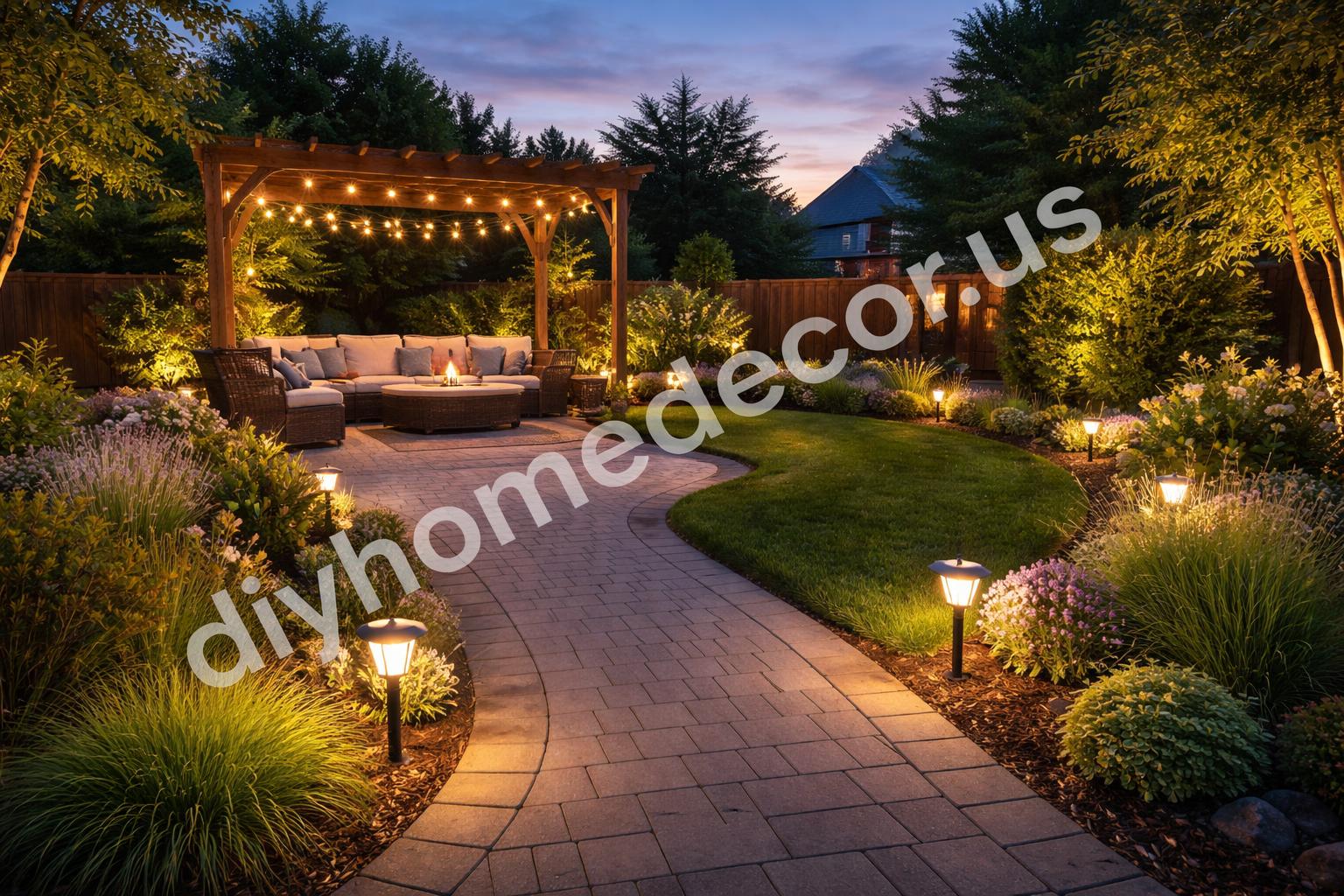
Mixing solar and LED garden lighting isn’t really about buying more stuff. It’s about giving each light a job and letting the yard breathe a little.
When solar handles the edges and LED handles the dependable center, the whole space feels calmer. And once that balance clicks, the backyard stops looking decorated in pieces and starts looking like one thoughtful plan. That’s the look most people want, even if they don’t say it out loud.
Save This Guide on Pinterest
Save this image to Pinterest so you can easily return to this guide later.