A small backyard can look cozy fast, but the wrong lighting makes it feel cramped or messy. Too many fixtures, too much glare, or lights that don’t fit the space usually end up doing the opposite of what you wanted.
And once that happens, the whole yard starts to feel less usable at night. You stop sitting outside, corners disappear into darkness, and even a nice patio can feel unfinished.
The good news is that small spaces are easier to light well once you know what to look for. In this article, I’ll walk through the choices that matter most, the mistakes people make, and how to pick garden lighting decor that actually helps a small backyard feel bigger, warmer, and more inviting.
Start with the size of the space, not the style
This is the first thing people skip, and it causes most of the trouble.
A tiny yard does not need the same lighting plan as a wide garden path. If you treat it like a larger space, you usually end up with too many bright points and no clear focal area.
Think in zones first.
You may only have three: a sitting area, a planting edge, and a path or step.
That simple split helps you avoid buying random lights that look nice online but don’t make sense together. For a small backyard, the job of lighting is less about filling space and more about guiding the eye.
I’ve noticed that people often overestimate how much light a small yard needs. One lantern, one string of lights, and one soft accent light can be plenty. More than that, and it starts to feel cluttered.
A quick rule that helps
Use lighting to answer one question:
- Where do I want people to look?
- Where do I want people to walk?
- Where do I want the space to feel softer?
If a light doesn’t help with one of those, it probably doesn’t belong.
Choose light that feels soft, not harsh
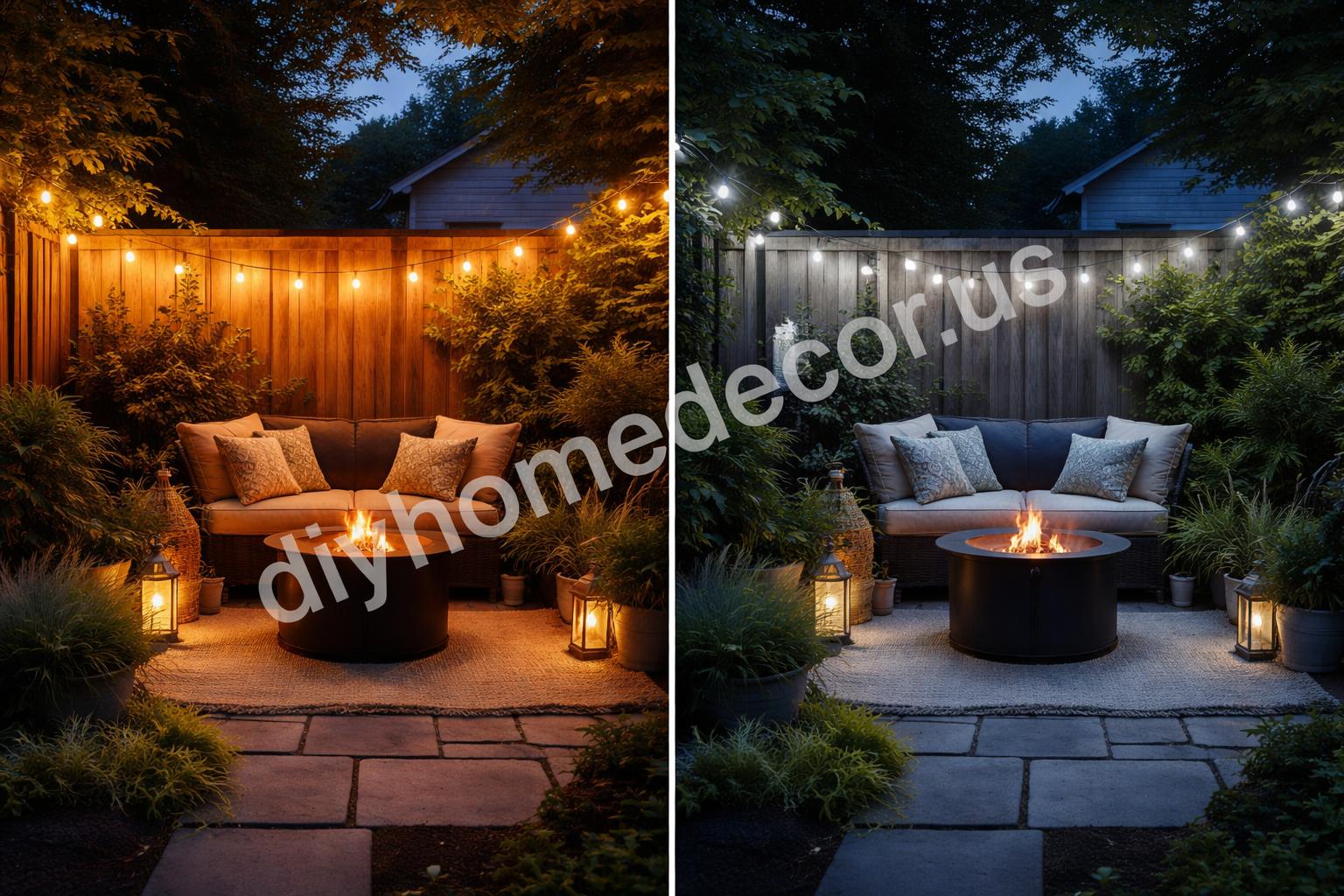
Small backyards usually look best with warm, low-intensity light. Bright white lighting can make a tight space feel flatter and more exposed.
That doesn’t mean everything has to be dim. It just means the beam quality matters.
A soft glow around a bench, fence, or planter does more for mood than a harsh floodlight ever will. It also helps the yard feel a little larger because your eye moves gently from one lit area to another instead of stopping at a bright hotspot.
Warm light almost always feels safer in a small space because it makes the yard feel lived-in, not overlit.
If you’re comparing options online, check the color temperature first. Around 2700K to 3000K is usually the sweet spot for a garden that’s meant to feel relaxing. Cooler light has its place near work areas, but most small backyard decor looks better with warmth.
What to avoid
- Blue-white LEDs that feel too stark
- Overpowered spotlights
- Fixtures that cast hard shadows everywhere
- Decorative lights that are so bright they erase the plants around them
A small yard needs definition more than drama.
Pick decor that matches the shape of your backyard
A narrow yard and a square courtyard need very different lighting choices.
In a long, skinny backyard, linear lighting works well. Think string lights, slim wall sconces, or a run of small path lights that lead the eye down the length of the space. That helps the yard feel intentional instead of chopped up.
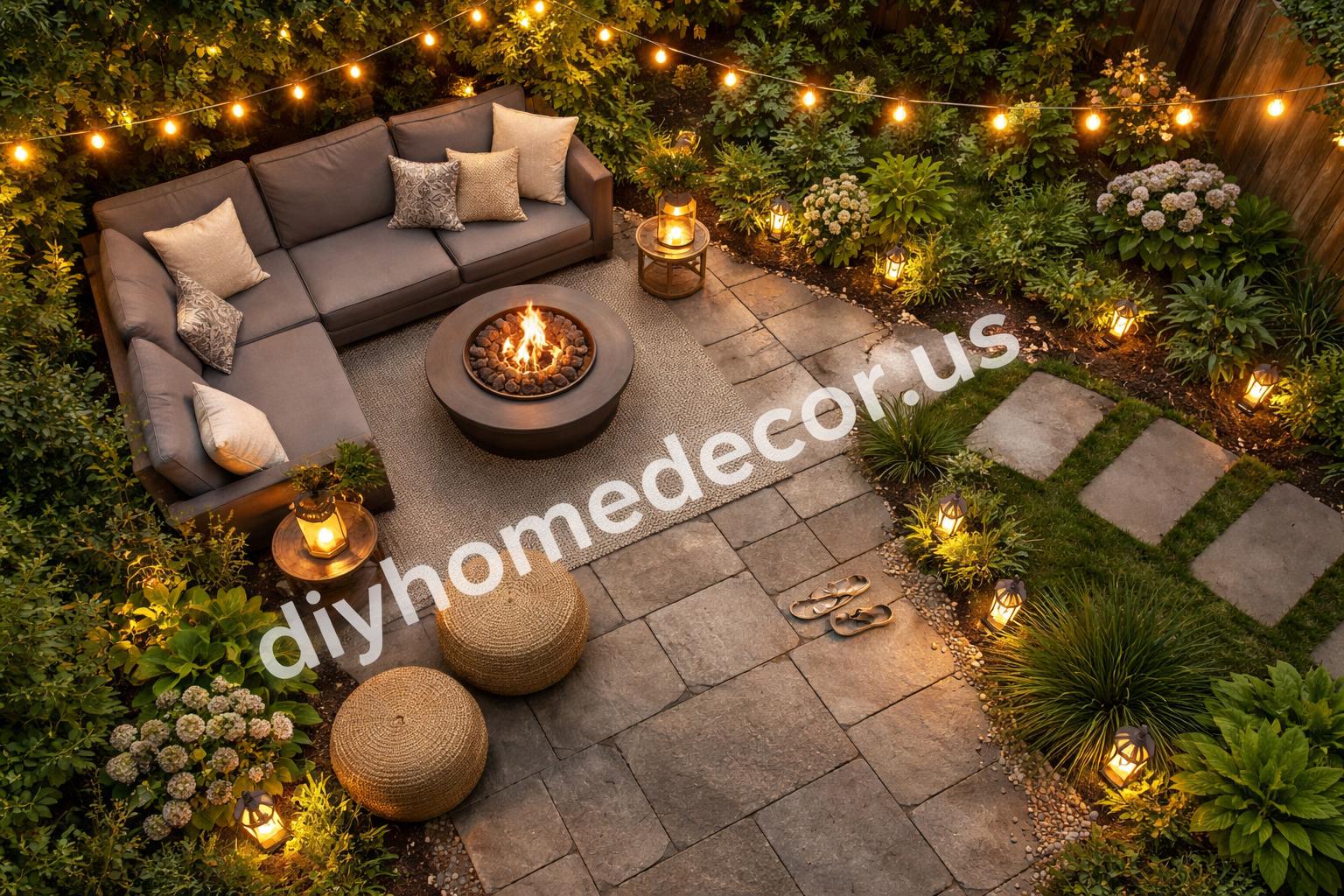
In a square or patio-heavy yard, you usually want layers. One overhead element, one ground-level glow, and one accent light near a plant or decorative object can make the whole area feel more balanced.
A mistake I see a lot is choosing decor pieces because they look cute by themselves. They may be adorable on a product page, but in a tiny backyard, an oversized lantern or bulky solar statue can eat up visual room fast.
Shape matters more than people think
- Tall and narrow fixtures can help if the yard feels short or crowded.
- Low, spread-out lights work better if you want to keep the space open.
- Hidden lights are useful when you want atmosphere without adding visual clutter.
That last one is easy to forget. Sometimes the best garden lighting decor is the stuff you barely notice during the day.
Solar, plug-in, or battery: choose for your real habits
This part is less glamorous, but it matters a lot.
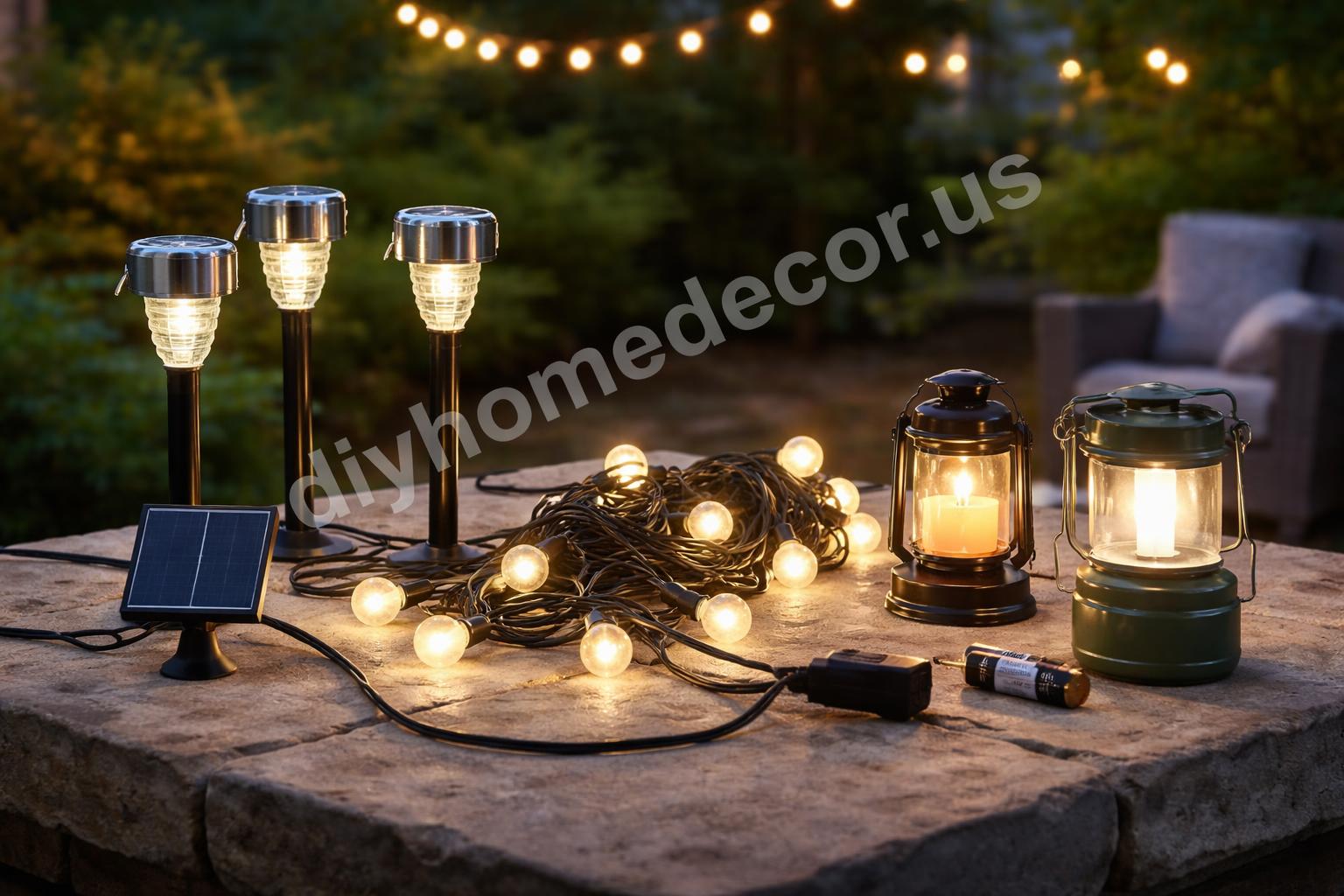
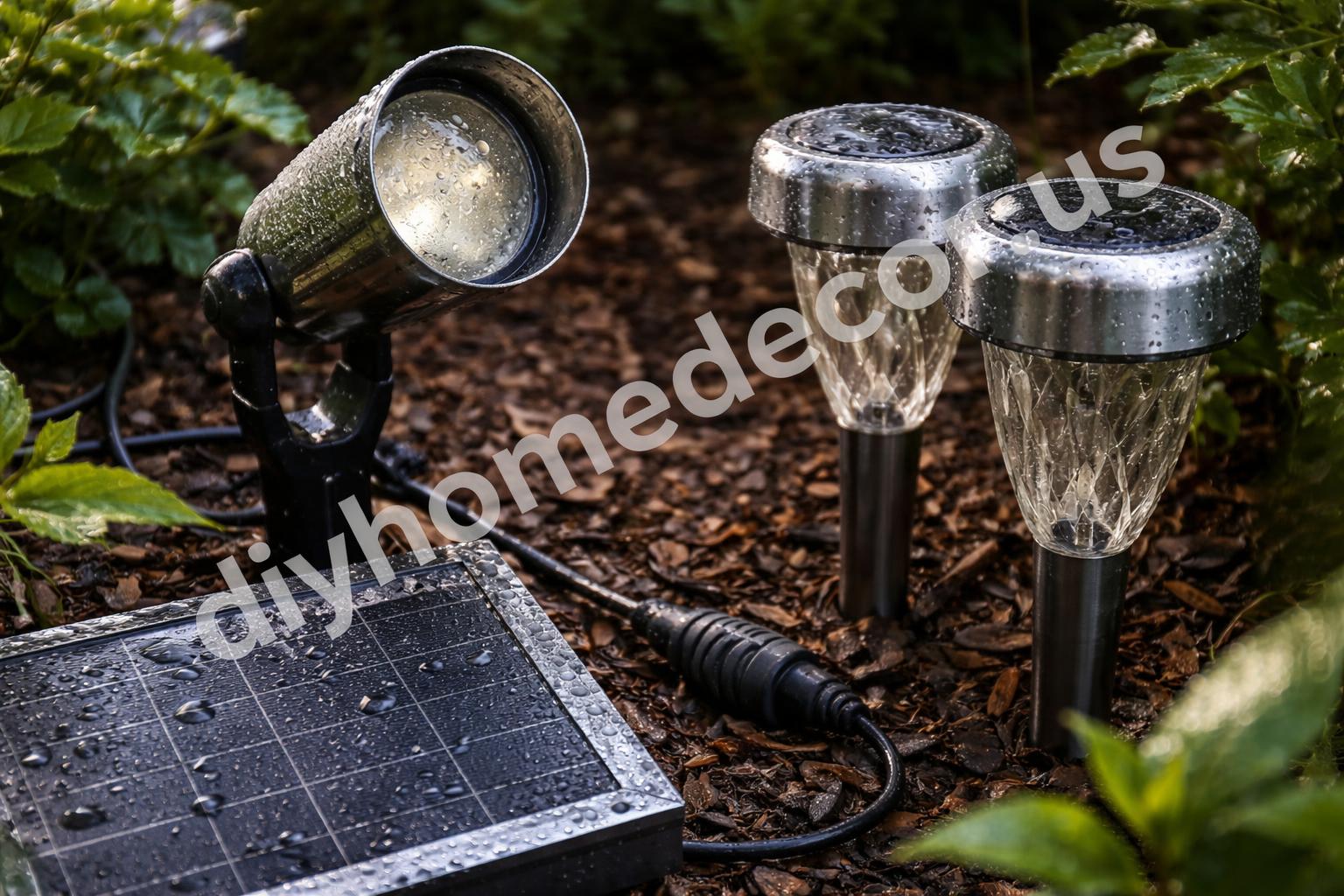
Solar lighting is convenient, especially for small yards where you don’t want cords everywhere. But solar only works well if the panels get enough direct sun. If your yard is shaded by fences, trees, or nearby buildings, the lights may be weak by evening.
Plug-in lighting is more dependable. It gives you steadier brightness and more control. The downside is obvious: cords, outlets, and a little more planning.
Battery-powered decor is the middle ground, but it asks for regular upkeep. If you dislike changing batteries, you’ll probably stop using it.
For a lot of people, solar ends up being the easiest entry point. If you’re looking for ideas, this guide to solar garden lighting décor ideas for small spaces is a useful place to compare styles before you buy.
A practical way to decide
Ask yourself:
- Do I have enough sun?
- Do I want the lights to turn on without effort?
- Am I okay with occasional maintenance?
If you answered yes to the first two, solar may be enough. If not, plug-in usually wins.
Use layers instead of one main light
This is the part that changes everything in a small backyard.
One overhead string or one lantern on the table can look fine, but it rarely feels complete. Layering gives the yard depth, and depth is what makes a small space feel comfortable instead of flat.
I like to think of it like this:
- Base light gives general visibility
- Accent light highlights a feature
- Decorative light adds charm
You don’t need all three in a big way. Even a small version of each can be enough.
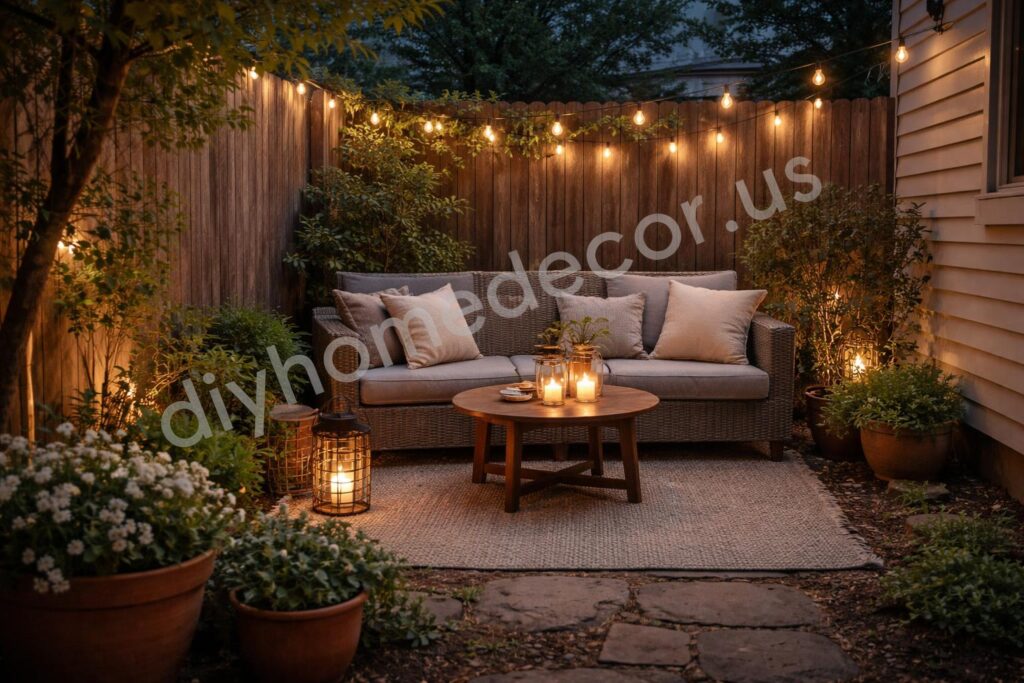
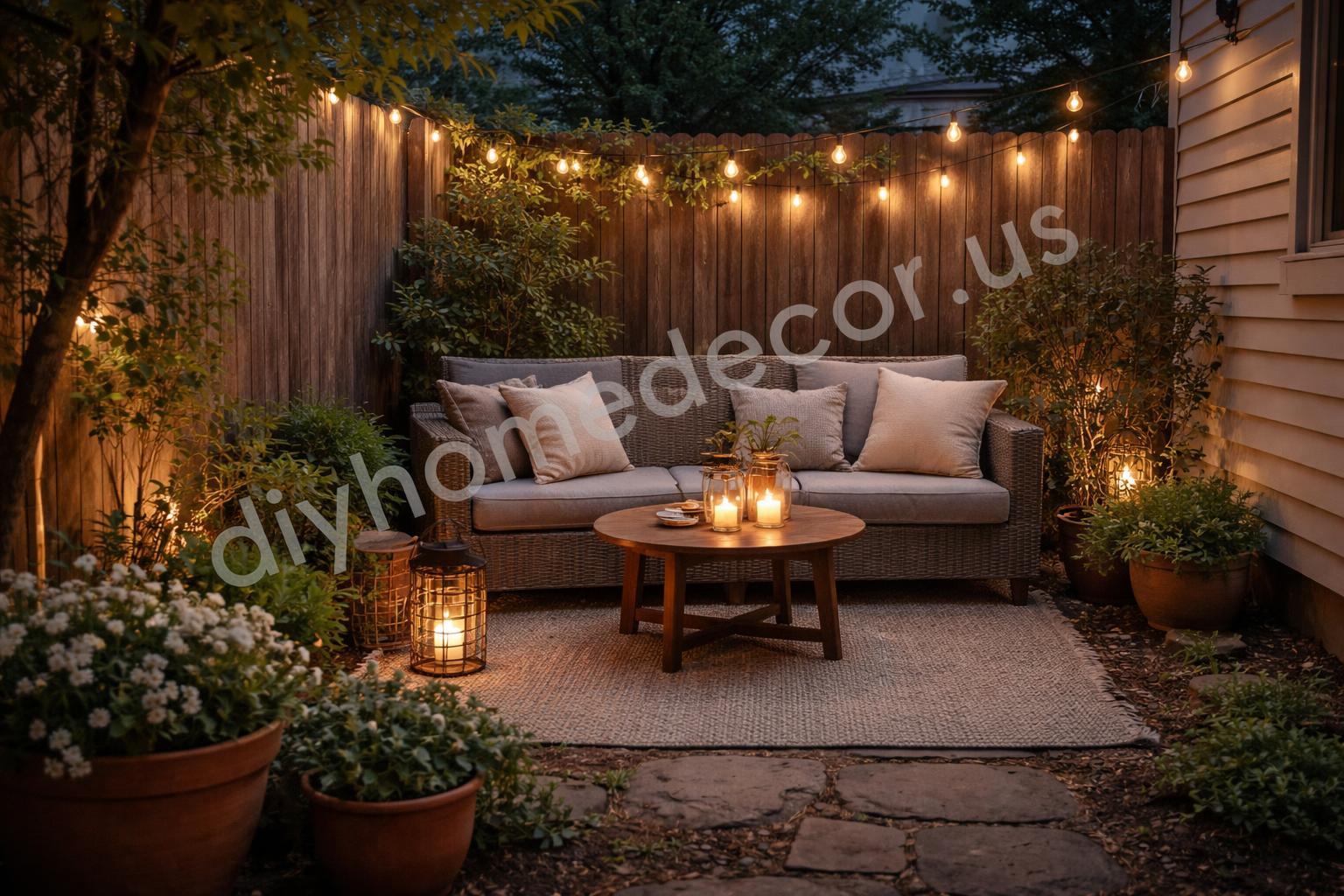
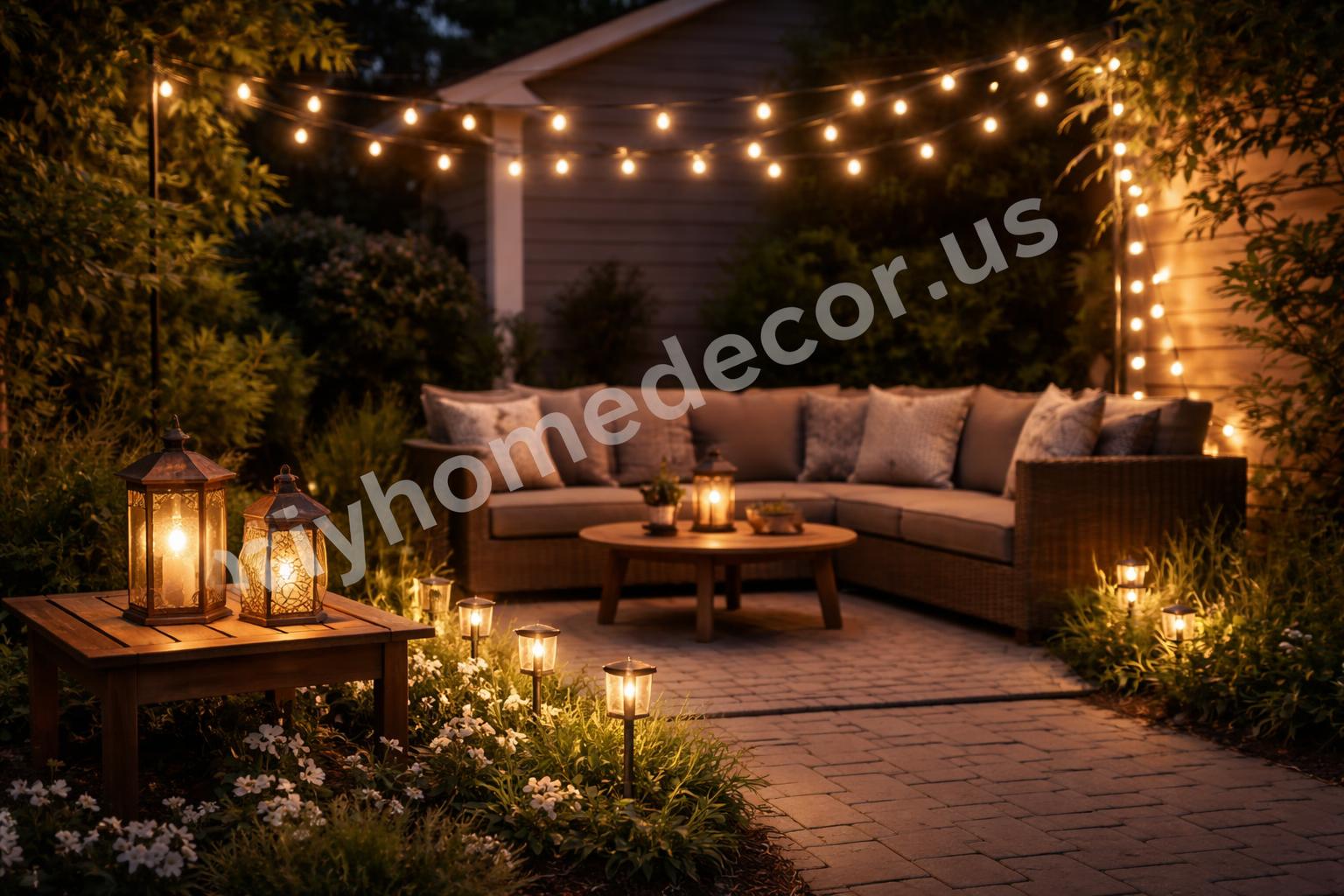
For example, a single row of string lights overhead, a pair of path lights near stepping stones, and one softly lit planter near the seating area can feel surprisingly full without being busy.
One small lesson I learned: when every light has the same brightness, the yard loses personality. Mixing levels is what gives it character.
Choose decor that does double duty
In a small backyard, every item should earn its place.
That doesn’t mean the yard has to feel practical-only. It just means your lighting decor should ideally do more than one thing. A lantern can mark a corner and look nice on its own. A solar stake can brighten a path and add shape to a flower bed. A wall light can make stairs safer and help the fence feel less plain.
This is where a lot of smaller yards get better results from simpler pieces. A few well-placed items almost always look better than a pile of trendy decor.
Good double-duty choices
- Lanterns that can sit on the ground or table
- String lights that frame a seating area
- Stake lights that define a border and guide movement
- Wall-mounted fixtures that save floor space
- Decorative solar orbs that work like art during the day and glow at night
The trick is to keep the forms simple. Busy shapes can look noisy in a small yard.
Pay attention to placement before you buy more lights
A lot of bad lighting problems are really placement problems.
If the lights are too close together, the yard looks crowded. If they’re too far apart, the whole setup feels unfinished. And if everything sits at the same height, the result can feel flat.
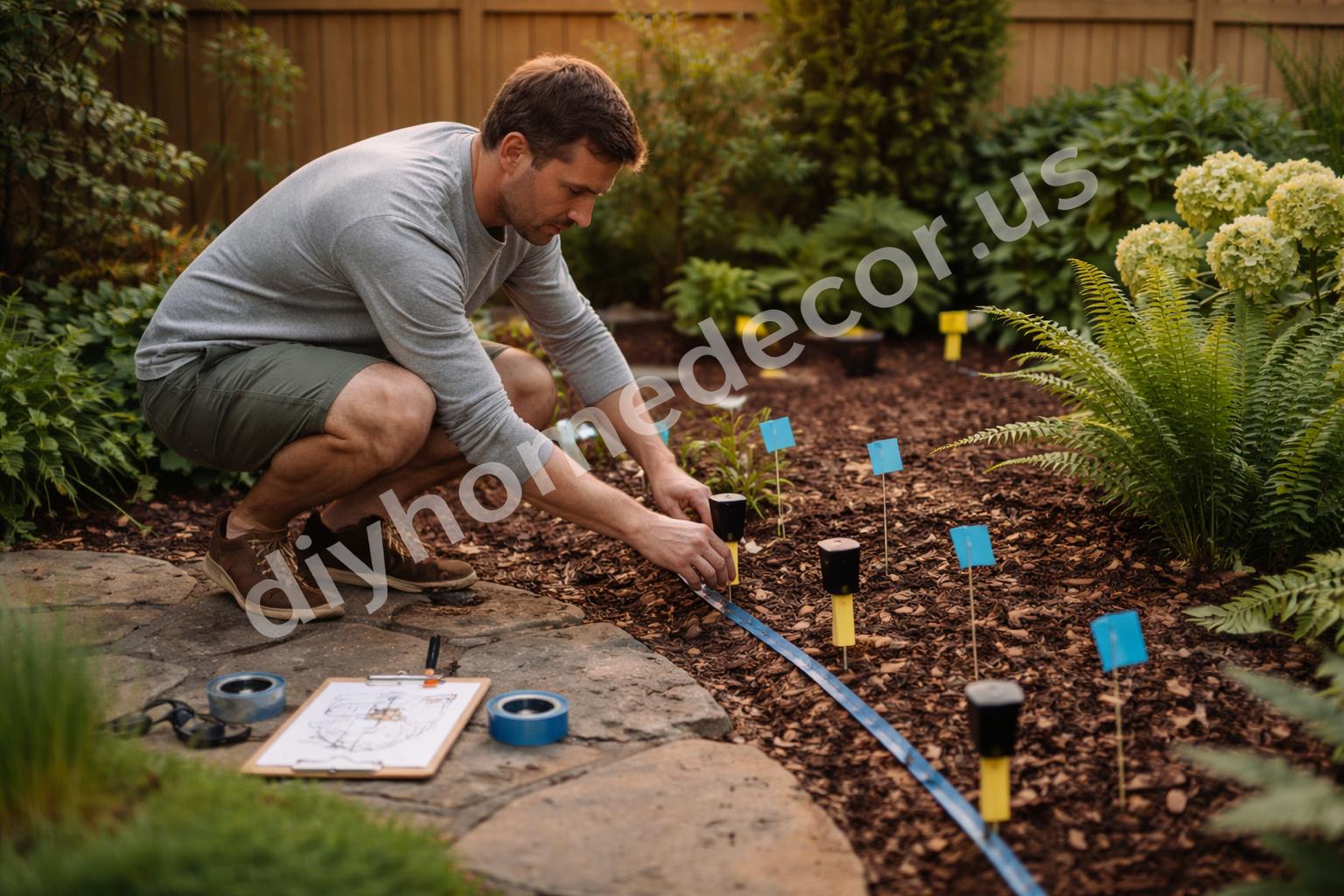
Before buying more decor, try marking spots with painter’s tape, stakes, or even a few random objects. It’s a cheap way to see how the space will read once the lights are in place.
A simple placement rhythm works well in compact areas:
- Put one light near where people sit
- Put one light near a border or edge
- Put one light near a walkway or step
- Leave some darker space in between
That last part matters more than people expect. Darkness gives the lit areas more contrast, and contrast is what makes the decor stand out.
Placement mistake to avoid
Don’t line every light up like a runway unless that’s truly the look you want. In a tiny backyard, perfect symmetry can feel stiff.
Think about daytime looks too
Garden lighting decor is not only for night.
A small backyard spends most of its life in daylight, so you’ll see the fixtures all the time. That means the shape, finish, and size matter even when the lights are off.
This is where some products disappoint. They look charming in the evening, but daytime is a different story. Oversized plastic globes, glossy metal finishes, or flimsy stake tops can make a small yard look cheap fast.
A better rule is to choose decor that disappears a little during the day and earns attention at night. Neutral finishes, clean lines, and smaller profiles usually work best.
If you’re also shopping for other kinds of decor and want a sense of what tends to look clean online, this roundup on where to buy modern living room decor online for less can be a useful reminder of how style and value are often judged the same way in different parts of the home: by finish, proportion, and how well the piece fits the space.
Outdoor durability still matters, even in a tiny yard
Small spaces can trick people into thinking the lighting won’t need to work as hard. But the same weather still hits.
Rain, wind, sun, and moisture can wear down cheap decor quickly. In a compact backyard, worn-out lights stand out even more because there’s nowhere to hide them.
Look for weather resistance that matches your climate. If a product will sit in a damp corner or close to plants, that matters. If it’s solar, the panel needs to survive direct sun without getting cloudy or weak. If it’s metal, the finish should be able to handle rust better than a basic painted surface.
I’ve seen a lot of small yards look great for one season, then start to feel tired because the lighting hasn’t held up. That’s frustrating, especially when the decor was supposed to make the space easier to enjoy.
A quick durability checklist
- Can it handle rain?
- Will it fade in strong sun?
- Is it easy to clean?
- Can you replace the bulb or battery?
- Will it still look decent after a season?
If the answer is no to most of those, keep looking.
Match the lighting to the mood you actually want
This sounds obvious, but people often skip it and end up with mixed results.
Do you want the yard to feel romantic, playful, calm, or a little more polished? Different decor choices support different moods.
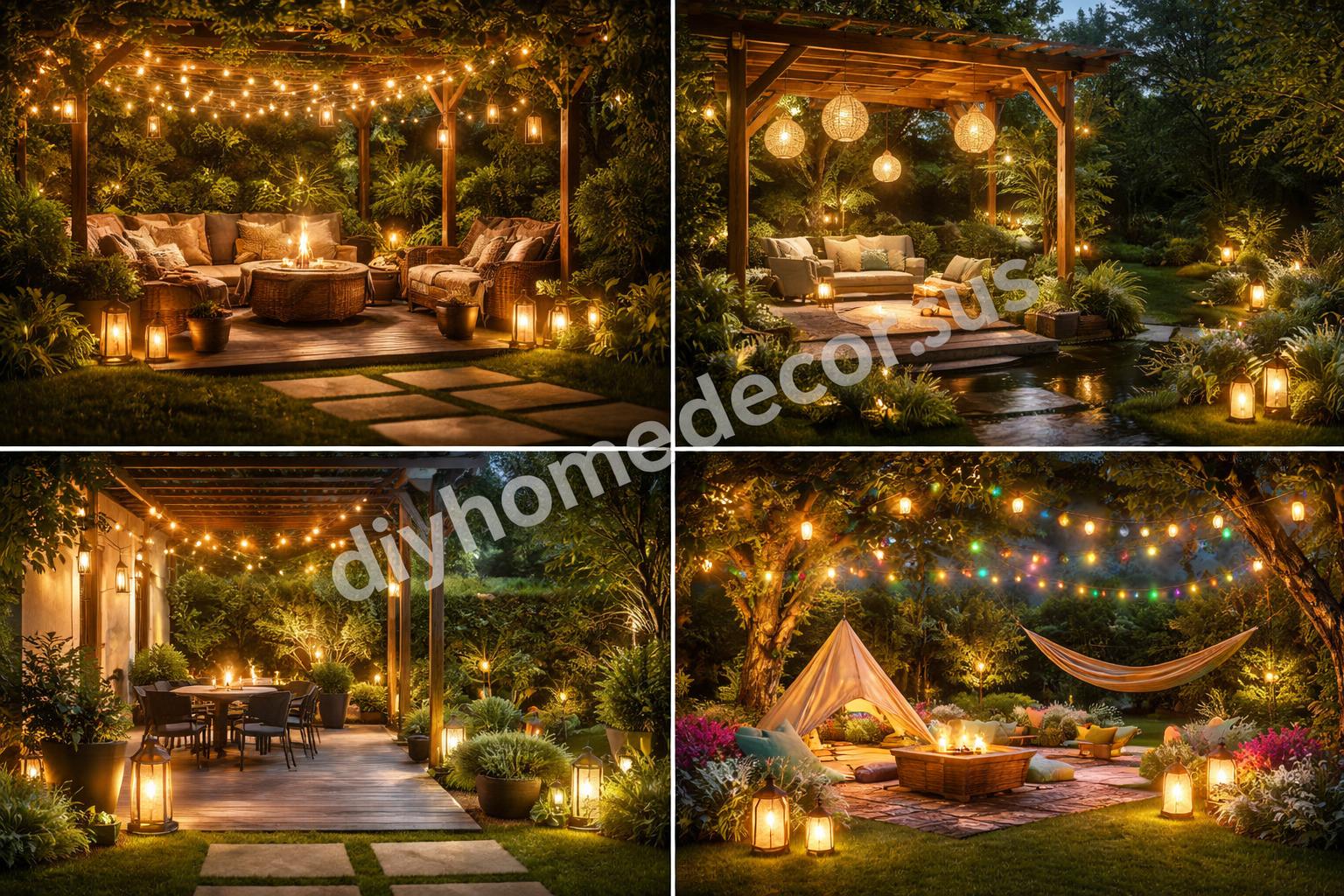
String lights usually feel casual and cozy. Lanterns feel more grounded and intimate. Small path lights feel neat and practical. Decorative orbs or sculptural pieces can make the yard feel a little more styled, but they can also become clutter if you use too many.
A good small backyard usually sticks to one main mood and one supporting mood. For example, cozy plus tidy works well. Calm plus welcoming works too. Cozy plus dramatic, though, can get messy fast.
Simple mood guide
| Mood | Best lighting style | What it does |
|---|---|---|
| Cozy | Warm string lights, lanterns | Makes the yard feel inviting |
| Calm | Low accent lights, soft glows | Keeps the space relaxed |
| Neat | Path lights, wall fixtures | Improves structure and safety |
| Playful | Small orbs, mixed shapes | Adds personality without much effort |
That table is simple on purpose. Small yards don’t need complicated lighting plans.
Build around one focal point
If your yard is tiny, trying to light everything evenly usually backfires. It’s better to give the eye one place to land.
That focal point might be a chair corner, a tree, a planter wall, or even a small table setup. Light that area a little more than the rest, and let the edges stay softer.
This is one of the easiest ways to make a small backyard feel designed instead of just decorated. It also helps if your yard has awkward corners or less attractive bits that you’d rather not feature.
One thing I learned the hard way: if you try to make every corner equally important, none of them feel special.
A simple buying checklist before you click order
Here’s the short version I’d use if I were shopping again for a small backyard.
- Measure the space before you shop
- Decide on warm or cool light first
- Check whether you have enough sun for solar
- Look at the daytime shape, not just the night glow
- Keep cords, plugs, and batteries in mind
- Choose fewer, better-placed pieces over lots of small extras
- Read the final price carefully, including shipping and returns
If you’re comparing similar products, don’t just look at the sticker price. Final cost, bulb size, material quality, shipping, and seller trust can matter more than the base listing.
That’s especially true with decorative lights, where two products can look nearly identical online and turn out very different once they arrive.
Final thought
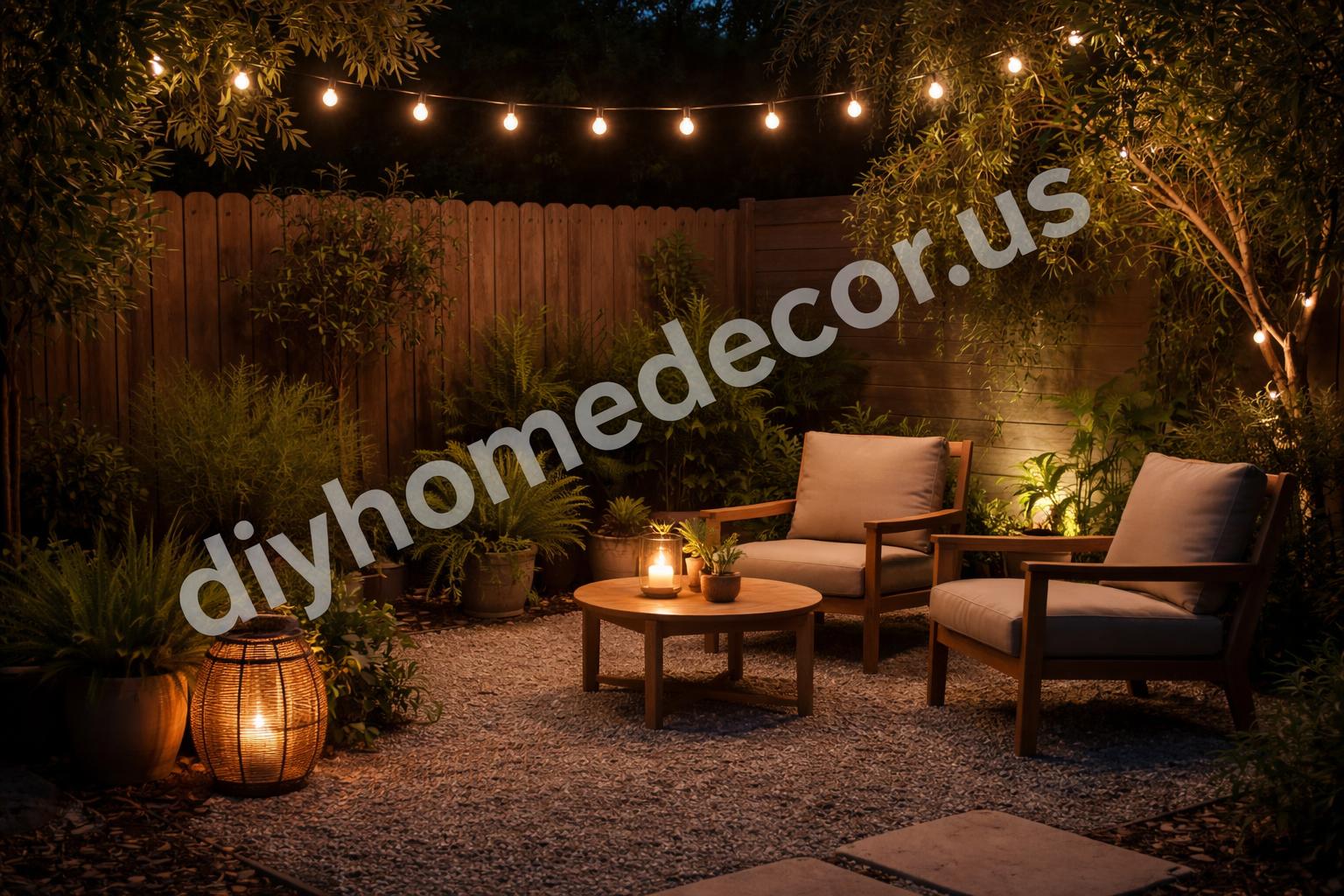
Small backyards usually look best when the lighting is quiet, layered, and a little restrained. That doesn’t make the space boring. It makes it feel usable.
The nicest setups I’ve seen weren’t packed with lights. They just had the right ones in the right spots, and the rest of the yard was allowed to breathe.
Save This Guide on Pinterest
Save this image to Pinterest so you can easily return to this guide later.