A backyard can look fine in daylight and still feel a little flat at night. That’s usually the problem with outdoor spaces that don’t have a lighting plan, and it gets obvious fast once the sun goes down.
Without enough glow, people stop using the space as much. The patio feels smaller, the corners disappear, and even a pretty garden can look unfinished. I’ve seen that happen with simple yards and nicer ones too.
The good news is you don’t need a wired setup or a big budget to fix it. These 17 solar garden lighting décor ideas can help you make the whole space feel warmer, softer, and more inviting after dark.
Start with the easiest glow: paths, edges, and borders
The simplest solar lights are often the best place to begin. They don’t need much planning, and they instantly make a yard feel more finished.
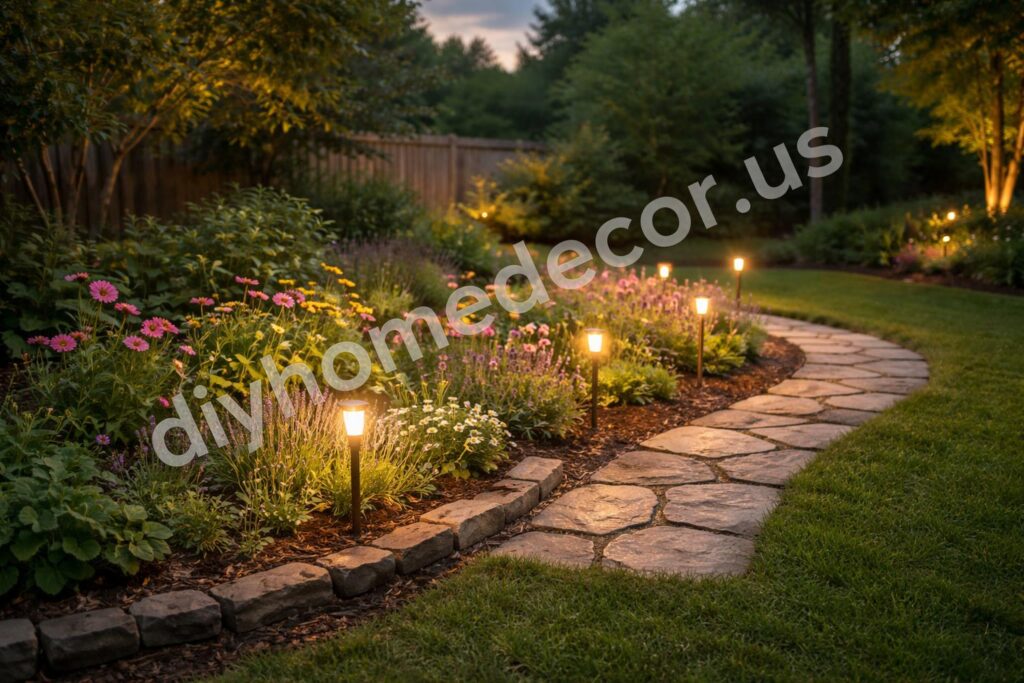
Path lights along a walkway do two jobs at once. They help people see where they’re stepping, and they also create a clean line that makes the garden look organized.
1. Stake lights along the walkway
This is the most straightforward upgrade. A row of small stake lights makes gravel paths, stepping stones, and paver edges feel intentional instead of forgotten.
I’ve noticed that uneven spacing looks worse at night than most people expect. Keep the spacing consistent, even if the lights themselves are simple.
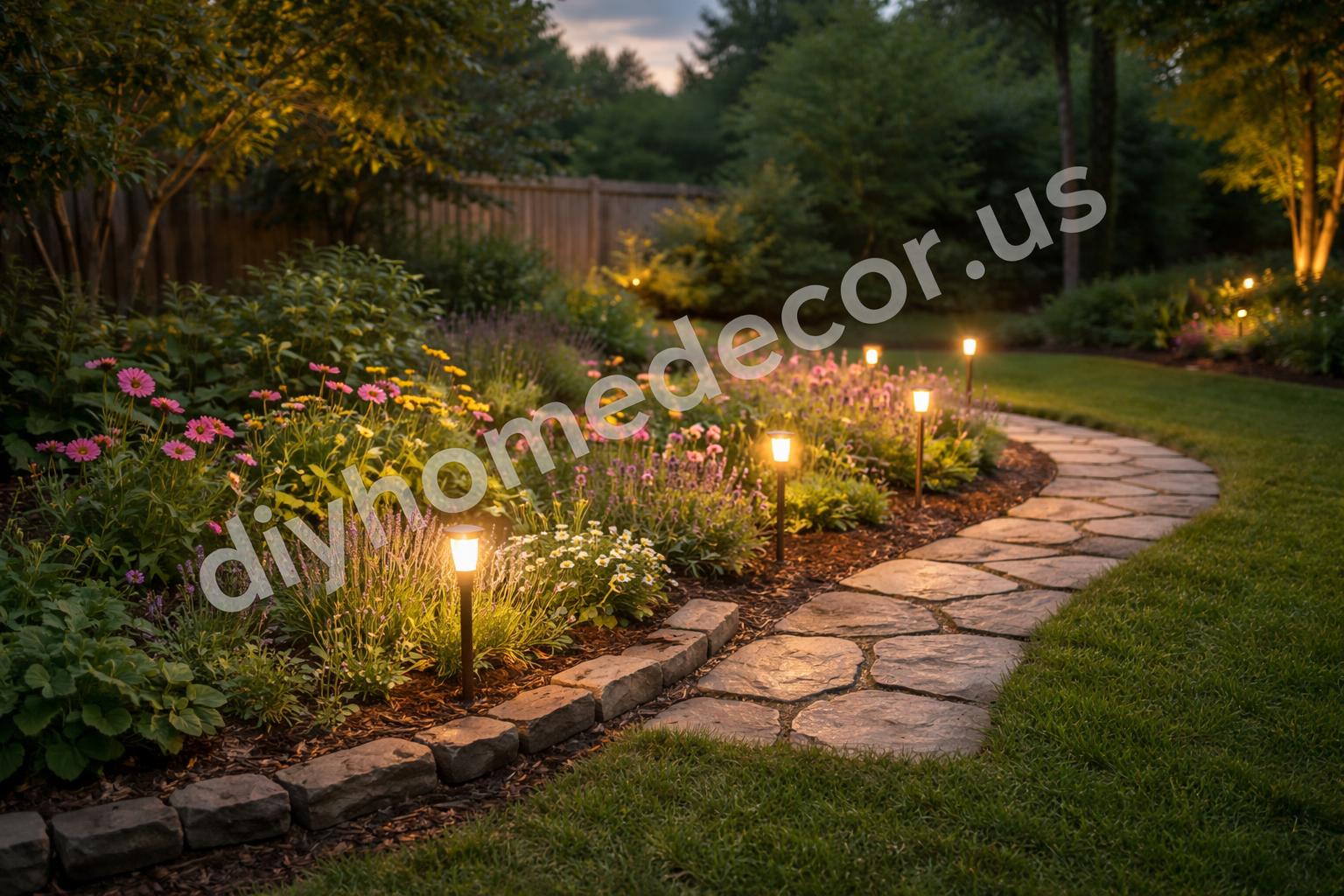
2. Border lights for flower beds
Short solar border lights can outline a bed without stealing attention from the plants. They give shape to the garden and make darker corners feel less empty.
Best for: front edges of beds, low shrubs, and curved borders.
3. Solar lanterns tucked beside planters
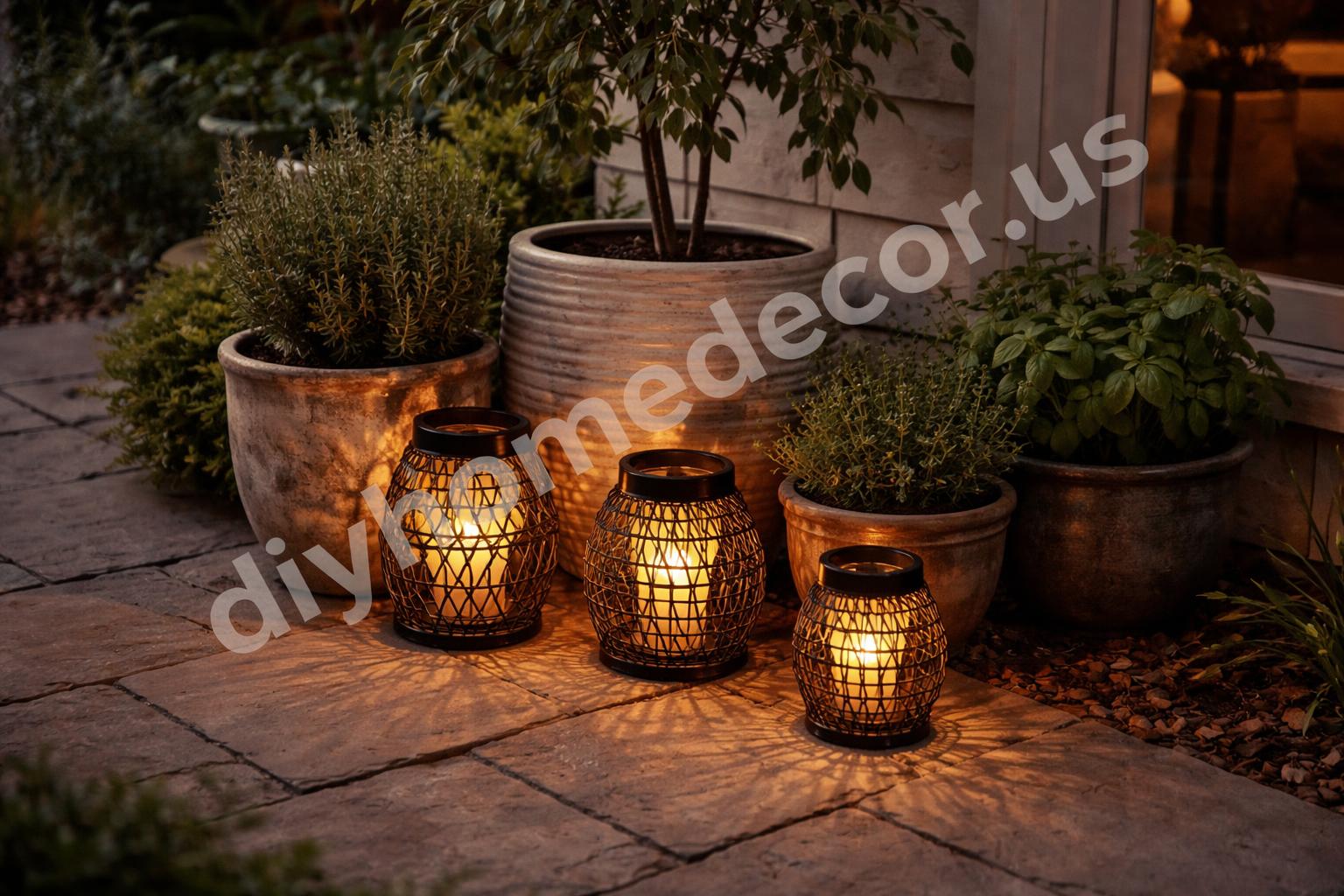
Lantern-style lights feel a little more decorative than standard stakes. Set them near large pots or group two or three together by the porch.
That small cluster effect usually looks better than one lantern standing alone. One lonely light can feel random, while a pair looks planned.
Make the seating area feel like a real outdoor room
A backyard usually gets used more when the seating area feels cozy. Lighting is what changes it from “place to sit” into “place to stay.”
The trick is to light for mood, not just visibility. Too much brightness makes an outdoor space feel hard and practical. A softer glow is usually more useful.
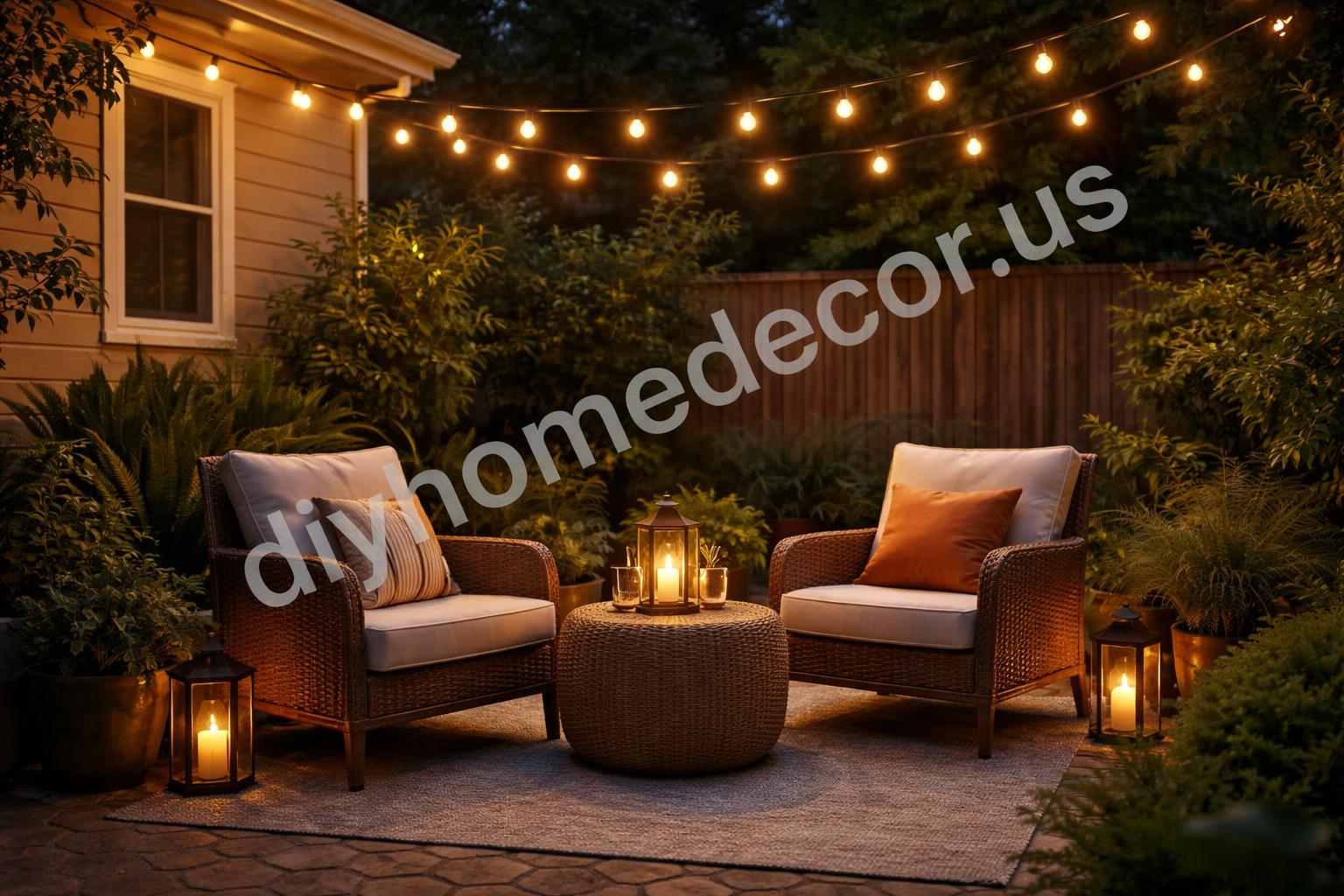
4. Hanging solar string lights over the patio
This is the classic choice for a reason. String lights give you a wide, gentle wash of light that makes everything feel calmer.
If the lights are too low, they can get in the way. If they’re too high, you lose the cozy feeling. The middle zone usually works best.
5. Mason jar solar lights on tables
These are easy to set on a dining table, side table, or outdoor shelf. They give off a small warm glow and double as décor during the day.
The one thing I learned is that they work better in groups. One jar can look cute, but three feels like a choice.
6. Solar pendant-style lights for pergolas
If you have a pergola or covered structure, pendant-style solar lights add a polished look without needing hardwiring.
They’re a nice option when you want the backyard to feel a little more styled. The look is subtle, but it changes the whole mood.
Use light to highlight features you already have
A lot of people buy décor when the real fix is already in the yard. A tree, a fountain, a bench, or even a raised planter can look much better with the right light on it.
This is where solar garden lighting starts to feel a little more thoughtful. You’re not just adding brightness. You’re directing attention.
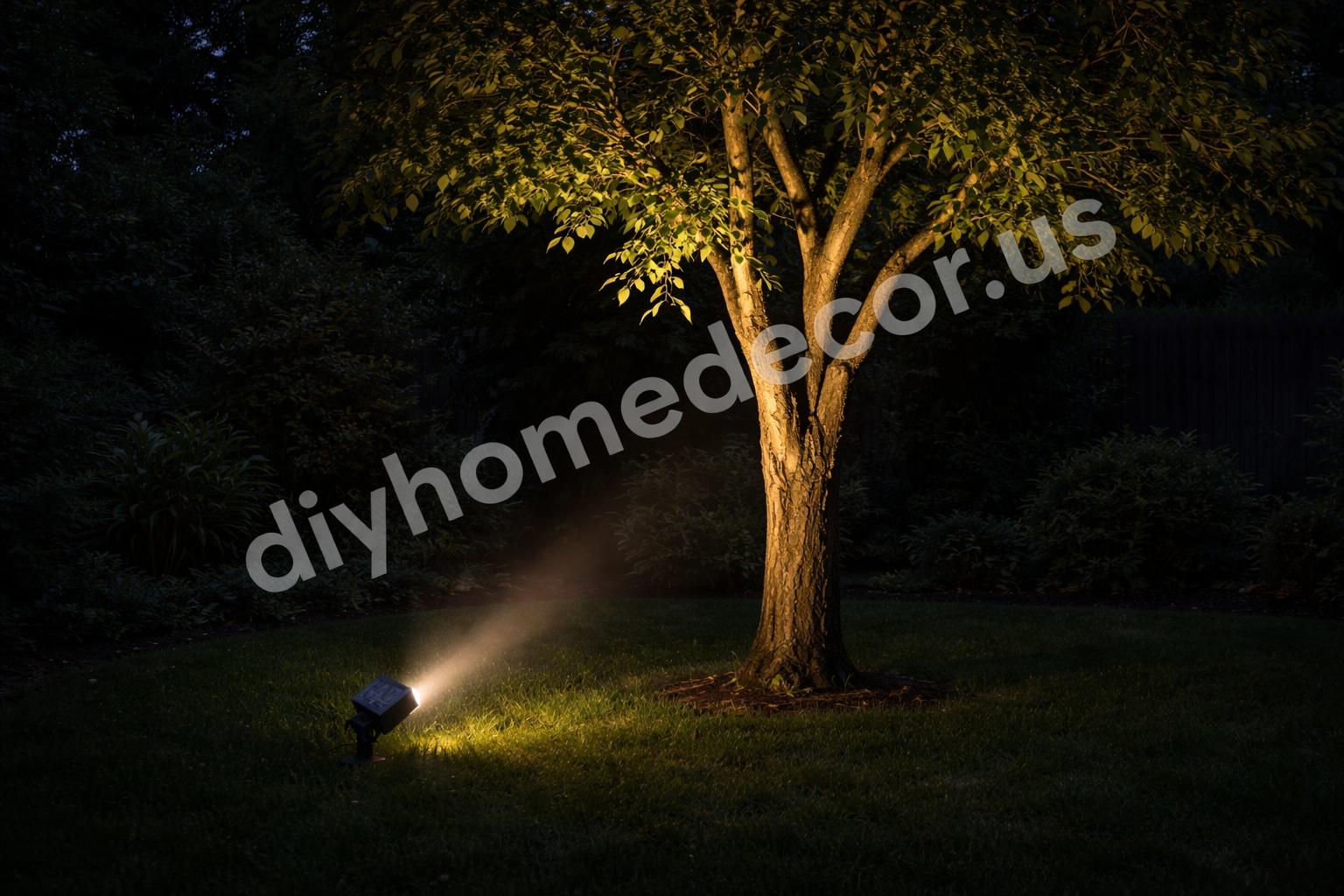
7. Spotlights on a favorite tree
A small solar spotlight aimed upward can make one tree look dramatic in a good way. It also creates depth, which helps the yard feel bigger.
For better results, aim the light low and let it wash upward. Straight-on lighting is usually flatter and less interesting.
8. Light a birdbath or fountain
Water features look better with a small glow nearby. The reflection adds movement, and the light makes the area feel alive even when everything else is still.
A soft light near water is often enough. You don’t need to flood it.
9. Accent lighting on garden art
If you have a sculpture, trellis piece, or even a weatherproof wall decoration, use one small solar light to point it out.
This works especially well if the piece already has a strong shape. Light and shadow do most of the work.
Add charm with decorative pieces that do more than light up
Some solar décor is useful, and some is purely for atmosphere. The best backyards usually mix both.
These pieces help the yard feel personal. They’re the kind of details people notice without always saying why.
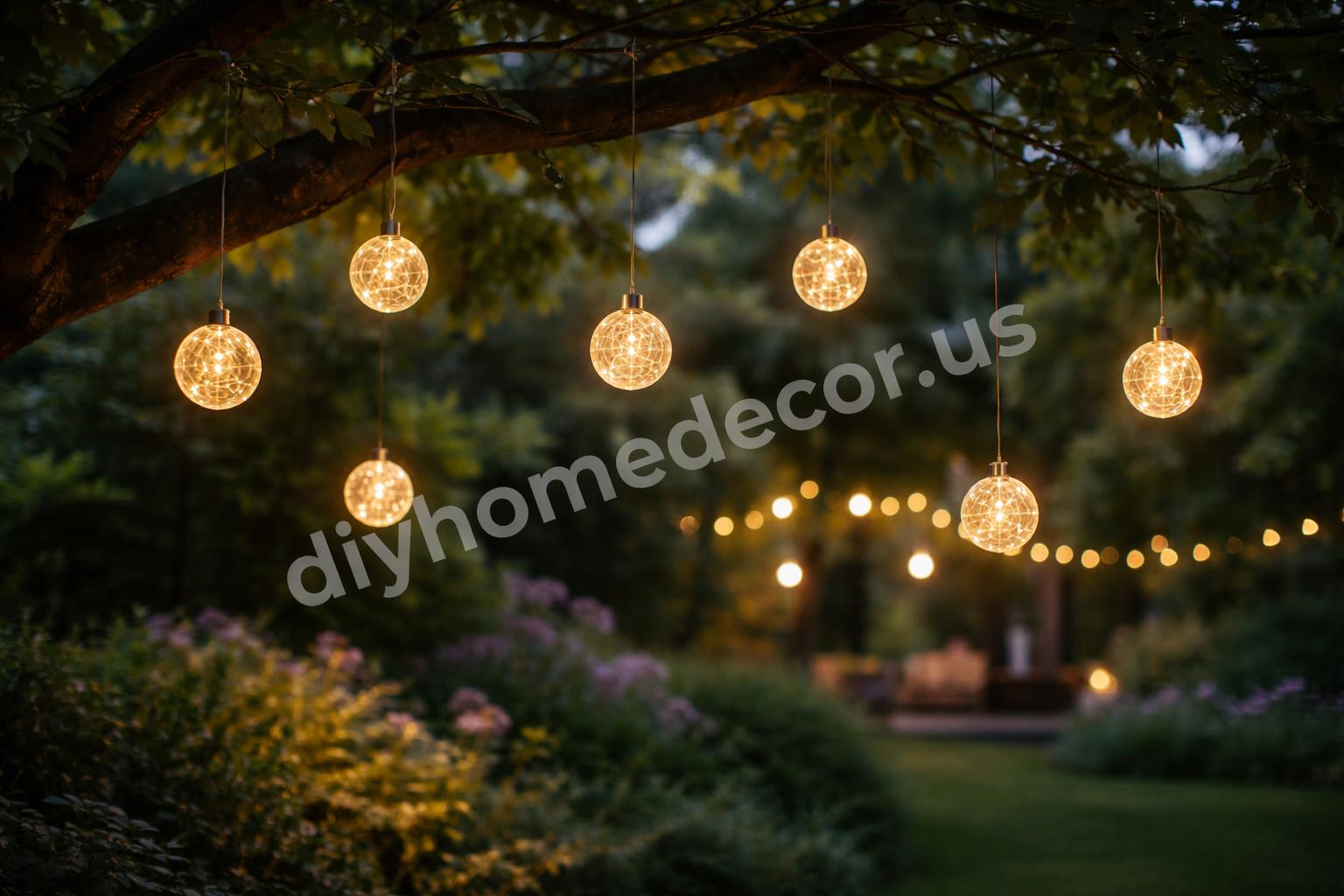
10. Hanging solar globe lights
Glass or orb-style solar lights can look beautiful in trees, along fences, or hanging from hooks. They add a soft floating effect that feels almost magical without being too much.
I like them because they don’t need a lot around them. One or two can create a strong visual point.
11. Solar fairy lights wrapped around shrubs
Tiny fairy lights are easy to overlook in the daytime, but at night they can turn an ordinary shrub into a feature.
A small warning here: wrap them loosely. Too tight, and the plant ends up looking stiff instead of styled.
12. Decorative solar stakes with shapes
Butterflies, flowers, stars, and leaves can be a little playful. Used carefully, they add personality instead of clutter.
These work best when you keep the shapes limited. A garden full of different motifs can start looking busy fast.
Create layers so the backyard doesn’t feel flat
Good outdoor lighting usually has layers. One type of light handles safety, another handles mood, and a third adds focal points.
That’s what makes a backyard glow instead of just “stay visible.” The space feels deeper.
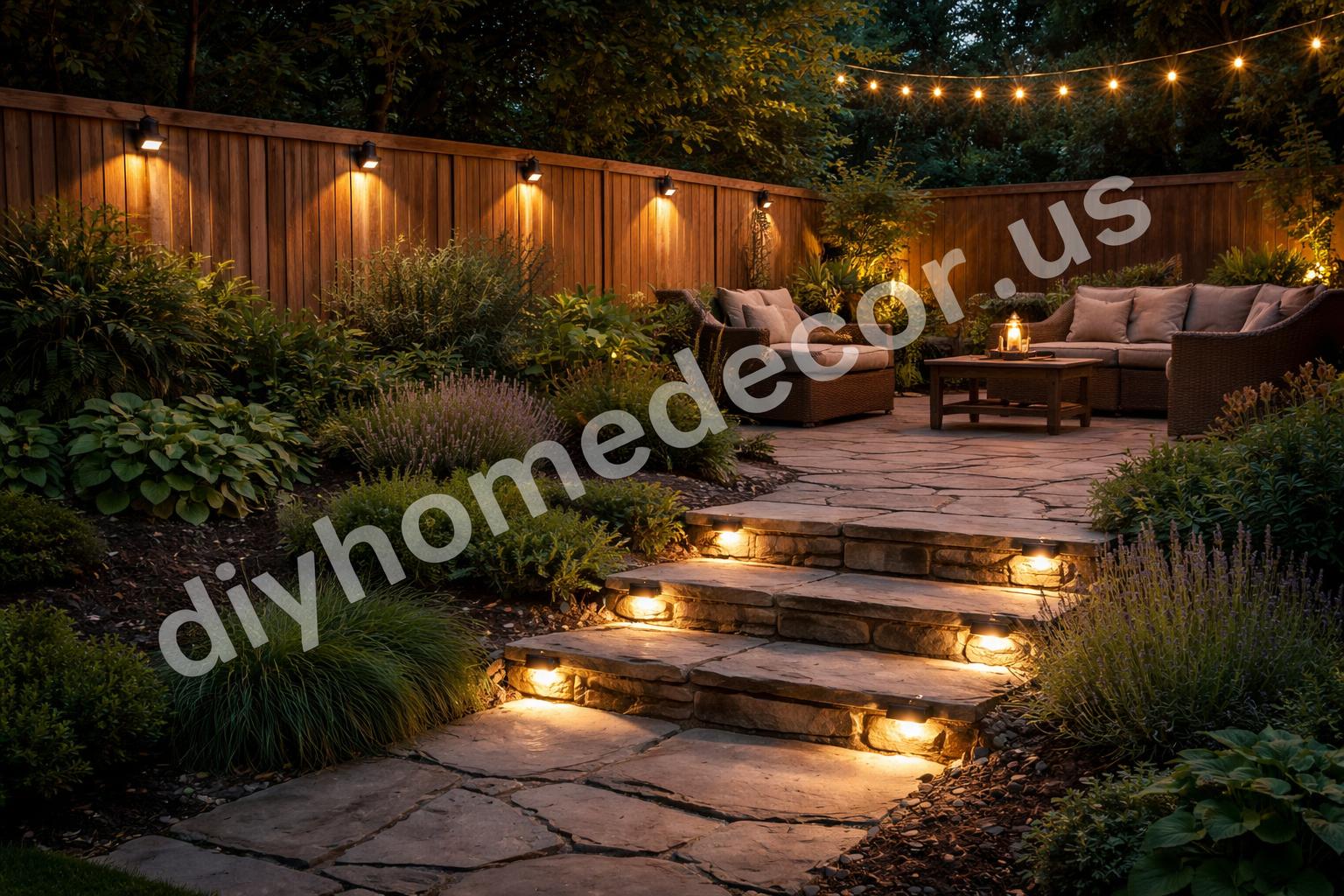
13. Low-level lights near steps
If your garden has stairs or a short drop, low solar lights near the edges help the space feel safer and calmer.
They’re not the most decorative option, but they often make the biggest real-world difference. I’d put these on the must-have list.
14. Fence-mounted solar lights
Fence lights add height to the lighting plan. They pull the eye upward, which helps the yard feel less short and boxed in.
They’re also useful if your garden doesn’t have many plants or structures. A plain fence can become part of the design.
15. Combine warm and cool tones carefully
Most people do better with warm white outdoors, especially around seating areas. Cool white can work for paths or a more modern look, but too much of it can feel harsh.
My rule is simple: warm for comfort, cool only when you want a cleaner, sharper look. Mixing both can work, but only if it’s done on purpose.
For anyone trying to keep the whole backyard cohesive, that same calm, layered approach shows up in a lot of well-balanced outdoor style ideas, including the kind of room-feel you see in this collection of Japandi bedroom décor ideas. The style is different, of course, but the lesson is the same: keep things simple and let a few good details do the work.
Small touches that make the glow feel more expensive
A few small choices can make solar lighting look a lot more polished. These are the things people often skip, then wonder why the setup feels off.
16. Hide the panels as much as possible
Solar panels are part of the deal, but you don’t need them front and center. Place them where they still get sun, but don’t steal attention from the garden décor.
This is one of those details that sounds minor and matters a lot. Visible panels can make a pretty setup look utilitarian.
17. Repeat one style at least three times
You don’t need a perfect match across the yard, but repeating the same light shape or finish helps everything feel connected.
That’s especially useful if you’re mixing lanterns, string lights, and path lights. The repetition gives the eye something to follow.
A lot of the same thinking applies to smaller spaces, too. If you’re trying to make a compact yard or patio feel less crowded, these small bedroom décor ideas that instantly create more space show how much difference restraint can make. Different room, same idea: don’t fill every inch.
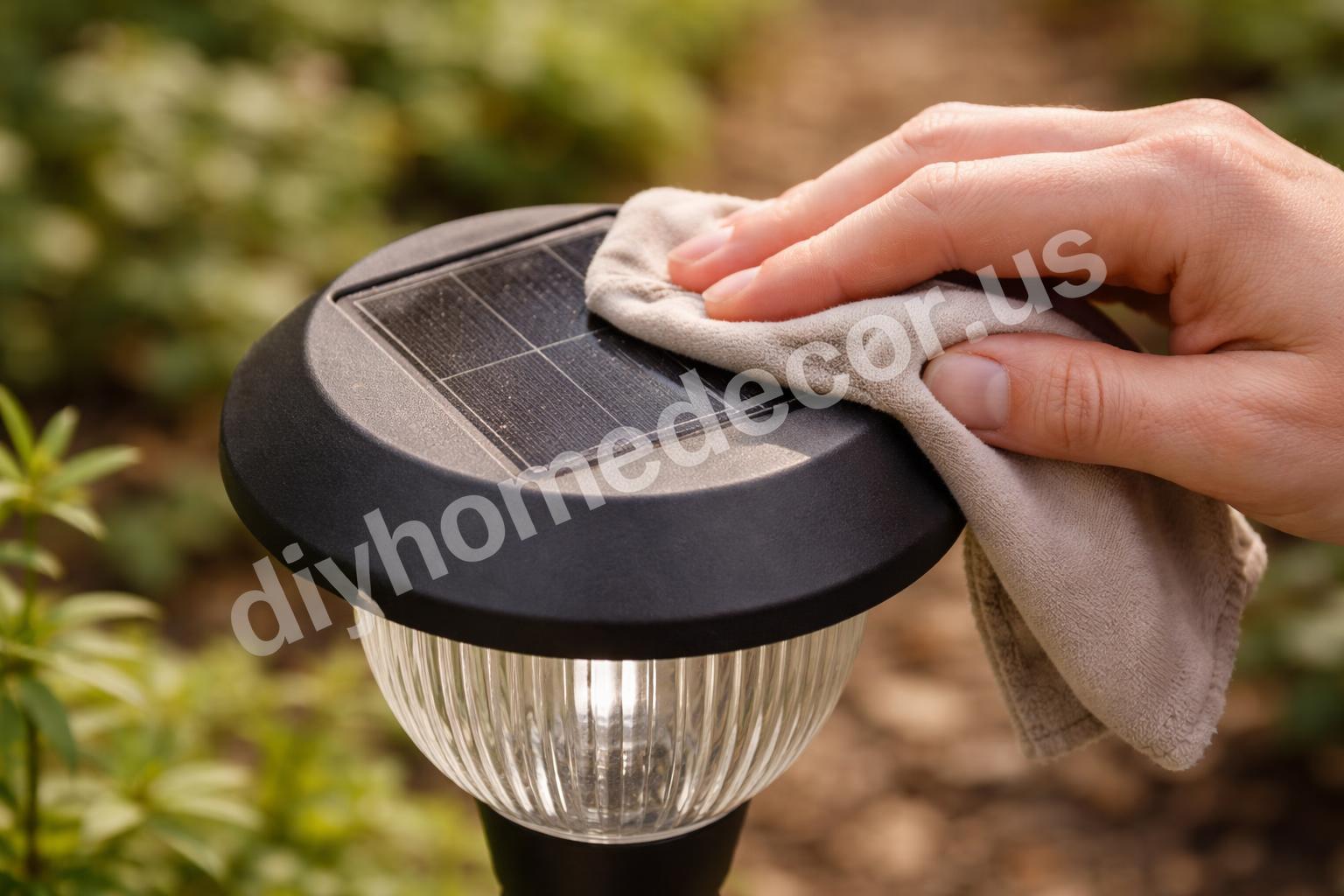
A few simple ways to keep solar lights working well
Solar lighting is easy, but it’s not totally hands-off. If the lights stop glowing the way you want, the problem is usually one of a few small things.
Here’s the short version:
- Keep panels clean.
- Put them where they get direct sun.
- Don’t hide them under dense leaves.
- Replace weak rechargeable batteries when needed.
- Bring delicate décor indoors during heavy storms.
The panel angle matters more than people think. Even a pretty light won’t do much if it barely gets daylight.
For people who want to compare solar garden products more carefully, check the panel size, battery type, run time, and weather rating rather than just the look. If you’re buying online, final cost can change a lot once shipping, bundle sizes, and seller quality are included, so it helps to compare the total checkout price instead of the sticker price alone.
The U.S. Department of Energy has a useful overview of how solar lighting works in practical terms through its solar energy basics resources, which is a good reference if you want to understand why placement matters so much.
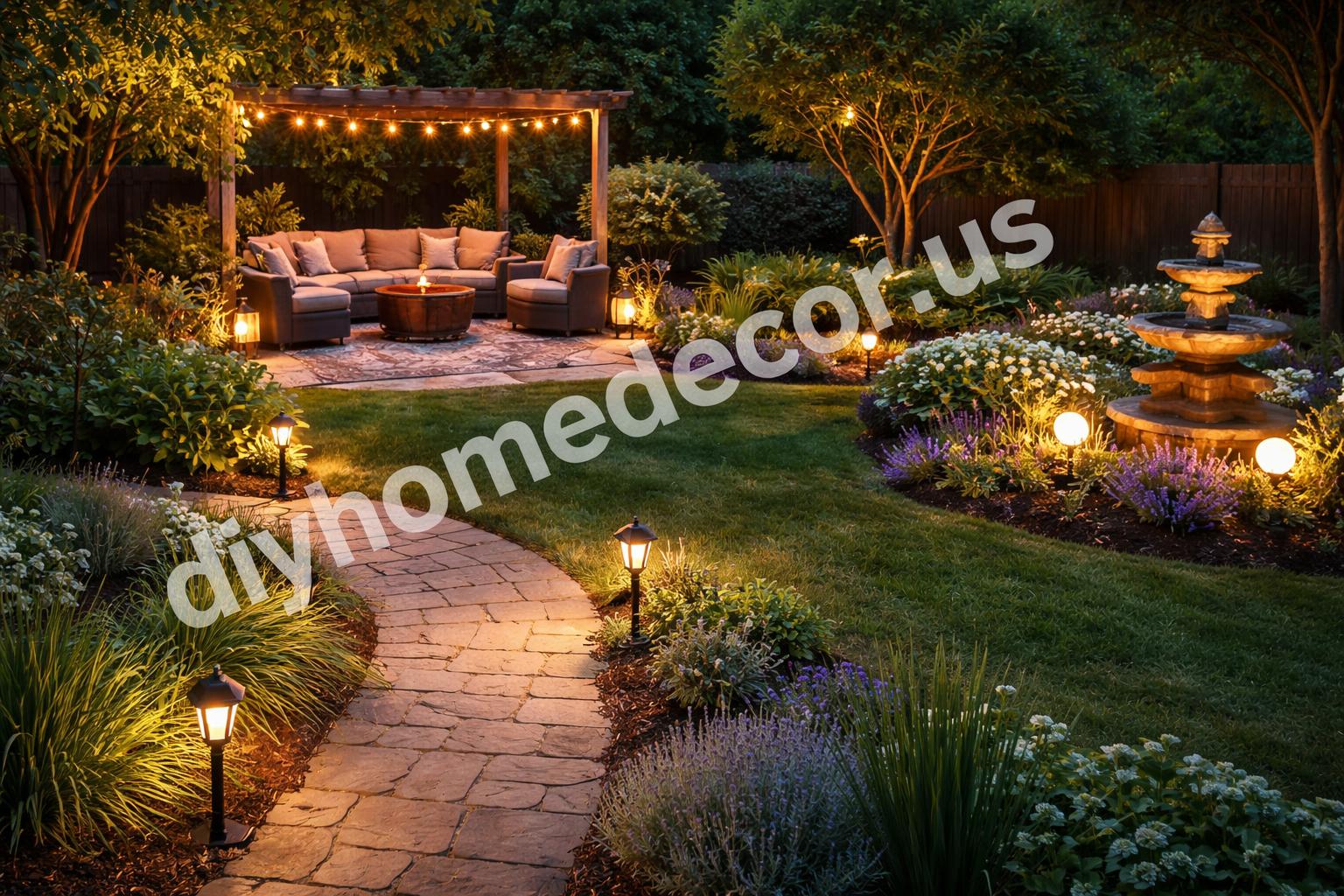
A simple layout plan if you’re starting from zero
If your backyard currently feels dark and a little unfinished, don’t try to light everything at once. Start with one small zone and build from there.
A good starter layout usually looks like this:
- Mark the path with stake lights.
- Add one seating area glow with string lights or lanterns.
- Pick one feature like a tree, fountain, or bench to spotlight.
- Repeat one finish or style so the whole yard feels connected.
That’s enough to make a noticeable change without crowding the space.
I’ve seen a lot of outdoor setups go wrong because people buy too many different lights. A mix is fine, but too many styles makes the yard feel noisy at night.
What usually works best by backyard type
Not every yard needs the same kind of glow. A tiny patio, a sloped lawn, and a big garden all need different priorities.
For small backyards
Use fewer, softer lights. Focus on string lights, one or two lanterns, and a clean border line.
Too many fixtures can shrink the space visually. That’s a common mistake.
For family yards
Safety matters more here. Put lights on steps, along paths, and near play or seating areas.
Decor still helps, but it should support the layout first.
For ornamental gardens
This is where spotlighting and decorative shapes shine. Highlight the plants and keep the rest understated.
A garden that already has strong visual interest doesn’t need heavy lighting. It needs direction.
For a backyard that’s mostly patio
Use overhead lighting and a few table-level accents. Ground lights alone can feel too low if most of the action happens on the patio.
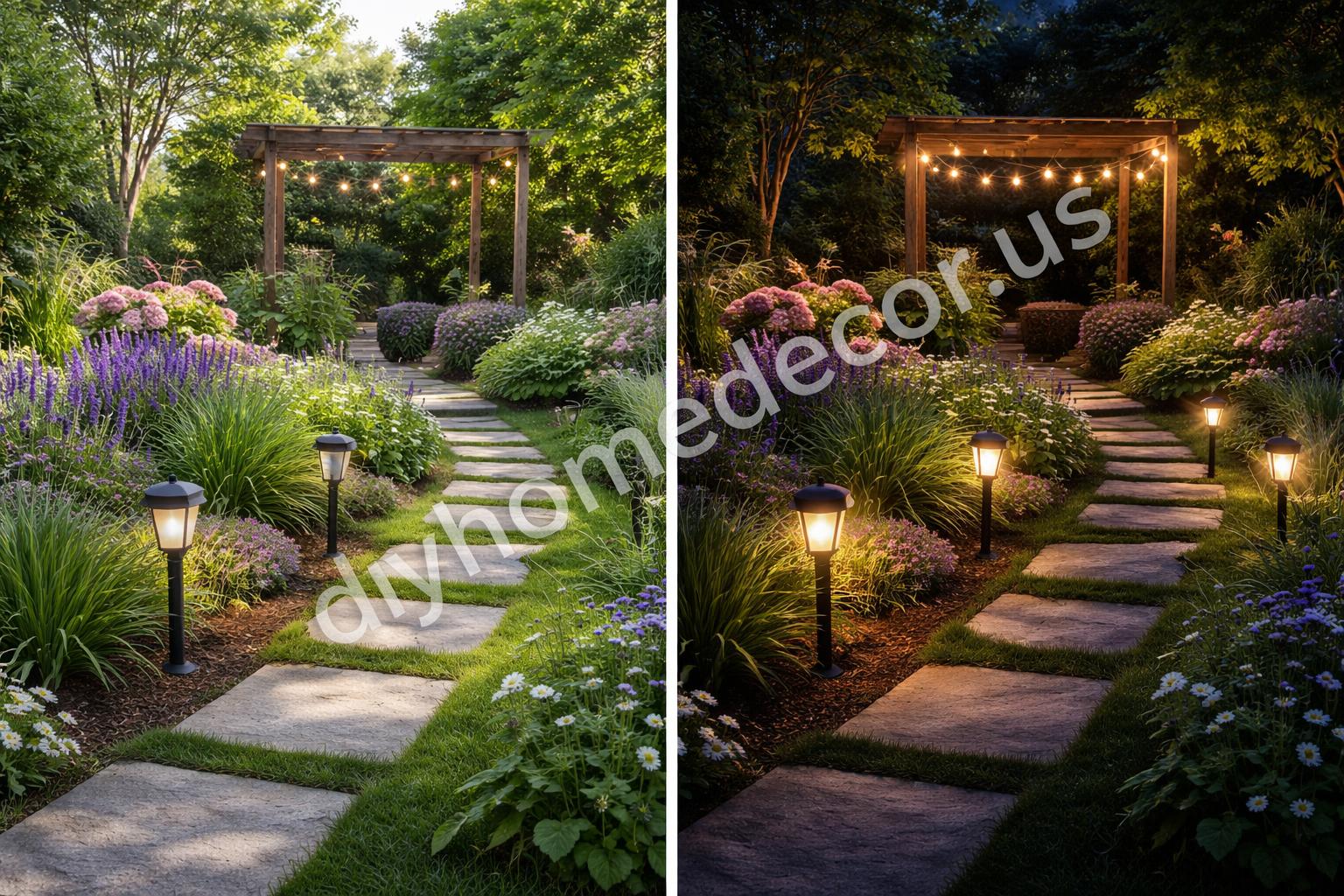
The part people forget: daylight matters too
Solar garden lighting is a night-time feature, but it lives in daylight all day. That means it should still look good when it’s off.
This is why finish, shape, and placement matter. If the lights look clunky in daylight, you’ll notice it every time you step outside.
That’s why I prefer décor-style solar lights over anything that looks too plastic or oversized. The best ones blend into the garden during the day and become part of the mood at night.
If you’re undecided, start with one or two categories only:
- Path lights for structure
- String lights for atmosphere
- One accent light for personality
That’s usually enough to get the glow without turning the yard into a hardware store display.
Final thoughts
The best solar garden lighting doesn’t just brighten a yard. It changes how the yard feels when the sun goes down.
A few well-placed lights can make a backyard look calmer, more useful, and honestly a little more cared for. And that’s usually the real goal.
I still think the strongest setups are the simple ones. One clear path, one cozy seating area, and one feature worth noticing can do more than a dozen random lights ever will.
Save This Guide on Pinterest
Save this image to Pinterest so you can easily return to this guide later.