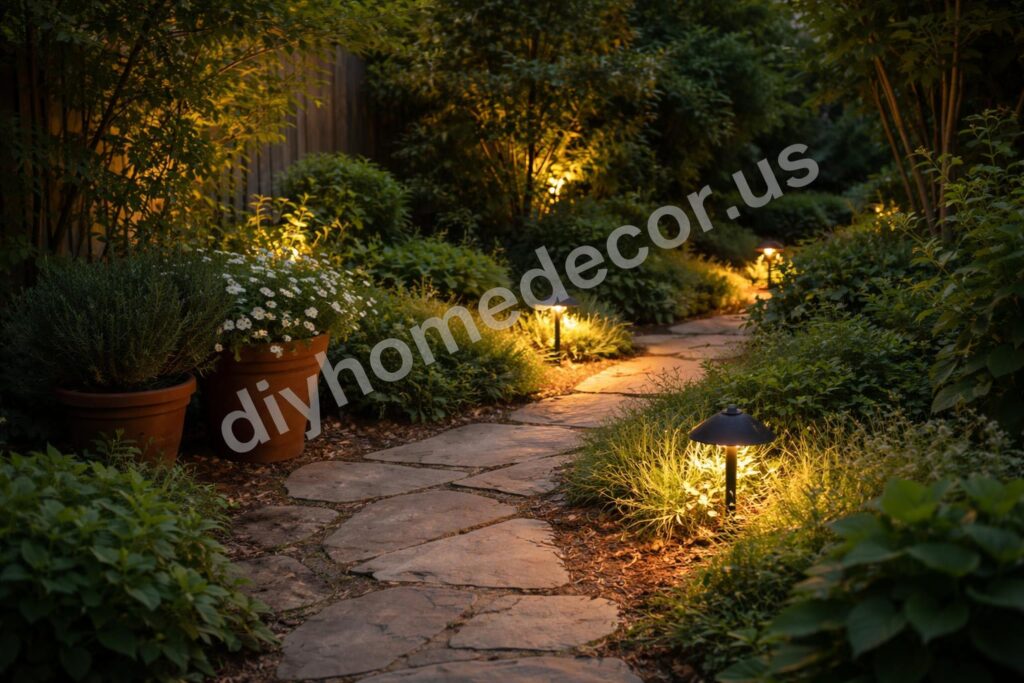
A backyard can look perfectly fine in daylight and still feel a little flat at night. That usually happens when the lighting is too harsh, too blue, or just placed in the wrong spots.
If you ignore it, the space ends up feeling more like a utility area than a place you want to sit in. And honestly, that’s a shame when a few warm lights can change the whole mood.
The good news is you don’t need a huge setup to fix it. In this article, I’m walking through warm white garden lighting décor that makes outdoor spaces feel softer, calmer, and more inviting without looking overdone.
Why warm white light feels different outside
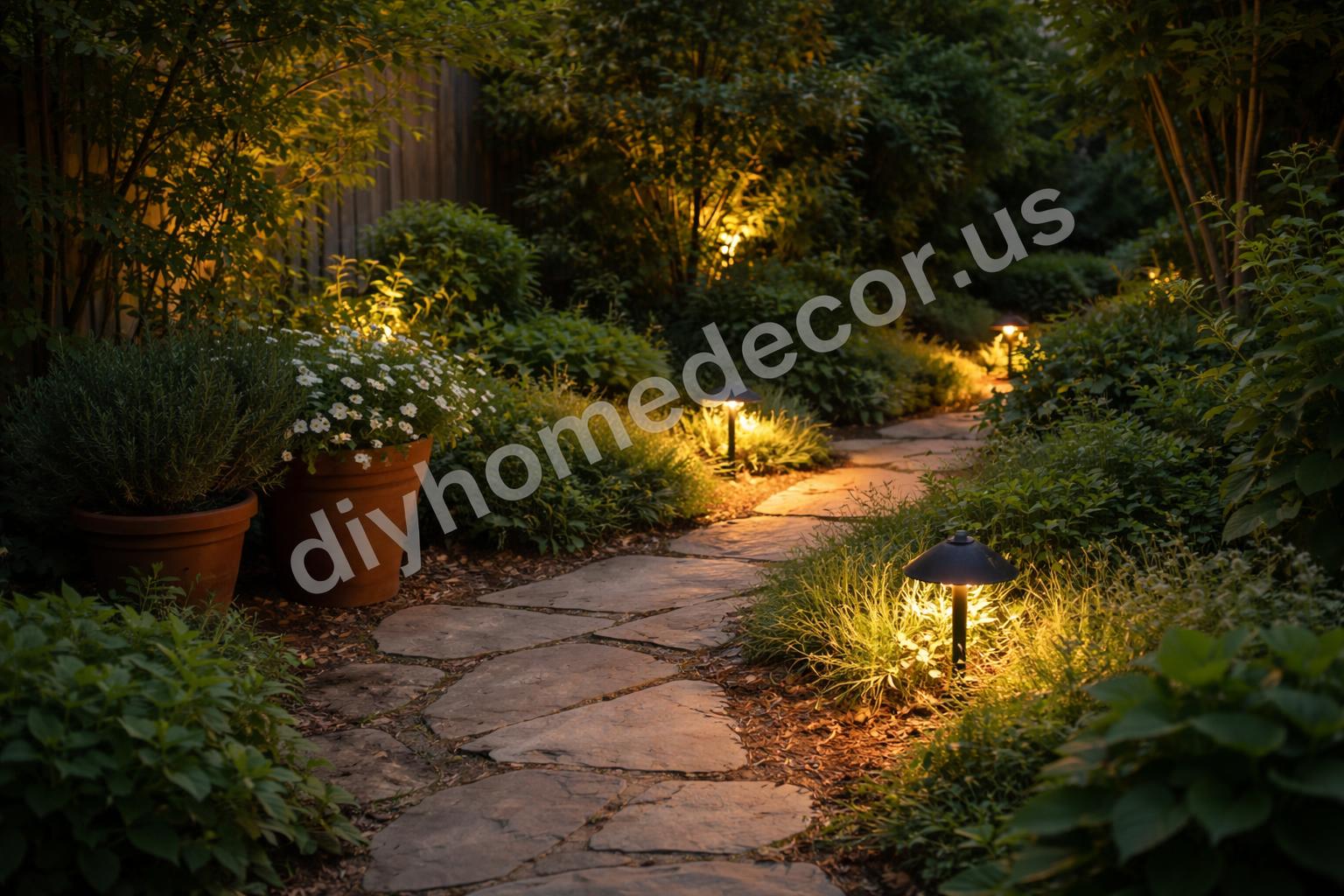
Warm white lighting works because it behaves a little like sunset. It softens edges, flatters plants, and makes wood, stone, and fabric feel more welcoming.
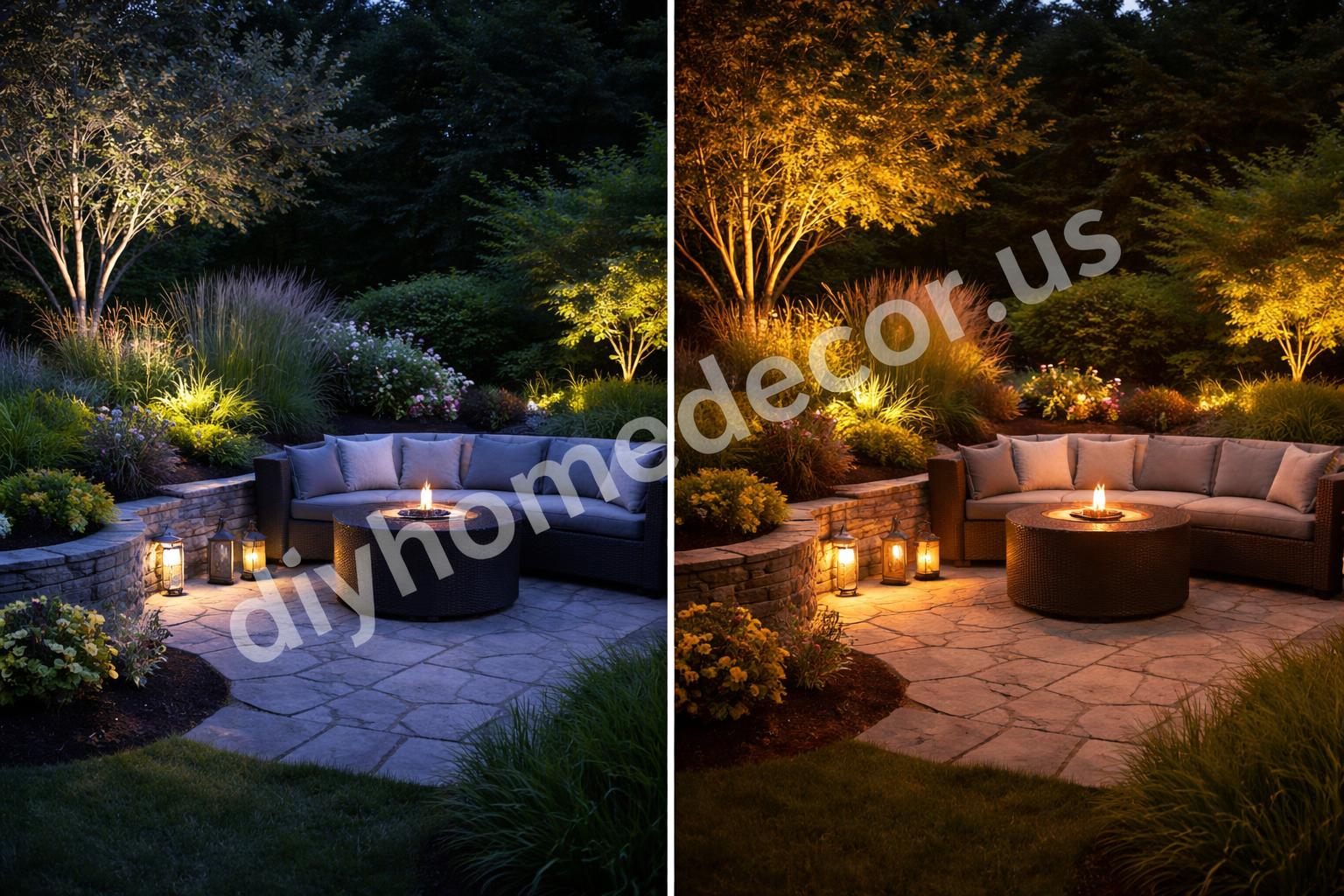
Cool white light can be useful for task areas. But for a cozy garden, it often feels too sharp. That’s the part people don’t always realize until they see both side by side.
I’ve seen plenty of patios that looked stylish during the day, then turned cold and busy at night because the bulbs were too bright or too blue. Warm white usually fixes that fast.
The aim isn’t to flood the whole yard with light. It’s to create pockets of glow, so the space feels layered instead of flat.
Start with the places people actually use
Before you buy anything, think about where you sit, walk, and pause. That’s where light matters most.
A seating corner needs a different kind of glow than a path or a planter bed. If you light everything evenly, the yard can lose its sense of shape.
Good spots to light first
- Along a path so people move comfortably
- Around a dining table or bistro set
- Near a bench, hammock, or fire pit
- Around steps or level changes
- In planters and garden borders
One thing I learned is that one well-lit corner often matters more than ten random lights scattered around the yard. The eye goes to the brightest area first, so placement really does the heavy lifting.
String lights still work, but only when they’re used with restraint
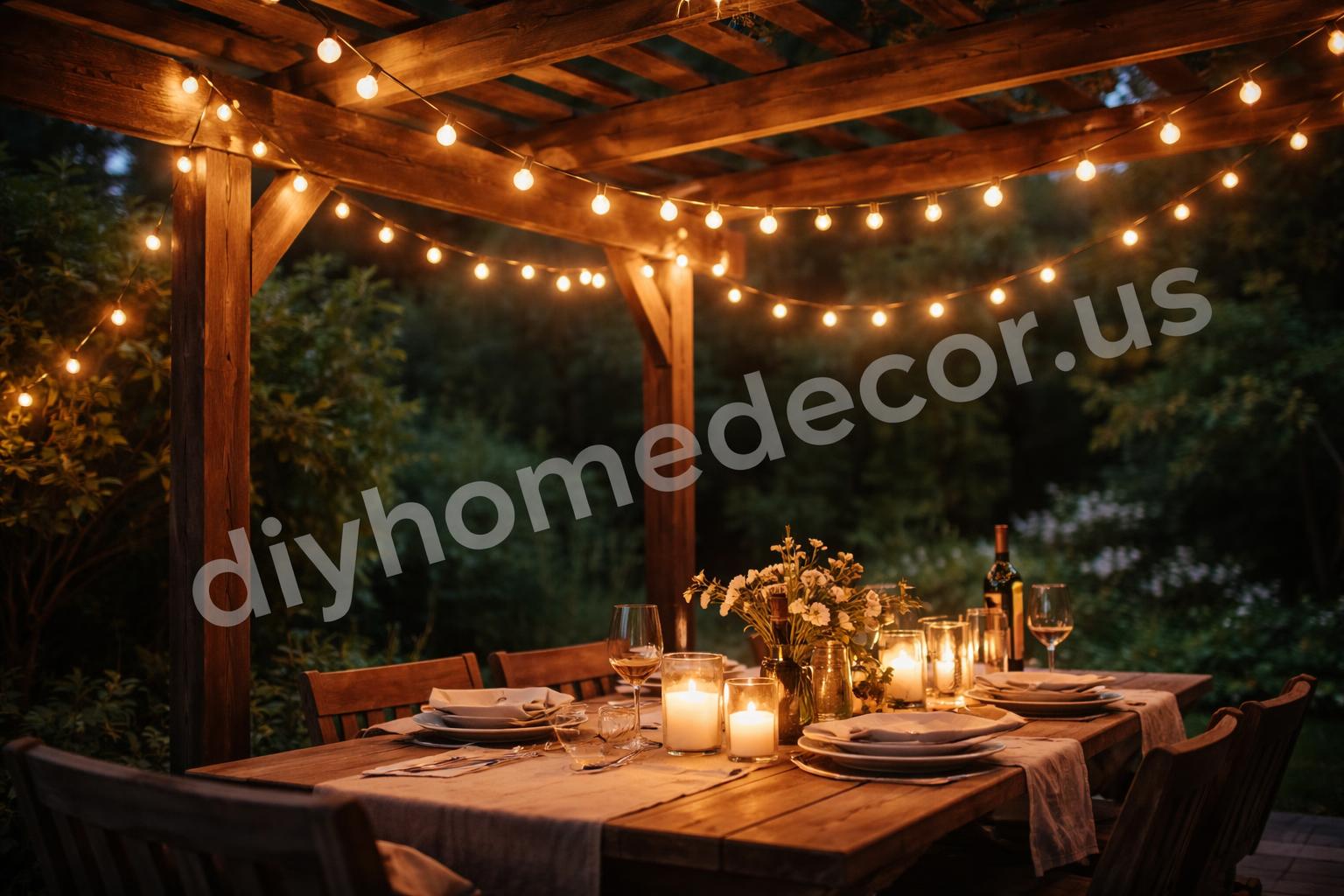
Warm white string lights are popular for a reason. They make a space feel relaxed right away.
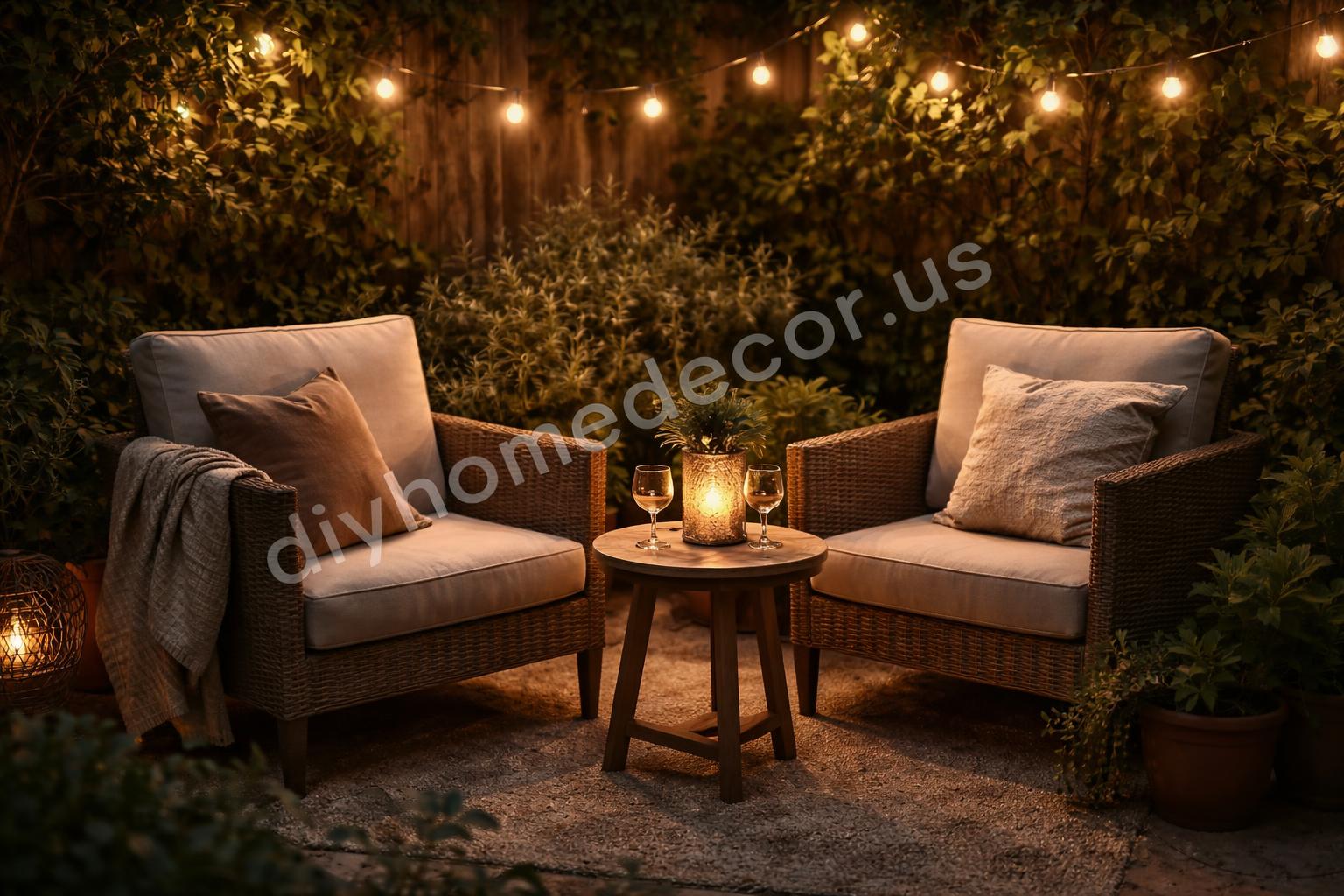
The trick is not to drape them everywhere. A single line overhead, a pergola frame, or a fence edge is usually enough. Once you start layering too many strands, the effect gets messy and loses that cozy feeling.
For outdoor dining, I like the look of string lights hung a little loose rather than pulled perfectly tight. That slight softness makes the whole area feel less staged.
What to watch for
- Choose warm white, not bright daylight white
- Look at the bulb spacing before buying
- Make sure the cord color blends into your background
- Check whether the set is dimmable if you want flexibility
If you’re comparing sets online, don’t just look at the listed price. Compare the final price, cord length, bulb count, shipping, and seller trust. Those details change the value more than a headline discount does.
Lanterns add calm without much effort
Lanterns are one of the easiest ways to make outdoor lighting feel decorative instead of purely functional. A warm bulb inside a lantern gives off a steady glow that feels grounded and simple.
They work especially well on steps, by doors, or beside seating. You don’t need many. Two or three in the right spot can do more than a whole row of small lights.
I like lanterns because they fill awkward corners. That’s a small thing, but it matters. Some yards have a dark spot that never feels finished, and a lantern solves it without turning the area into a light show.
Best lantern styles for a cozy look
- Rattan or woven lanterns for a softer feel
- Metal lanterns for a cleaner look
- Glass lanterns for a little more shine
- Covered lanterns if your area gets wind
For a softer, more natural outdoor style, the mood often lines up well with the calm balance you see in Japandi bedroom décor ideas. That same quiet look works outside too.
Solar lights are convenient, but placement decides everything
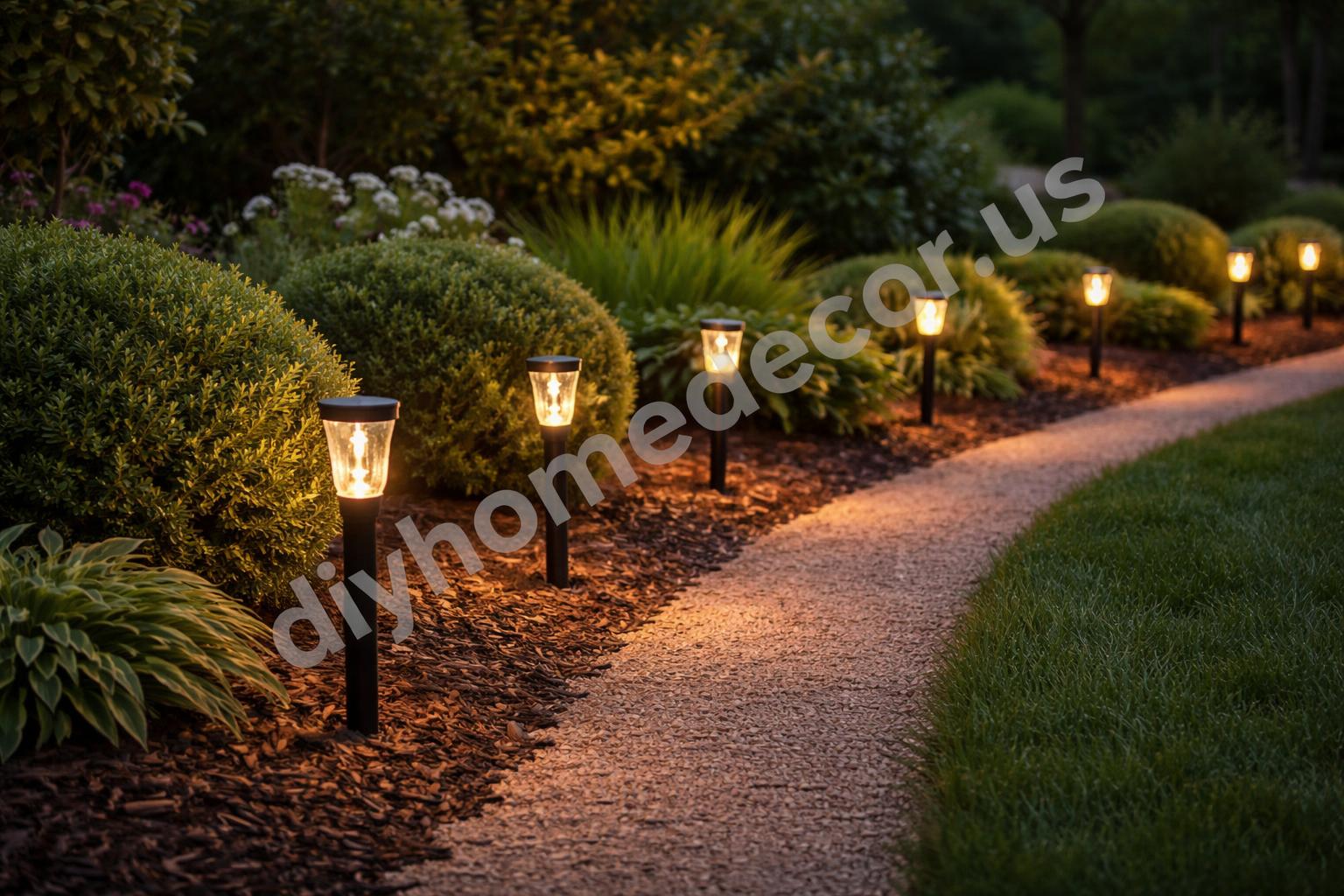
Solar garden lights are easy to love and easy to mess up. They don’t need wiring, which makes setup simple. But if the panel sits in shade, the light will usually disappoint.
That’s why placement matters more than the product photo. A solar stake light in a sunny spot can look lovely. The same one tucked under a tree may barely stay on long enough to notice.
If you want a broader overview of layout ideas, this guide to solar garden lighting décor ideas that make your backyard glow is a useful place to compare styles and see what fits your space.
Solar lights that usually make sense
- Path stakes for walkways
- Small spotlights for shrubs or trees
- Globe lights for soft decorative glow
- Stake lights near borders or planters
Quick tip: place solar lights where they can charge for most of the day, then test them for two or three evenings before deciding if the location works.
Fairy lights look better when they’re hidden a little
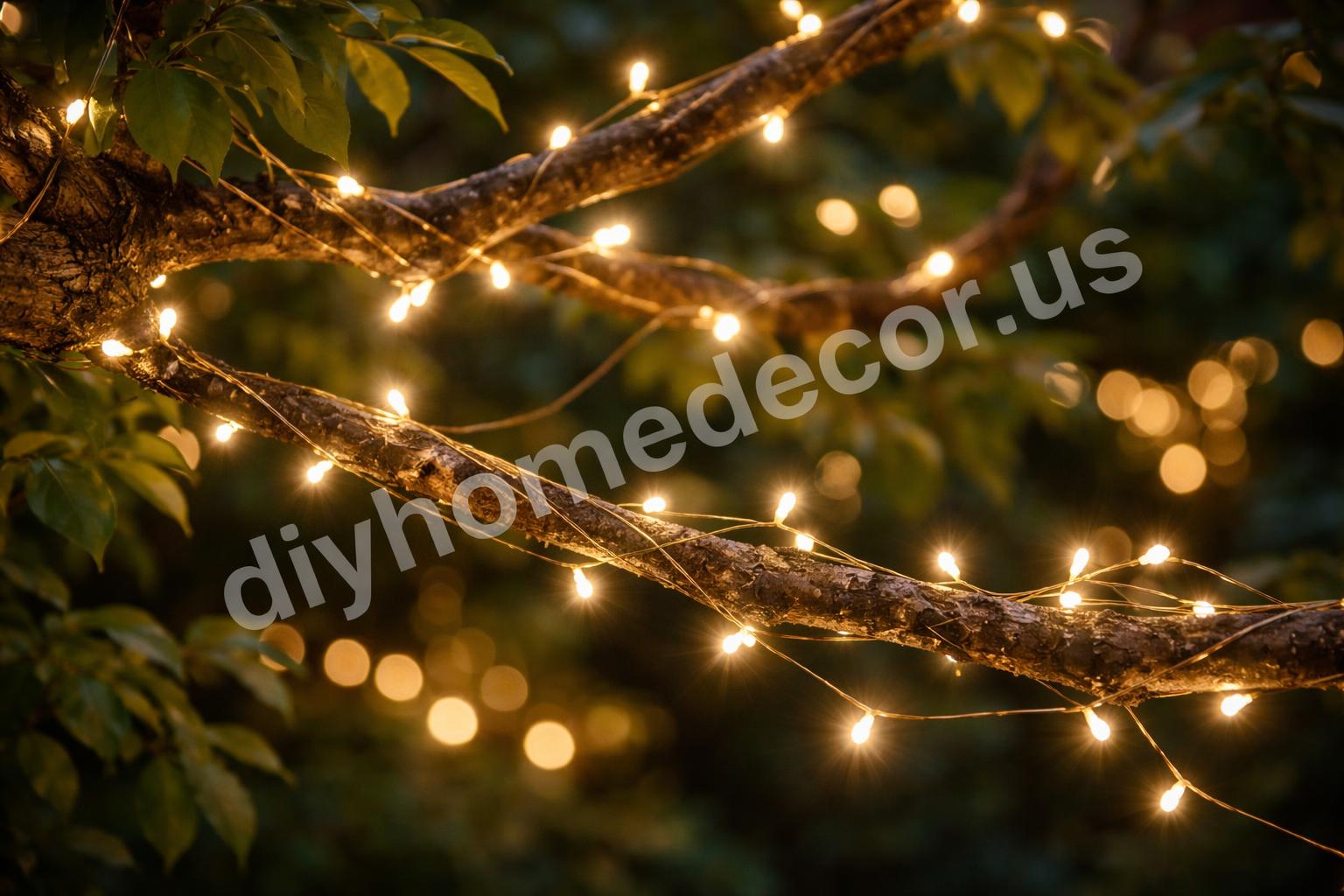
Fairy lights are great for gentle sparkle, but they look best when they don’t scream for attention. Wrapped around branches, tucked into jars, or woven into railing details, they make a space feel warm without being loud.
Too much visible wire can ruin the effect. That’s a small annoyance, but it’s real. The light may be beautiful, yet the cord can make it look unfinished if you don’t hide it well.
I usually think of fairy lights as accent lighting. They shouldn’t carry the whole space. They’re there to add tiny points of glow, not replace the main source.
Best places to use fairy lights
- Around tree trunks or low branches
- Inside glass jars or hurricane holders
- Along balcony rails
- Woven through wreaths or wall décor
- Around mirrors or reflective garden pieces
Choose warm bulbs that actually feel warm
Not every “warm white” bulb feels the same in real life. Some are more amber, some lean neutral, and some end up brighter than expected once they’re installed.
That’s why color temperature matters. If the description gives a Kelvin number, lower numbers usually feel warmer and softer. If that part is missing, I’d be careful. Listings that avoid clear details sometimes don’t match the mood you want.
For a cozy outdoor area, bulbs in the softer warm range usually make more sense than anything overly crisp. They help wood, greenery, and stone look relaxed instead of flat.
A simple way to compare bulbs
| What to compare | Why it matters |
|---|---|
| Color temperature | Changes the mood right away |
| Brightness | Too bright kills the cozy feel |
| Dimming | Helps for evenings and gatherings |
| Weather rating | Important for outdoor durability |
| Cord length | Affects placement more than people expect |
Always compare the final mood, not just the bulb name. A bulb can be sold as warm and still feel too harsh once it’s in your space.
Mix light with texture so the space feels finished
Warm white lighting works better when it bounces off something interesting. Bare walls and plain fencing can make even nice lights look a little flat.
Add texture where you can. Think woven chairs, terracotta pots, wood planters, stone edging, or soft cushions. The light catches those surfaces and creates depth without needing more fixtures.
That’s why some outdoor spaces feel expensive even when they aren’t filled with fancy pieces. The light has something to play against.
Easy texture pairings
- String lights + wood slats
- Lanterns + woven baskets
- Solar stakes + gravel paths
- Fairy lights + leafy shrubs
- Wall lights + climbing plants
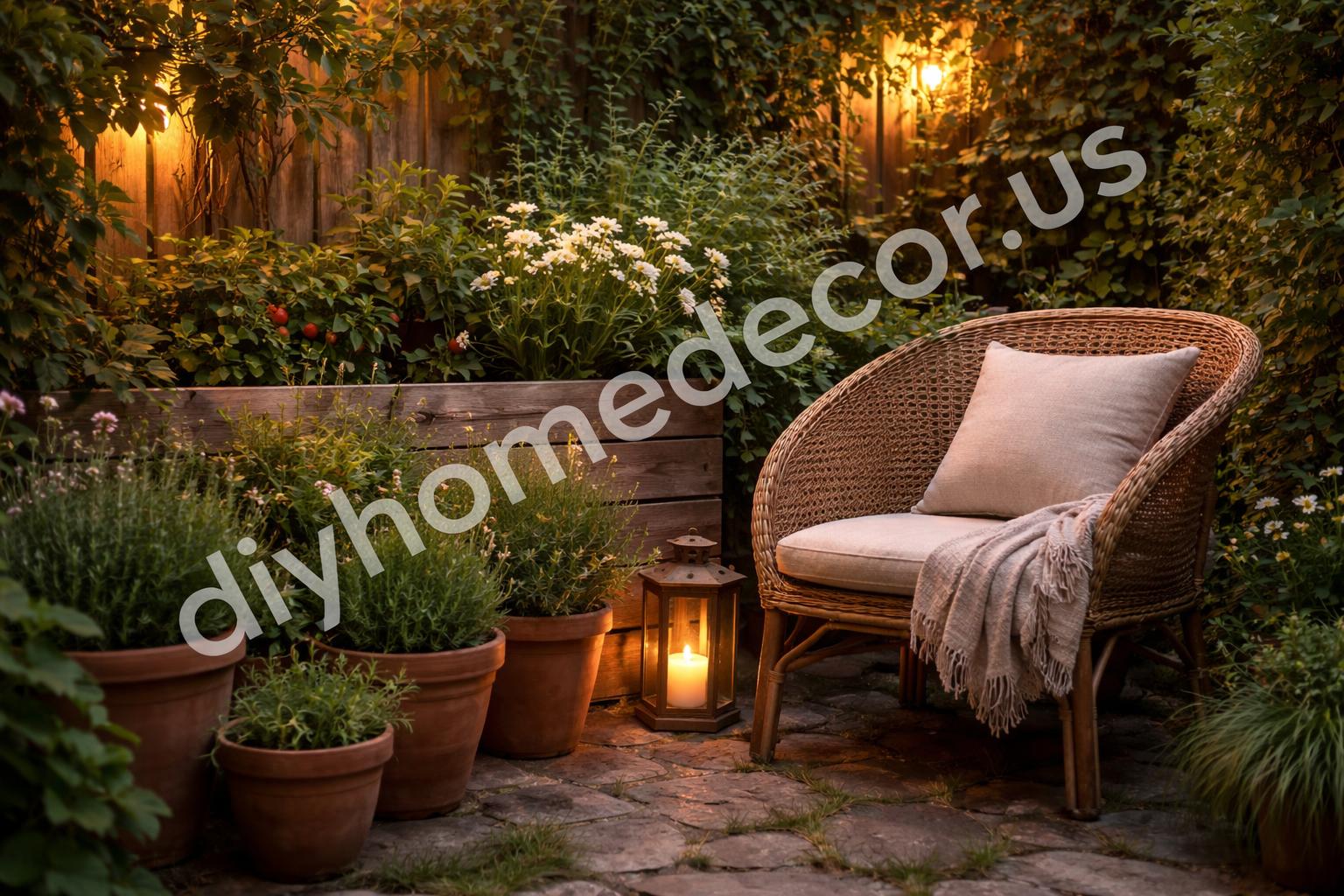
If you have a small patio, use vertical light
Small spaces can get crowded fast. So instead of spreading light across every surface, go up.
Vertical lighting means using walls, trellises, hooks, branches, and railings. It keeps the floor clear and makes the area feel taller. That’s especially useful on compact patios or narrow balconies.
For cozy spaces, vertical light can be more effective than floor lighting because it creates eye level warmth. You notice it sooner, and it feels more like a room.
Good vertical ideas
- Hang lights along a fence line
- Attach lanterns to wall hooks
- Wrap lights around a trellis
- Use slim uplights on plants
- Add a lighted mirror or reflective panel
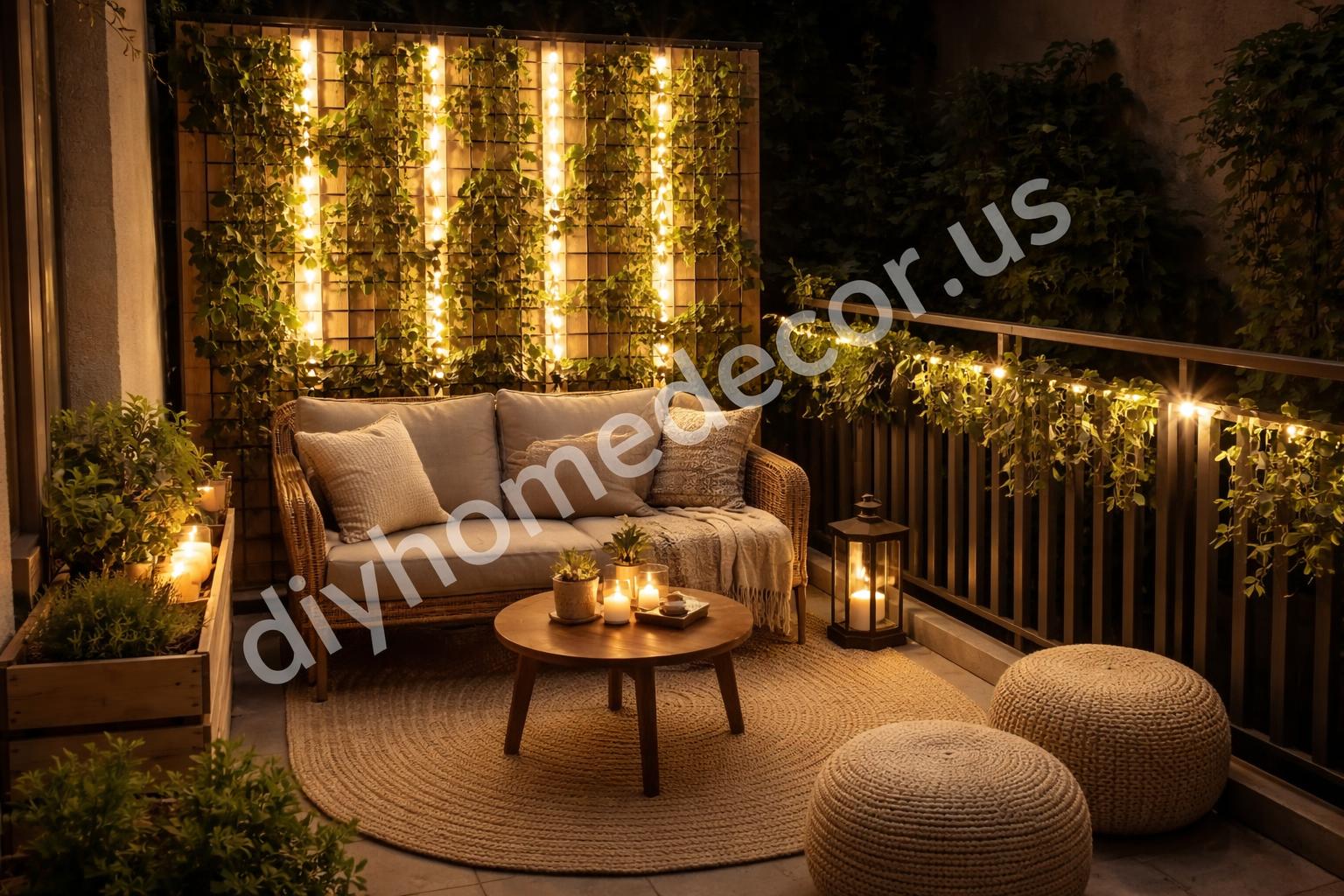
Don’t overlook the power of dim light near seating
A lot of people make the same mistake: they light the whole yard the same way they’d light a driveway. That works for visibility, but not for atmosphere.
Seating areas need softer light. When the glow is lower, people relax more. The space feels quieter, and conversations feel easier.
A small table lamp meant for outdoor use, a low lantern, or a dimmable string setup can make a huge difference. It doesn’t need to be dramatic. It just needs to feel comfortable.
A simple rule
- Bright light for paths and steps
- Medium light for cooking or grilling
- Soft light for seating and décor
That balance keeps the outdoor area useful without making it feel like a parking lot.
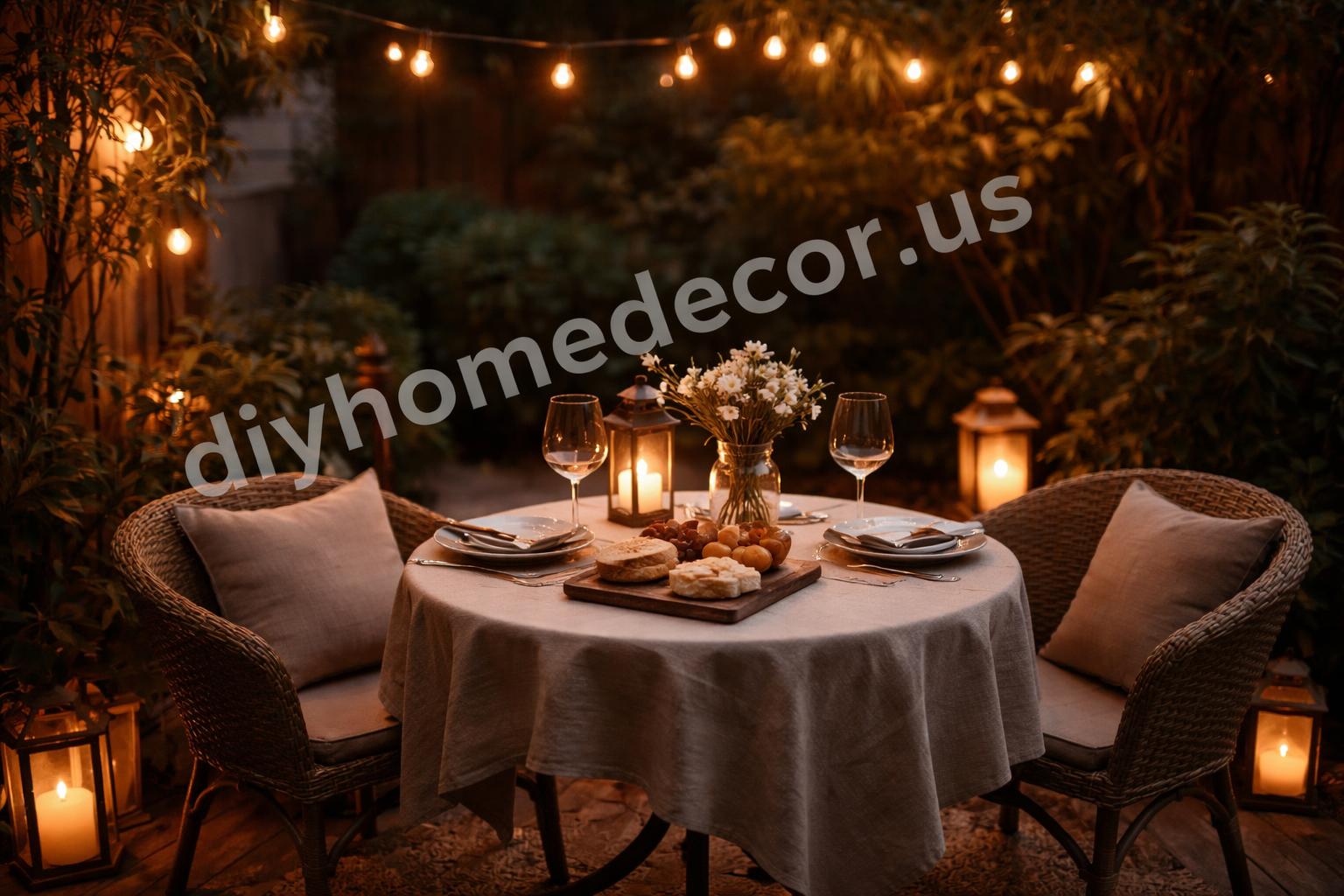
Warm white lighting pairs well with garden styling that feels calm
If your outdoor décor already leans natural, warm white light usually fits right in. It works with cream cushions, clay pots, olive greens, and raw wood better than cool lighting does.
I’ve noticed that warm light also helps busy décor calm down a little. If you have lots of plants or mixed materials, the softer tone smooths things out. It makes everything feel more unified.
That same quiet, layered feeling shows up in romantic bedroom décor ideas for the perfect cozy escape, and it’s one reason those tones translate so well outdoors.
Styles that match warm white best
- Cottage-style gardens
- Mediterranean-inspired patios
- Minimal outdoor seating areas
- Boho corners with textiles and plants
- Rustic decks with wood and metal mix
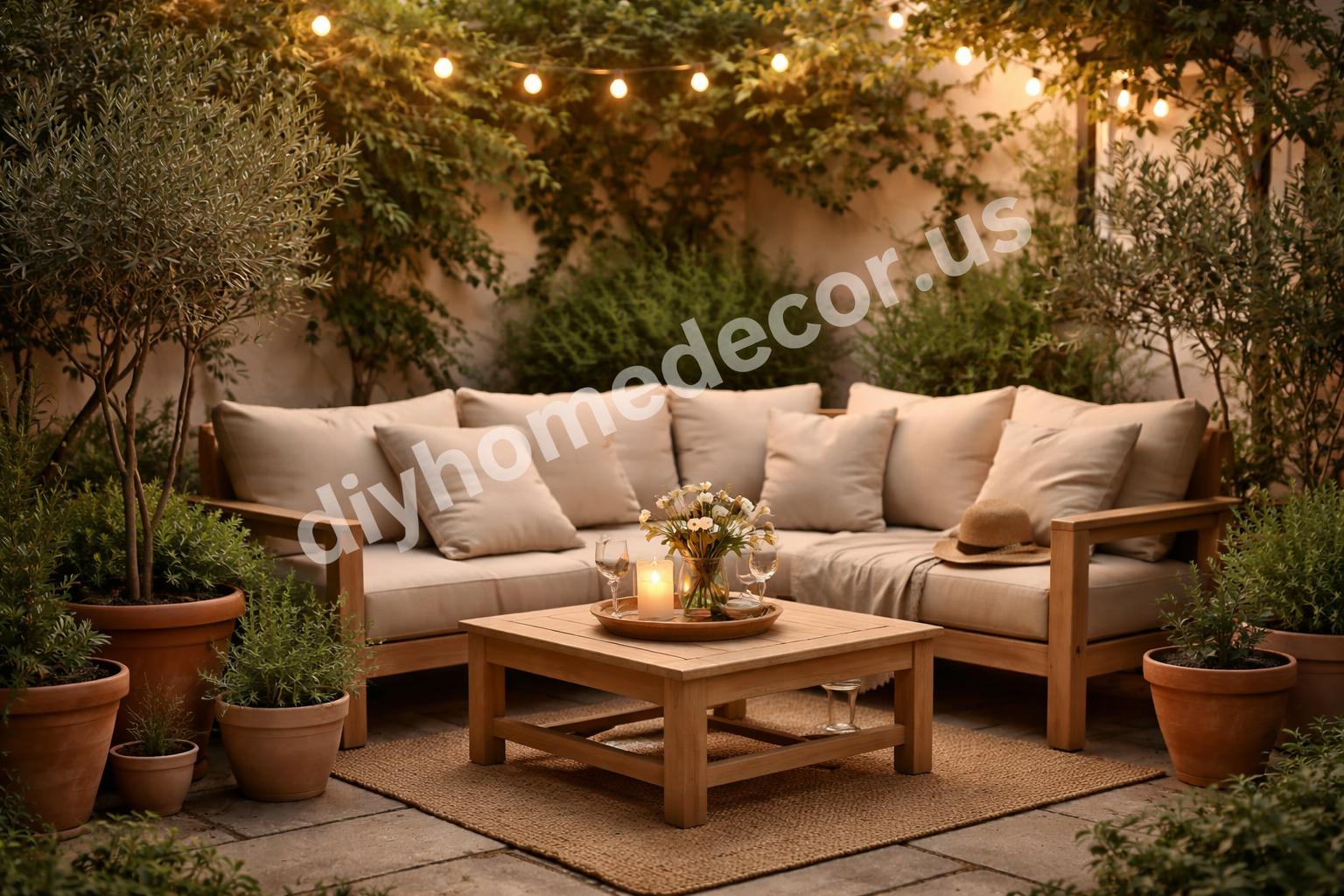
A few mistakes that make outdoor lighting feel awkward
Some lighting problems show up right away. Others only show up after you’ve used the space a few evenings.
Here are the ones I’d watch for.
- Too many points of light makes the yard feel busy
- Lights placed too low can get lost in plants
- Mixing warm and cool tones makes the whole space feel off
- Ignoring cords and hardware leaves the setup looking unfinished
- Putting solar lights in shade makes them disappoint fast
One small surprise for me was how often people fix brightness when the real problem is placement. Moving a light six feet can help more than replacing it.
A simple way to build the look without overthinking it
If you want the cozy look without turning the project into a weekend job, start small.
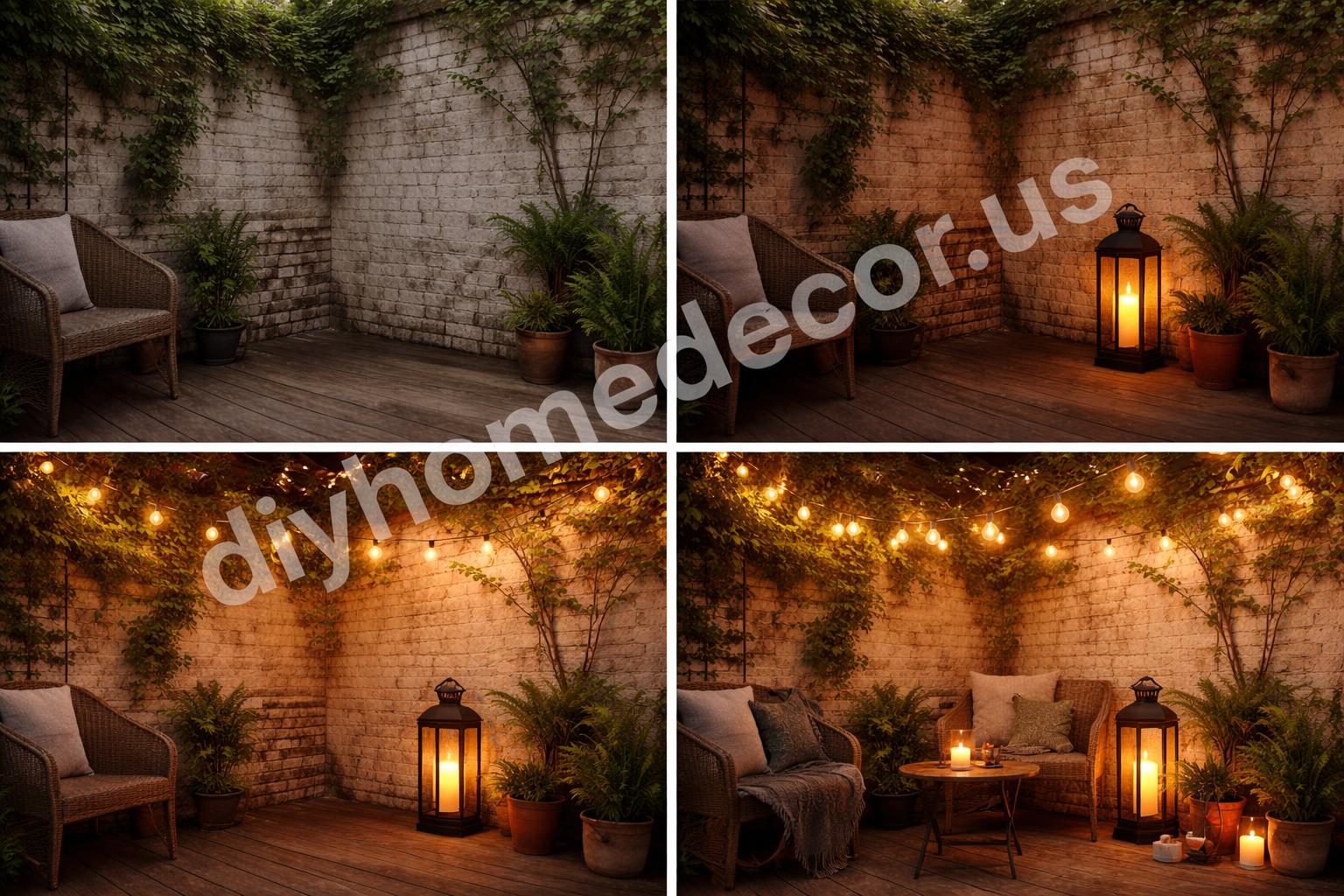
Use one main light source, then add one accent layer. That might mean string lights over the seating area and lanterns near the path. Or a few solar stakes plus a soft light in a corner.
That’s usually enough to make the space feel intentional.
Easy starter setup
- Choose one area to anchor first
- Add warm white light at eye level or just below
- Fill one dark edge with a small accent light
- Step back at night and check the balance
- Remove one light if the area starts to feel crowded
What I’d focus on first
If I were helping someone set up a cozy outdoor space from scratch, I’d keep it simple. I’d start with warm white light, use fewer fixtures than expected, and make sure each light has a job.
That’s the part people skip. They buy nice lights, but they don’t assign them a purpose. Once you do, the whole yard feels calmer and easier to enjoy.
And honestly, that’s the real goal. Not a brighter backyard. Just a warmer one.
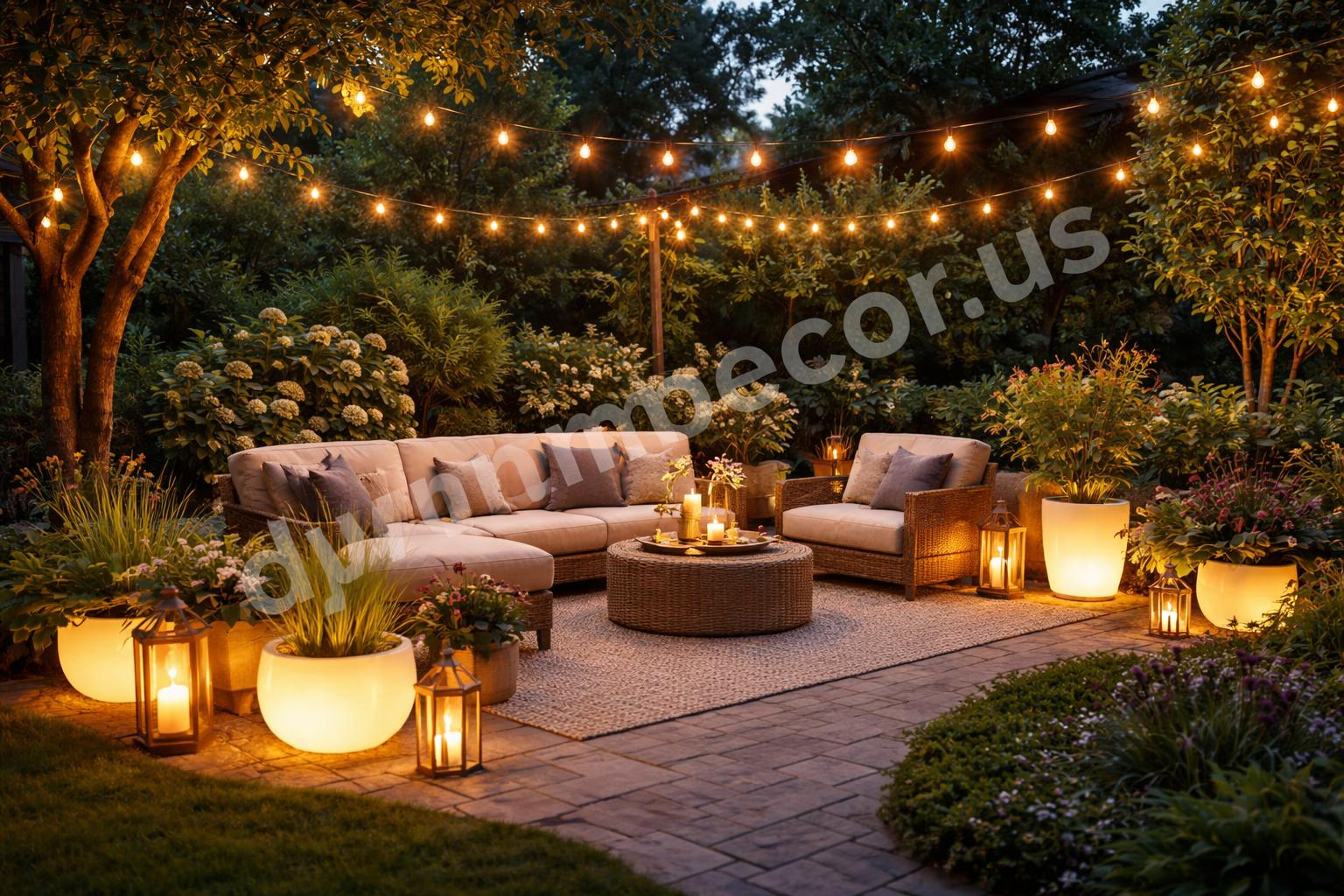
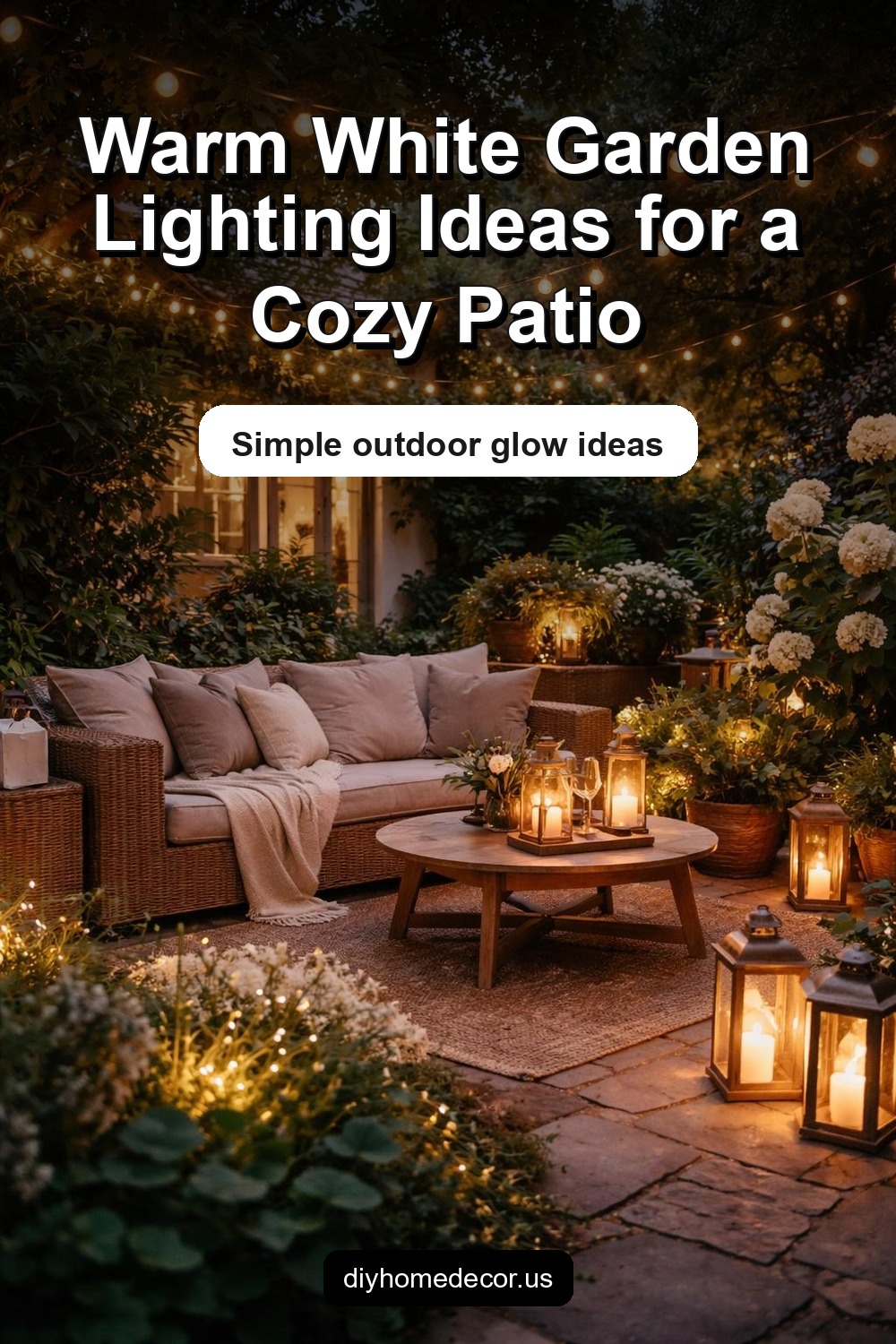
Save This Guide on Pinterest
Save this image to Pinterest so you can easily return to this guide later.